 Yesterday TV and online ad platform DG announced the acquisition of semantic technology firm, Peer39. Read it.
AdExchanger asked Ken Allen, who is Director, Head of Digital Media and Internet Advisory with Blackstone Advisory Partners, LP, his reaction to the deal and the opportunity with digital ad, targeting data.
AdExchanger: What’s your take on DG’s acquisition of Peer39?
KEN ALLEN: It’s an interesting move for DG. This deal is emblematic of a central theme we see in the sector around cross-channel, real-time data analytics and targeting. One needs many pieces to fulfill this vision — analytics capabilities across multiple, disparate pools of data, real-time attribution and targeting, RTB across display, mobile, social, video, search, etc. Some of these pieces will be “owned” and others will be “rented”. Arguably, no one has the full suite of capabilities yet, but many players are moving in that direction, assembling the various components through both partnerships and acquisition. This deal is a prime example of a trend towards building comprehensive, unified marketing platforms and I expect to see more like it.
What makes for a successful data company these days? Any successful attributes?
Third-party data is becoming increasingly commoditized and there is less and less differentiation among industry participants that are simply functioning as data aggregators / distributors.

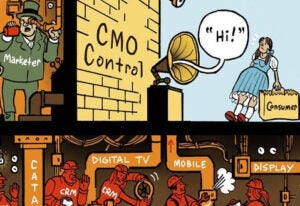
The most successful models have evolved beyond aggregation to real-time management of large, complex first+third party data sets. The natural evolution on the enterprise side is to layer on custom analytics and real-time media buying. There is a strong logic to having many of these pieces as part of a unified platform (e.g. a cross-channel CMO dashboard) and I believe that is where we are headed with many of the leading products. There will be an interesting place for aggregators/suppliers of unified first/third party data sets; however, undifferentiated third party data aggregators will need to evolve their offerings in my view.
How do you see strategy playing for data companies in the future?
I think one can draw an interesting analogy in the data value chain with manufacturing. The raw material, data, in a variety of formats and from multiple channels, needs first to be collected, aggregated, and refined into a useable format. This raw material then must be delivered to a “plant” — e.g., an analytics and decisioning engine that leverages the data to make marketing decisions. I see different firms taking distinct strategies — one is to gain scale as either a (data) raw materials provider or as a (data) manufacturing facility, but not both. Think data exchanges / DMPs and the many buying platforms in the market. Another strategy is to vertically integrate; to own multiple pieces of the data supply chain, analytics, and campaign management. This is a powerful model but one that is also difficult from an operational perspective — it is very difficult to maintain best-of-breed capabilities across all segments of the value chain, and there are potential conflicts with this approach as well. We will see successful examples of each strategy going forward, with certain key determinants of success, including some or all of the following: (1) access to proprietary cross-channel data sets, (2) sophisticated data management capabilities, (3) superior analytics and decisioning platforms, and/or (4) scale.
By John Ebbert
Follow Ken Allen (@kw_allen), Blackstone (@blackstone) and AdExchanger (@adexchanger) on Twitter.