
The CTV Slump Advertisers Want; The CMA Isn’t Done With Google
What’s behind the drop in CTV CPMS; the UK CMA sets its antitrust sights on Google Search; and gen AI job cuts decimate another marketing department.

What’s behind the drop in CTV CPMS; the UK CMA sets its antitrust sights on Google Search; and gen AI job cuts decimate another marketing department.

After a reenergizing week at the Cannes Lions festival, here are six observations on how our industry is changing to meet its new challenges.

From Cannes Lions, our editorial team discusses the mix of perspectives on the ad industry’s application of AI: the opportunity, the hesitation and the predictions of how it will disrupt marketing.

With no-click generative AI search gaining steam, here’s how publishers can thrive when search traffic disappears.
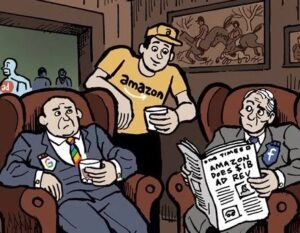
The Amazon DSP vs. The Trade Desk rumor mill; How SharkNinja has stayed sharp; Why nothing beats organic.
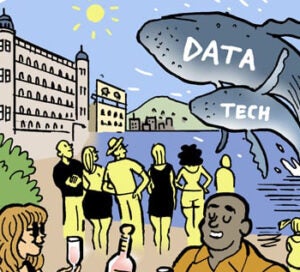
Content aggregators are winning while actual journalism suffers; users say they hate Meta bringing ads to WhatsApp, but Meta’s research says otherwise.

Economic uncertainty provides the perfect scenario for demonstrating marketing’s essential role in driving growth, resilience and adaptability. Here are actionable strategies CMOs can take to thrive amid market volatility.

If journalists don’t decide the best use of AI in journalism, then AI firms will decide for them, says Christian Broughton, CEO of The Independent,

The past two decades have left publishers struggling to effectively compete with “easy buttons” from tech giants and UGC behemoths. The ad tech industry must proactively support publishers with solutions tailored to their needs.

Enjoy this weekly comic from AdExchanger.com that highlights the digital advertising ecosystem …

AGI is Meta’s latest pipe dream; the Nerds Gummy Clusters blueprint for ROAS; and how the gen AI vibe shift could pave the way for “vibe targeting.”

Expect to see more AI-generated ads on the Amazon website going forward. On Tuesday, Amazon announced the US release of its AI-powered video generator tool after nine months of beta testing. It also rolled out an updated version of the image generator first announced in 2023.

For proof of the uncertainty facing marketers in 2025, look no further than the industry’s ping-ponging projections for ad spending. WPP Media’s revised forecast is just the most recent example.

Sigma, MiQ’s new AI-powered ad platform, gives advertisers better analytics and attempts to unify the fragmented data landscape.

IAB Tech Lab to highlight the industry’s favorite CTV ad formats; how agentic AI could transform ad agency practices; and the Trump tariffs trigger an uptick in false “Made in America” claims.

Classify is entering a crowded space of AI-powered contextual curation offerings. But the company is already teasing some high-profile integrations thanks to its network of well-connected advisors.

Programmatic promised clarity: automation, efficiency and measurable outcomes. What we got instead is complexity dressed up as optimization: a stack of acronyms performing trust theater.

As AI agents begin to mediate everything from search to purchase, marketers are being forced to confront the reality that they must treat machines as customers.

YouTube is winning the CTV race by not just focusing on TV; ads threaten the gen AI user experience; and sports still brings brands incremental reach.
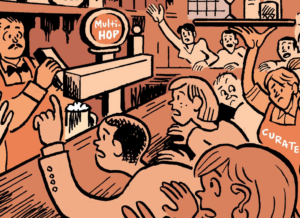
Magnite’s SpringServe deal illustrates why SSPs need a video ad server; Google grapples with AI search’s impact on publisher traffic; and Anthropic’s AI assistant is a law enforcement snitch.

Perplexity is thirsty for revenue streams; Marketecture’s media biz grows; and Duolingo goes dark on social after its AI pivot.

The era of fragmented, adversarial ad tech is winding down. A new paradigm is emerging defined by AI-first, end-to-end platforms and collaboration among buyers and sellers.

The open web is dead; long live the open web. It’s healthy; it’s full of opportunity; it’s doomed; it’s a mess. Also, what even is the open web, and do consumers care about the definition?

The CFPB backtracks on plans to bar data brokers from selling financial data; Jamie Lee Curtis takes on Mark Zuckerberg over fake AI ads; and Gas Station TV drives traffic to Applebee’s.

Marketing On Autopilot Companies that build AI-powered marketing software have been framing the technology as a friendly helper. Nothing to fear here, just an eager “copilot” ready to serve. The AI “copilot” that first comes to mind for most people is Microsoft’s generative AI chatbot of the same name. GitHub, meanwhile, which is owned by […]

CMOs’ ad budgets are flat this year compared to last year, according to Gartner. As a result, CMOs are looking for efficiency wherever they can find it, and AI is a top strategy.

AI is being embedded in tools, tagged in decks and tossed into internal sprints. But for agencies, publishers, brands and platforms, there’s still no shared definition of success.

Agencies around the globe weigh in on principal-based buying; live sports are king, but new sports like F1 are having trouble gaining traction; and Adobe gets roasted by Bluesky’s artist community.

Here are three areas that marketing technology professionals must handle successfully to get the most out of their AI applications.

Proof keeps piling up that gen AI makes marketing creatives lazy; Google stops serving ads to parked domains, prompting questions as to why those domains were ever monetized; and a resurgent David’s Bridal thinks it can reach profitability this year.