
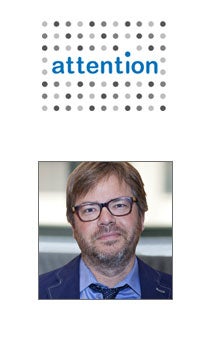
 Curtis Hougland is founder of Attention, a full-service social media marketing agency and part of MDC Partners.
Hougland discusses his agency, social media marketing and more.
AdExchanger.com: In social media, what is the unique approach to addressing audiences that isn’t present in other digital or traditional channels?
CH: We can actually engage in conversations, which is the Holy Grail for marketers. This conversation occurs in the context of explicit messages, and implicit behaviors within the channel. In this way we can humanize our customers and prospects by understanding their purchase intent, mood, and past behavior through not only art, but also science and data. Social marketers really could not have said this a year ago.
Paid, owned and earned are today’s media triumverate. For marketers, how would you rank them in importance? And does it change in the future?
Is quadumvirate a term? As social media matures, and audiences grow within branded environments, shared media gains importance. The most efficient way to build audience in social media is to co-opt the audience of a partner or like-minded brand—share. So, smart brands are using social channels to barter exposure, and cross-promote.
As for dominance, earned, owned, paid and shared media must indeed work together. Ultimately, earned media reigns supreme, because of the power of word-of-mouth to drive purchase decision and brand affiliation. Every piece of content should be filtered through its earned word-of-mouth potential, and marketers must realize that most word-of-mouth is expressed as a link. As technology supplants traditional advertising, this trend only increases.

Why does the holding company model work for Attention which is part of MDC? Are there challenges?
MDC is the only network to allow entrepreneurs to be, well, entrepreneurs. Agencies within the network only work together, when they share a common, or complementary, need or interest. Each agency must earn the right to collaborate with another, which is the only sustainable partnership model. Ultimately, you get out of the network what you put in, which is sort of how life works anyway.
How does Attention manage its relationship with other channels of ad spend and their agencies?
Social marketing impacts an organization horizontally, touches the entire marketing loop from awareness through each state of advocacy. Out of necessity, Attention created workflow to integrate social marketing across the organization. In addition to capturing conversations, and publishing content, we now have the ability to correlate performance in social marketing against SEM (AdWords), site traffic (Omniture) and purchase intent (var.).
What can you say about the metrics for measuring success in a social campaign that Attention might lead?
Each channel, and each objective, in social media yields a different benefit, and is measured through different key performance indicators. However, the goal is often sales, and we are now conducting fruitful campaigns to drive consideration and acquisition—middle of the funnel. For example, awareness often correlates to links; consideration to purchase intent; acquisition to sales and referral traffic; loyalty to repeat traffic; and advocacy to engagements. There are lots of others, but this is a good start to benchmarking and measuring performance.
Is an automated or programmatic approach to P.R. possible?
Fundamentally, I do not understand PR. If the goal of PR is to earn media by engaging influencers, then, yes, we can create social maps to structure engagement, and optimize this engagement based on incoming data. In this way we optimize how the conversation develops within audience segments to better understand what is working and what is not.
Finally, Facebook’s latest F8 update – any high level thoughts on what this says about Facebook or social media, in general?
Facebook has quickly become so large that it has its own social media gravity. The list of media partners implementing the new frictionless Open Graph from Spotify to The Washington Post really shows how central social has become to our media discovery and consumption.
Follow AttentionUSA (@attentionusa) and AdExchanger.com (@adexchanger) on Twitter.







