
News Corp Earnings Illustrate The News Industry’s Ad Woes
The company’s total revenue was down 1% YOY due to a decline in ad revenue across its News Media and Dow Jones publishing groups.

The company’s total revenue was down 1% YOY due to a decline in ad revenue across its News Media and Dow Jones publishing groups.

Dotdash Meredith previewed plans for how its OpenAI partnership could provide incremental traffic and scale its contextual targeting capabilities across a wider network of sites and media types.

In today’s newsletter: The “user agent” concept is dead; principal-based buying is just arbitrage by another name; and a deep dive into BuzzFeed’s doomed acquisition of Complex.

Advertising accounted for $222.7 million, up 39% YOY. CEO Steve Huffman attributed this growth to a boost in search traffic from Google.

Multiple factors such as buy-side practices, the CTV industry structure and shortcomings in ad tech contribute to CTV’s ad frequency problem. Yet there are several ways to overcome these limitations.

In today’s newsletter: Ad blocking is getting integrated into web browsers; why Reddit needs to diversify its advertiser base; and how big media’s affiliate marketing tactics crowd specialist publishers out of search.

Business Insider released a new targeting tool called SAGA reACT that analyzes the emotional reactions its content produces to create actionable, emotion-driven audience segments.

Gannett experienced its fourth consecutive quarter of growth in Q1 2024. It pointed to recent partnerships with non-news publishers as instrumental to growing its audience and ad revenue.

Leaf, a UK-based challenger brand in the laundry space, doubled its sales by using AdSapiens, an automated creative optimization platform from digital advertising firm Adludio.

Appealing to advertisers’ better angels is never going to bring ads back to the news. But appealing to their bottom lines might.

In today’s newsletter: Roku and The Trade Desk expand their partnership; Instagram changes its content recommendation system; and the European Commission investigates Meta for potential Digital Services Act violations.

Screenverse plans to add about 20 employees over the next 12 months with the help of its new cash reserve. The company also earmarked a portion of its funding for enhancing its publisher suite.

In today’s newsletter: The CMA still has a bone to pick with the Chrome Privacy Sandbox; the FCC fines mobile carriers for selling customer location data to data brokers; and the Financial Times is the latest publisher to strike a licensing deal with an AI company.

If anyone asks what the main theme of Roku’s Q1 earnings call was on Thursday, say: “programmatic.”

GSTV is trying to win a larger share of spend earmarked for TV. In GSTV’s case, it wants to reach a broad and captive audience – while they’re at the fuel pump.

In today’s newsletter: Google’s cookie deprecation delay hurts Chrome Privacy Sandbox supporters; mall chains go for broke with their DTC efforts; Warner Bros. Discovery launches a first-party data product.
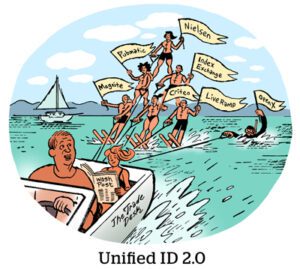
Bonbon gives users rewards – such as discounts or chances to win merchandise – for setting up email registrations with publishers. Now The Trade Desk’s OpenPass will include that same rewards functionality.

In today’s newsletter: President Joe Biden signs the TikTok ban into law; upscale grocery and convenience store chain Foxtrot closes down; and IPG has a rough Q1.

To build a first-party data strategy, the NY Post contracted Permutive and Prohaska Consulting for advice on monetizing its audience data and growing its addressable audience. The collaboration prompted Permutive and Prohaska to expand their combined services to all publishers.

In today’s newsletter: P&G boosts paid media budgets by 14%; why lower subscription prices aren’t enough to sustain the current rate of ad-supported streaming signups; and news publishers follow the NYT’s lead by using games to retain visitors.

In today’s newsletter: The European Data Protection Board outlaws Meta’s “Pay or OK” model; Walmart sharpens its conquesting tools; and Roku seeks more ad supply.

Change is coming quickly in the digital advertising industry. With so much shifting, here’s what’s top of mind for Prebid members, based on feedback from a cross-section of the top companies in the industry.

In today’s newsletter: Google AdSense publishers are in crisis; Apple is fighting antitrust suits in the UK and the US; and Sherwood Media has a post-SEO strategy.

Enjoy this weekly comic strip from AdExchanger.com that highlights the digital advertising ecosystem …

Industry experts weigh in on Forbes’s MFA subdomain and why ad verification tools still regularly fail to flag some instances of alleged SIVT.

In today’s newsletter: Shoppable TV needs a better reason to exist; Disney+ will roll out password-sharing bans worldwide this summer; and “Bluey” is a huge hit, but Disney doesn’t make much from it.

AdExchanger caught up with Zefr’s new chief AI officer, Jon Morra, about his role and how digital media will adapt (or acquiesce) to AI tech.
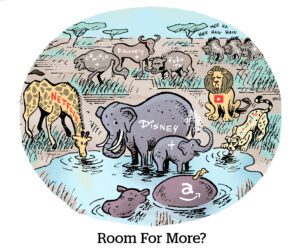
Big streamers aren’t joining the JIC, which could spell trouble for the broadcaster-backed organization; Spotify raises prices again; Chase gets into retail media.

The past decade has been tumultuous for supply-side platforms. But SSPs will be fine, according to SSPs. They’re simply evolving.

SuperAwesome CEO Kate O’Loughlin discusses how contextual targeting makes it less risky for brands to market to kids and teens, and whether advertiser priorities for reaching young consumers are shifting after years of metaverse hype.

Meta is simplifying its CAPI setup and teaching its pixel new tricks, including adding an AI-powered feature that automatically pulls in data from an advertiser’s website.

TelevisaUnivision is the latest TV publisher to join the self-serve trend that’s rising in popularity across connected TV advertising. Its streaming inventory is now available to buy through fullthrottle.ai’s self-serve platform. The collaboration includes an ad bidder designed to improve both targeting and measurement.

Law firm Keller Postman is leading mass arbitration suits against Google, seeking advertiser damages for alleged monopoly overpricing. The total available pot is a quarter-trillion dollars.


Opal launched Gem, a new AI solution, to help large brands unify the layers of media and tech within their organizations.

Mula’s AI native content feed helps On3 keep its engagement and RPS consistent amid traffic drop-offs to publisher sites and the growing scarcity of online attention.

Hearst is stitching together its far‑flung news properties into a single programmatic marketplace to simplify buying local news and shore up its business as the ad market shifts.