
Home Podcast Podcast: How We Got To Now

Podcast: How We Got To Now

SHARE:

Subscribe to AdExchanger Talks on iTunes, Google Play, Spotify, Stitcher, SoundCloud or wherever you listen to podcasts.

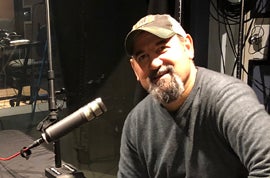
This week on AdExchanger Talks, digital ad pioneer Richy Glassberg describes the invention of creative ad formats and T&Cs that became the foundation for today’s vibrant programmatic ecosystem. And he describes his new privacy compliance startup, SafeGuard Privacy.

“We did not have a Randall Rothenberg,” Glassberg recalls of the first wave of ad standards. “It was all volunteer. I literally ran the finances of the IAB on Quicken on my computer.”

The early push for standards came around 1997, when publishers started complaining that half of all spending on the internet was going to resize ads. Glassberg helped organize a group of about 60 stakeholders who hashed out some common creative standards. The group determined that about 500 ad sizes were being used across 200 publishers, and most were within about 10% of each other.

But there were outliers, like The New York Times. “The Times had just redone their sites, and they had other sizes,” Glassberg says. “It was like herding cats but we got everybody to agree, and we saw in ’98 a doubling of revenue because you didn’t have to resize your ads.”

His current venture provides marketers, publishers, ad tech and other companies that have consumer data with tools to assure compliance with GDPR, CCPA and other privacy laws.

“I’m solving the problem for the general counsel, the CEO, the CFO … to help them be compliant. We give them the entire road map,” Glassberg says. “We’re going to have a patchwork of legislation in the US, so we built the platform to allow you to deal with the next 14 states. Unfortunately, while we should have federal legislation to make it easy for marketers, it’s probably not going to happen for a couple years.”

Must Read

WPP’s Angela Steele On AI, CTV And The ‘Trusted Growth Partner’ Pitch

AI is taking over the media and tech industries in the name of simplification, and marketers are pining for provable campaign outcomes, including from TV. These shifts are also causing significant change in Agency Holdco Land, according to Angela Steele, the first chief client officer for WPP Media US.

Shopify Noses Further Into Ad Tech With Campaign Autopilot Expansion

No major retail media player has taken as circumspect an approach to ad revenue as Shopify. But the company has recently taken its next important step with a product called Campaign Autopilot.

Benji Shomair, VP of monetization, OpenAI & Terry Kawaja, CEO, LUMA Partners (photo credit: Jenna Bascom Photography / LUMA Partners)

In OpenAI’s Ad Business, Advertisers Come Third

OpenAI’s head of monetization, Benji Shomair makes the case for ads as a way to bring ChatGPT to more people, with user trust taking priority over advertiser demands.

Privacy! Commerce! Connected TV! Read all about it. Subscribe to AdExchanger Newsletters

The Trade Desk’s Revenue Slipped In Q3. If It Wants To Grow, It Must Evolve

In Q3, The Trade Desk beat the admittedly pessimistic revenue forecast it set for itself earlier this year. But growth has stalled.

Human artist painting on canvas, while beside him an AI robot stands copying the artwork onto its own canvas. Depict the controversy surrounding Generative AI and the creativity of human artists

Viant Buys Waymark For $20 Million, Because CTV Needs More Ads (More!)

Viant is doubling down on CTV with its $20 million Waymark acquisition, betting that AI-generated ads can bring more advertisers to streaming TV.

Smart AI Chatbot Virtual Assistant Vector Icon design

TIME’s AI Agents Do The Coordinating, And Its Sellers Still Do The Selling

TIME is using AI agents to draft proposals and troubleshoot campaigns – but not to replace the human relationships that drive ad sales.

