

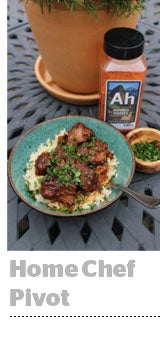
Spiceology historically dedicated all of its attention to selling spices to professional chefs online.
Then the coronavirus pandemic hit. With the future of the restaurant business uncertain, the company decided on March 16 to completely pivot to its consumer business for the foreseeable future.
Within six weeks, Spiceology went from selling 40% of its products to chefs, 40% to consumers and 20% to specialty grocers to selling 80% of its products directly to consumers.
“It’s not that we didn’t have a consumer business before – but we never focused on it,” said Spiceology CEO Chip Overstreet.
To attract consumers, Spiceology has focused on two key areas: its virtual storefront or site experience, along with marketing and messaging tailored to consumers.

A home cook-focused shopping experience
The old Spiceology website emphasized that the company is chef-owned and -operated, and it featured pictures of commercial kitchens filled with large jars of Spiceology products.
The new website focuses on custom blends, which are more popular with consumers who want to jazz up their chicken, for example. Spiceology is also promoting gift boxes that allow home cooks to sample groups of products in small sizes. And its fulfillment has switched from 16-ounce and 80-ounce spice containers to the petite 2-ounce and 4-ounce spice containers preferred by home cooks.
Spiceology also never included reviews or ratings on its site before. Chefs know what they want and preferred the site’s utilitarian look. Home cooks, in contrast, are “more about discovery,” Overstreet said. “They want to poke around and experiment with flavor.”
To inspire home cooks and make them confident in using their purchases, Spiceology is adding six to 12 recipes per week to its site, for a total of 157 so far. And chefs and employees are creating three to five videos a week, with more than 40 videos now on Spiceology’s YouTube page, a massive content push entirely inspired by Spiceology’s new focus on consumers.
Home cook-focused marketing
In the past, Spiceology connected with chefs on LinkedIn and Facebook, as well as at trade shows and events where chefs could smell the spices and experience the difference in product quality.
With consumers, Instagram is the best, and Facebook the second-best place to connect with home cooks.
“We have seen our ad spend shift from LinkedIn to Instagram,” Overstreet said. “It’s not that chefs aren’t on Instagram – chefs love Instagram – but LinkedIn is a better place to engage them.”
As Spiceology focuses on consumer-friendly social media such as Instagram, it’s planning a huge influencer-led marketing push early this summer for its line of BBQ spice rubs designed by tastemakers such as Christie Vanover, creator of Girls Can Grill.
Last year, Spiceology developed three partnerships with social media tastemakers. In Q2, it’s expanding to 10 partnerships as part of its plan to attract home cooks.
But Spiceology isn’t forgetting about its core constituency of professionals. It’s donating the proceeds of one of its spice blends to a nonprofit helping restaurant workers, among other initiatives. “We think it’s important not just to go dark but be a visible part of the food service community,” Overstreet said.
When restaurants reopen and chefs return, Spiceology plans to pursue both home cooks and professional chefs – and not treat home cooks as an afterthought that they would solely reach through word of mouth.
“This has been a great forcing function to get us to focus deeply on consumers,” he said. “Had the pandemic not happened, we would not have taken the time to do it.”








