

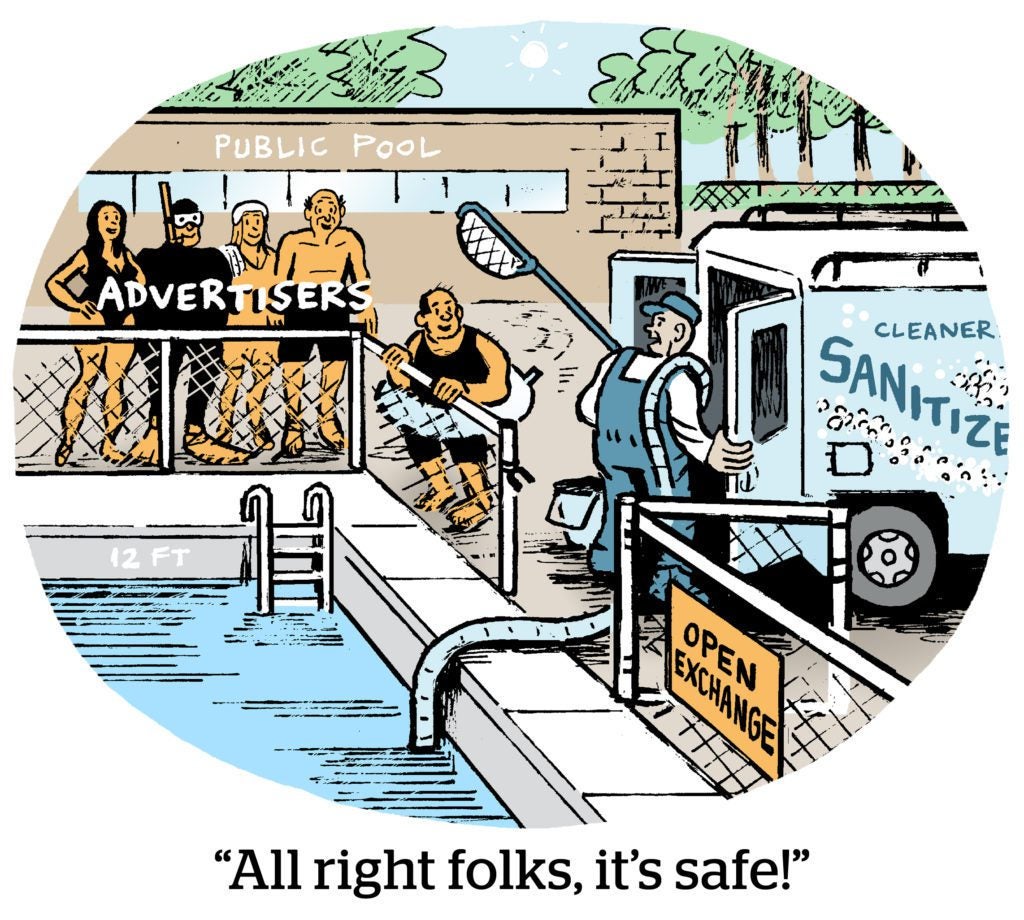
In 2020, UK-based advertising trade org ISBA and PwC found that publishers receive just 51% of ad spend … and that 15% of ad spend can’t be attributed at all.
They called for an overhaul of ad tech and agency buying practices.
On Wednesday, ISBA and PwC published their second programmatic transparency study and the good news is that ad tech and agency buyers seem to have gotten the message.
Last year, the two organizations analyzed 1.3 billion impressions over nine months and across 11 major advertisers, which supplied the campaign data. The campaigns spanned buys across The Trade Desk, Google’s DV360 DSP, the Google Ad Manager SSP, Xandr, Magnite, MediaMath, Adform and Index Exchange.
The 2020 study was based on a set of 1.3 billion impressions, too, but took one and a half years to complete because the data reported by SSPs and DSPs was inadequate or missing, said Sam Tomlinson, a partner at PwC and leader of its media and entertainment practice in the UK.
“That’s clearly a big step forward,” Tomlinson told AdExchanger, noting that ideally these sorts of studies should be “achievable in five months.”

Matching up
The DSP-to-SSP match rate for advertisers in the study improved from 12% in 2020 to 58% in 2022, and unattributable spend – the “unknown delta” between what leaves a DSP and enters a SSP – dropped from 17% to 3%.
After the initial report two years ago, advertisers were most focused on fixing unattributable spend, which isn’t surprising considering that’s an easy opportunity to cut out waste and improve ROAS. But publishers were keen to claw back ad dollars from the middlemen.
According to ISBA and PwC , the total cut of ad budgets that now find their way to publishers is 65%, up from 51% in 2020.
But perhaps the most important change from two years ago is the degree of sophistication that PwC and the ISBA observed among advertisers, Tomlinson said.
In the first study, the 12% match rate and nontransparent fees represented what an advertiser was likely to find if its agency wasn’t diligent about managing supply and ad tech. This time, according to Tomlinson, the findings represent what’s possible with a more rigorous approach and fewer vendors.
“It’s fair to say [that] after the first study, I was not top of ad tech vendor Christmas card lists,” he said. “But this time around, I’m a lot more popular with vendors and I suspect many will be trying to overclaim that this is representative.”
Next steps
But PwC itself has room to grow as an auditor before kicking off the next study.
For instance, ad tech vendors in particular often choose to warehouse and build their data sets using AWS and “S3 buckets,” which is an Amazon data transfer service. By meeting ad tech vendors on their AWS home turf, PwC can improve its own match rates and thus demonstrate further opportunities for savvy advertisers to improve campaigns, Tomlinson said.
Since all participating DSPs provided log files, the survey gatherers and brand teams could cross-reference and doublecheck when, for example, two separate impressions happen to share the same precise time stamp or whether a data field was filled out incorrectly.
Without being able to account for these situations, the 2022 data would not have shown the same dramatic gains.
“This standard is not yet routine,” Tomlinson said of ISBA campaigns. “It shows what can be achieved with a lot of hard work at the top end of programmatic.”
The lowest-hanging fruit for both advertisers and the sell side, however, is to spend more of their budgets in private marketplaces, he said.
The 2022 overall match rate of 65% jumped to more than 70% for PMP deals. The amount of unattributable spend in a PMP campaign is below 1%.







