

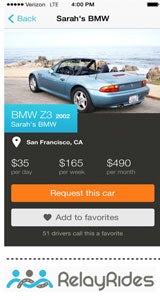
 RelayRides knows that mobile devices are an essential channel for reaching new and current customers.
The San Francisco-based car-sharing service lets private car owners rent out their vehicles. It serves more than 1,900 US cities including 270 airports, connecting drivers with car owners who post photos and information about their vehicle on RelayRides’ website.
When the company launched five years ago, smartphones were not yet widely used, but that has quickly changed. “We realized mobile would be a great tool for us and so we released our app a year ago, but we didn’t spend much time promoting it,” said RelayRides marketing and analytics director Andrew Mok.
Part of the challenge, Mok explained, was not knowing how to best reach consumers on their mobile devices. “The biggest problem we see in mobile advertising is fragmentation. As an advertiser I don’t want to deal with 30 different SDKs and ad networks,” he said.
RelayRides turned to mobile marketing firm TapSense two months ago to help it navigate the mobile app space and drive more users to its app. TapSense suggested using Facebook’s Mobile App Install ads.

TapSense helped RelayRides launch several messages that appeared on Facebook users’ news feeds. The ads included luxury rentals, discounted rentals and community-focused messages and were targeted at Facebook users who had liked RelayRides or another car rental service, shared a post or otherwise indicated they were interested in travel and were over 21 years old.
Several weeks after running the app install campaign, which only appeared on Facebook, RelayRides was pleased to see its app rise in the App Store’s rankings. (The app is available only on iOS and the company plans to launch an Android version in the near future.)
Prior to working with TapSense, RelayRides was ranked outside the 300 top apps in the US travel section, according to Mok. “The goal was to get into the top 200 part of the list since your app will be featured in the browsing section of the App Store,” Mok said. “We reached the 49th spot for a few days and we’ve been hovering at around 70 so we’re pleased with our traction in the rankings.”
Mok declined to reveal the number of downloads the app has received, but noted that the increased exposure has led to a large boost in installs. Mobile, he added, represents the fastest growing portion of the company’s marketing spend and its next goal is to drive more engagement on its app, such as through retargeted ads.
RelayRides delivers retargeted messages to PC users and it will eventually do the same on mobile, Mok said.
And even through the majority of RelayRides’ customers still access the company’s site through a desktop computer, they are quickly shifting toward mobile. “Mobile and Facebook are huge growth channels for us and I expect that by the end of this year most of our users will be coming to us through mobile,” Mok said.
While retargeting mobile users is important, it has several unique challenges, added TapSense marketing VP Gregory Kennedy. “You need people to first download your app and you’ll also need a very large user base to see a significant impact,” he said.
TapSense is enhancing its own mobile retargeting tools, which it will launch in the near future, Kennedy added.
“Only a few companies are actually good at mobile retargeting, but that’s part of our goal,” Kennedy said. “We want advertisers to focus on advertising and not worry about becoming mobile marketing technologists.”







