 Cosmetic brand EMMA New York is finding customers to seed its sampling program in the most unlikely of places – a gamified trivia app.
Founded in 2012, EMMA, which sells luxury makeup products in the US and China, recently started running campaigns on gameit, which came out of beta in early May.
Rather than doling out virtual badges, coins and points with no real-world value in exchange for engaging with content they have no interest in, gameit’s value proposition is this: Users opt in to watch branded content and take quizzes for the chance to get discounts and win free stuff.
It was an idea that appealed to Sam Freihofner, who handles partnerships at EMMA.
“It’s so easy to look past an ad,” Freihofner said. “But we’ve got people spending hours altogether reading about our brand and playing games related to our brand.”
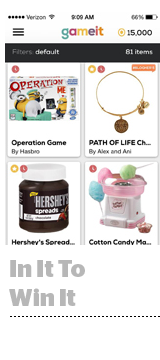
Gameit works like this: Brands provide an existing online video and gameit develops a series of questions about it with other bits of brand trivia thrown in. Players take quizzes and compete with each other to rack up points. Although only one person wins each free product, all players are presented with graduated discounts based on how many points they earned during gameplay.
Over the course of two recent campaigns, one at the end of June and a second that closed last Thursday, 1,500 players competed to win a kit of eye-related EMMA products that retails for about $70.

There is only one free prize per game, which meant that in the case of EMMA, 1,499 people would be going home with discounts, but no gratis eye kit. That’s when inspiration struck for Freihofner and his team. Those 1,499 people are all potential customers who have raised their hand to say that they’re actively interested in EMMA products.
During the two gameit campaigns, more than 16,000 questions were answered and players spent just shy of 44 hours competing for the prize on offer.
To that end, Gameit is helping the brand contact all people who played but didn’t win the EMMA eye kits with an offer to mail them free samples.
“We know people will like the product once they try it, but we have to get it into their hands first,” Freihofner said. “This is a way to do that.”
One could argue that players are only in it for the prize, but that doesn’t deter Freihofner.
“Obviously some people are only playing to get free stuff, but that’s not a problem for us – we just want as many people to know about us as possible and, regardless, we’re only giving away one prize for free per campaign,” Freihofner said.
Both during and immediately after its campaigns, EMMA noticed a roughly 6% increase in new visitors to its website, with the average person staying on site longer and visiting more pages than the brand’s normal web activity baseline. EMMA is planning a third gameit campaign soon.
Gameit CEO Bryce Johnson sees the company, which raised a $1.6 million seed round in early May, as a sort of gaming/commerce hybrid that could be one potential antidote to ad blindness.
“People ignore advertising, but they like to play games,” he said.
Since the app came out of beta in May, it’s garnered 80,000 daily users, each of which engages for about seven minutes at a time. Around 700,000 games have been played and brands have seen an average discount redemption and purchase rate of 7%.
Other brands are also seeing positive early numbers. Travel and entertainment deal site TravelZoo offered players a $1,000 voucher during a campaign in early June. More than 500 players answered nearly 35,000 trivia questions about the brand, each engaging with the content for about 10 minutes, for a total of 86 hours spent with the brand over about a week.
“When a 15-second pre-roll pops up on YouTube, most people just go and do something else while they wait for it to be over,” Johnson said. “We’re trying to create a scenario where people choose the kind of advertising they want to engage with, whether that’s for cosmetics or a wood chip grill or flip flops from Quiksilver.”