

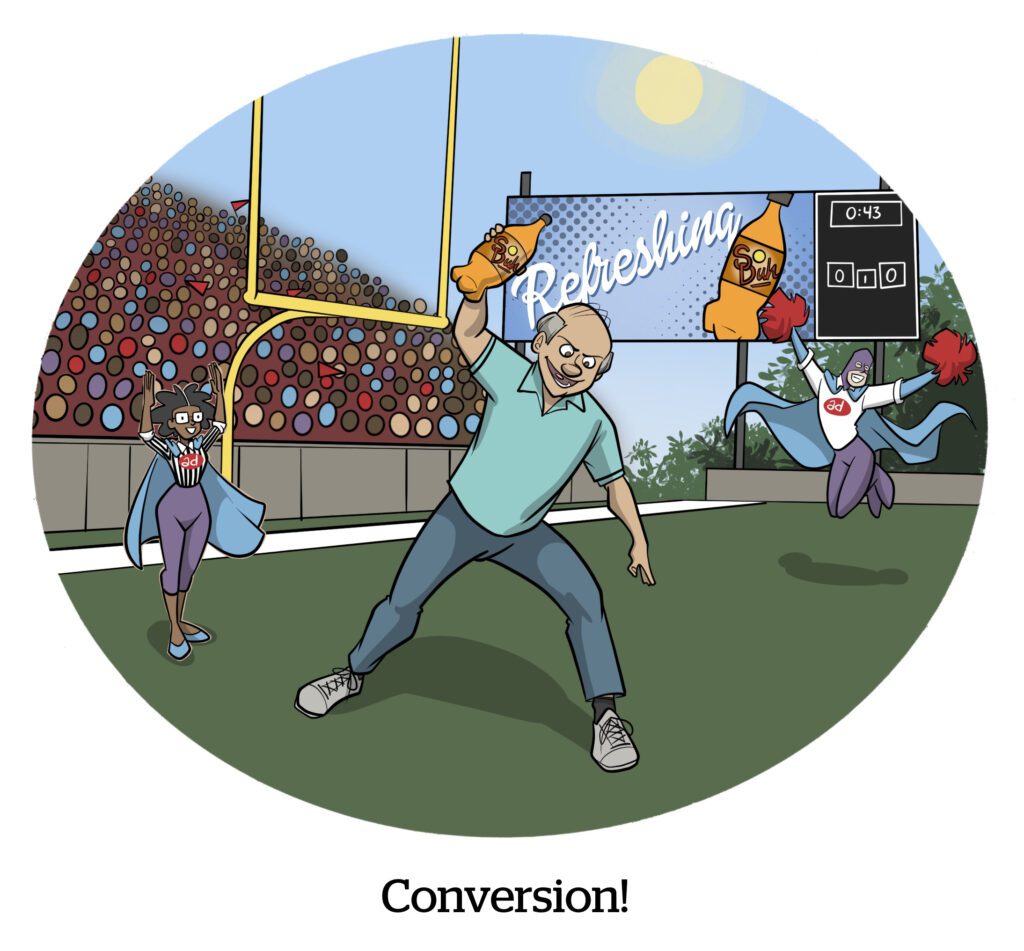
It’s finally starting to feel like autumn in New York, which means it’s just about time for me to get nostalgic about high school football.
After all, it was always those later-season, colder-month games that come to mind first, likely because they felt the longest. (Especially if you lived in a northeast climate and had to wear a marching band uniform instead of a cozy fall jacket, like I did.)
But high school sports are very different now than when I was a teenager. As is the case with basically all forms of modern entertainment, they’ve faced some disruption by the rise of streaming video – as well as the ads that often follow.
Take Hudl, which started out in 2006 as a platform to help players and coaches (of all levels, not just high school) review game footage for training purposes.

Over time, the Nebraska-based company has expanded into public-facing content, like livestreamed games and highlight reels and even hardware in the form of a line of smart cameras that automatically track movement. All the school has to do is put the camera somewhere facing the field and turn it on.
These days, Hudl is being used by 20,000 high schools across the country, VP of Media Adam Gouttierre told me. Which, by the way, is almost all of them. If you search for your own alma mater’s Hudl page, you will probably find it.
How ’bout them ad spots?
Like so many other streaming services, Hudl encountered a huge increase in demand during the height of the COVID-19 pandemic. With more people avoiding crowds due to health concerns, investing in better ways to deliver games directly to fans seems like a no-brainer.
To keep up with that demand, in 2022, Hudl acquired the livestreaming company BlueFrame and used that technology to launch its own platform called Hudl TV. (Before that, livestreamed games would often get posted directly to YouTube instead.)
The platform now features a number of monetization options for high schools to tap into, such as digital ticket sales, pay-per-view games and local broadcast sponsorships. There’s even a mechanism that allows schools to include their own advertisements into the broadcast, almost like a local access television channel might.
On top of that, there’s also a more traditional ad server that advertisers can buy into, either through programmatic means or through direct brand partnerships. All of the revenue from these ads goes to Hudl, which, Gouttierre said, is what helps keep their fan experience pages free for the schools that use it.
For the most part, these ad rolls are automatically inserted into the feed when the smart cameras determine that no active gameplay is happening, like in between plays or during halftime breaks.
So far, interested advertisers include Gatorade, Nike and Under Armour – the “locker room brands,” as Gouttierre put it. T-Mobile, which hosts an annual “Friday Night 5G Lights” contest that awards grants to schools, and the Food and Drug Administration, with anti-vaping PSAs, are in the advertising mix, too. Because, don’t forget, this is high school we’re talking about. The audience isn’t made up of typical sports fans; it’s friends, family, neighbors and even players themselves.
“There’s 5 million of them, relative to 300 NFL athletes,” Gouttierre said. “And, more importantly, the core fans are the parents. They have an even more vested interest in the outcome of that game.”
Money makes the ball go round
Of course, the thought of seeing ads from household name brands during a high school game does raise some concerns about the ongoing commodification of youth athletic programs. (Granted, I grew up in New Jersey and not Texas, so the idea that anyone outside our school district would want to make money off a 15-year-old that can kick field goals is inherently foreign to me.)
Because Hudl is literally hosting and selling ads against content that features minors in it, they’re extra careful about complying with child safety and privacy laws like COPA, Gouttierre told me. Individual athletes and their parents are given a log-in for the platform upon joining the team and can choose to opt out or not to share their own content.
Beyond that, Gouttierre said he hopes giving athletic departments more accessible options for monetization will relieve some of the burden that comes with having to monetize in the first place.
“The way I think about it is, how can we make the athletic director’s life easier?” Gouttierre said.
Like this newsletter? Got questions? Drop me a line at victoria@adexchanger.com.







