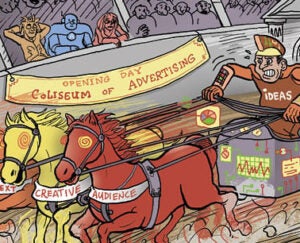

In an omnichannel environment, managing and selling ads is becoming too complex for humans to handle alone. That’s why many are turning to AI tools to maximize ad inventory monetization.
AI can analyze data and make decisions at a speed and scale beyond human capability. This rapid innovation is both exciting and challenging. Recently, the IAB found that more than two-thirds of publishers struggle with the complexity of AI solution setup and maintenance. This is not surprising given the many different audiences, channels, formats and business models that exist on the publisher side.
Think of a streamer versus a traditional news publisher. A video streamer may rely on AI to optimize pre-roll ad placements in real time based on viewer behavior and engagement scores. Meanwhile, a news publisher may prioritize tools that use AI to forecast inventory availability during high-traffic news events or dynamically insert contextual display ads based on article sentiment.
The silver lining is that, despite the early hurdles, 83% of publishers expect to hit full-scale AI adoption to support the media campaign life cycle by 2027.


What role can platforms play in helping publishers gain more value from AI solutions? The transformation begins with delivering relevant AI tools to our publishing partners.
Platforms must lead the way with solutions that cut through the noise and empower publishers to efficiently achieve their monetization goals, delivering value both to the audience and the business.
In parallel, publishers need to adopt a mindset where AI implementation is thought about holistically, rather than in isolation.
Why platforms need to uplevel AI for publishers
Productivity is one of the main roadblocks to publisher monetization. Tasks are not being completed efficiently because workflows and troubleshooting consume too much time and effort. Ad operations teams often spend endless hours analyzing dashboards, blocking ads and reviewing change logs.
A recent IDC study sponsored by Microsoft found that, globally, the two top business outcomes that organizations try to achieve using AI are enhancing employee productivity and increasing top-line growth.
By harnessing the power of AI, publishers and platforms can automate time-consuming tasks, surface performance issues before they escalate and gain a clearer understanding of what drives value. This enables faster, smarter decisions that fuel monetization, unlock untapped inventory and improve operational efficiency.
But today’s solutions don’t always deliver on these promises because they aren’t built with publishers in mind. To truly meet their needs and enable them to experience the full value of AI, providers should build purposeful AI tools with – not just for – publishers. The tools must apply AI in thoughtful and strategic ways to lessen complexity. This means establishing an ongoing dialogue between publishers and advertising platforms founded on collaboration and transparency.
This way, AI can shift beyond experimentation and initial implementation toward ensuring powerful revenue-generating applications that align with a publisher’s outcomes.
What’s next for AI-powered advertising?
Providers that make an effort to listen to publishers are likely to uncover some common threads. For one, publishers want platforms that embed AI directly into their workflows – not as an overlay but as a core capability that automates repetitive tasks, simplifies decision-making and removes operational friction. If you remove the friction, you’ll enable ad operation teams to refocus on what really matters: performance and revenue growth.
Ad operations teams are already seeing measurable gains. Integrated AI systems are flagging inventory issues before they escalate, recommending floor-price adjustments in real time and auto-generating performance reports that previously required hours of manual work.
Rather than digging into numerous reports and multiple dashboards, ops teams are increasingly relying on AI-generated alerts and summaries to prioritize their time and optimize faster.
The next frontier? Agentic AI.
These systems go beyond insights and automation. Think of autonomous AI agents, each managing a specific aspect of monetization – pricing optimization, creative selection and audience targeting, for example – all coordinated by an intelligent orchestrator. Rather than relying on humans to stitch together different workflows, AI agents can now work toward shared goals independently, reducing lag and boosting efficiency.
AI is rapidly becoming integral to how publishers monetize ad inventory in an omnichannel world. It brings the power of automation, data analysis and intelligent decision-making to an ecosystem that has grown too complex for manual management alone.
AI is no longer optional; it’s foundational. The publishers that approach this transformation thoughtfully – with clear objectives, transparency standards and a collaborative mindset – will be best positioned to thrive.
Sound achievable? We think so. Because when we develop effective AI solutions in tandem, everyone wins: publishers, platforms and the digital advertising ecosystem as a whole.
Let’s keep talking to each other.