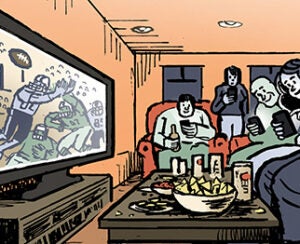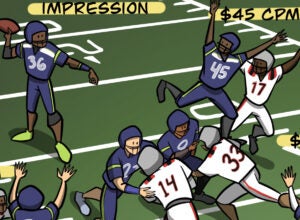

Political advertising has always evolved alongside media consumption. But the shift from linear television to streaming has introduced challenges that campaign managers are still working to navigate. While connected TV (CTV) promises precision and flexibility, the reality facing political advertisers today is far more complex and less standardized.
As dollars move from traditional TV to streaming, political campaigns are encountering a market where inventory is siloed, identity verification standards vary widely and scrutiny around fraud and brand safety is intensifying. For political advertisers operating under intense regulatory pressure and immovable election deadlines, inconsistency isn’t just inefficient – it’s a liability.
In this environment, advertisers no longer have the luxury of choosing between reach, precision, and trust. They need all three at scale within compressed election timelines.

From predictability to fragmentation
For decades, linear television provided political advertisers with a stable, predictable foundation. Measurement had limits, but inventory was largely trusted, buying paths were clear and accountability was built into the system.
The rise of streaming has upended that certainty, creating a fragmented ecosystem of platforms, proprietary workflows and inconsistent identity signals. Campaign managers must navigate this complexity often without a clear picture of how impressions are validated, audiences are defined or whether standards consistently apply across sellers.
A common misconception in political CTV is that more data automatically leads to better targeting. In reality, identity quality varies dramatically across the ecosystem. Independent research shows probabilistic approaches can introduce meaningful inaccuracies, creating risk for advertisers in highly regulated, time-sensitive election cycles.
In political advertising, those inaccuracies carry outsized consequences. When identity resolution is inconsistent, campaigns risk misdelivering messages, overserving or underserving key voter segments and wasting dollars that cannot be recovered once an election window closes. Compliance and disclosure obligations further raise the stakes, as campaigns must be able to stand behind not just performance outcomes, but the integrity of how audiences were reached.
When identity resolution lacks consistency, precision is difficult to prove, performance is harder to trust and optimization becomes reactive rather than strategic. Even when topline metrics appear to “work,” underlying uncertainty erodes confidence. Campaign managers may hesitate to scale what looks effective if they cannot clearly validate who was reached or how impressions were verified. Over time, this gap between reported performance and actual certainty makes it harder to defend spending decisions internally and externally, particularly under scrutiny.
Political advertisers also face unprecedented scrutiny around where ads appear and how dollars are spent. Brand safety, fraud prevention and compliance are central to campaign strategy from the outset. Many campaigns are reassessing whether fragmented buying approaches deliver the accountability, transparency and confidence they require to operate effectively.
Aligning scale with certainty and building confidence
These dynamics are driving a broader industry shift toward consolidation, transparency and authenticated supply. At Ampersand, this shift guided the development of TrueStream Political to address what campaigns and agencies consistently ask for: fewer handoffs, clearer verification and reliable access to premium streaming inventory for political use cases.
Trust should be foundational, not optional. By consolidating authenticated, privacy-focused, streaming inventory from Comcast, Cox and Charter and emphasizing deterministic, household-level verification, TrueStream Political reduces operational friction while giving advertisers greater confidence in who they reach and where their ads run. This reflects a broader industry movement toward simplifying political streaming rather than adding complexity.
What’s next for streaming
The future of political advertising in streaming depends on the industry’s ability to align scale with certainty. Reach without trust introduces risk. Precision without verification erodes confidence. Scale without transparency becomes unsustainable as scrutiny grows.
Campaigns that adopt solutions emphasizing verification, clarity and accountability will not only improve efficiency but also gain actionable insights to make smarter media decisions.
Streaming can deliver meaningful impact for political advertisers, but only if the ecosystem evolves. Solutions grounded in verification, clarity and accountability will define the next phase of political media – one where effectiveness is measured not just by impressions delivered, but rather by confidence earned.