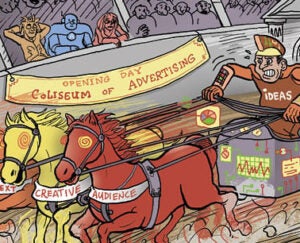
As artificial intelligence transforms advertising analytics, many organizations are rushing to adopt AI tools, hoping for a “magic button” that instantly democratizes data access.
It’s an appealing vision: marketing teams asking questions in plain English and getting instant insights without SQL expertise or analyst bottlenecks. But generic AI tools often stumble when confronting the specialized world of advertising analytics. They lack a crucial understanding of attribution models, customer journeys and cross-channel measurement.
The promise is real, but only when purpose-built solutions combine deep advertising domain expertise with intelligent automation. But here’s where the conventional narrative gets it wrong: The goal isn’t to eliminate the need for expertise; it’s to multiply its impact.


Augmenting expertise, not replacing it
Effective AI tools enhance analytical expertise by reducing time spent on tasks like SQL writing and dashboard creation. This shift enables analytics teams to focus on higher-value activities, such as extracting strategic insights, conducting sophisticated analyses and designing rigorous experiments.
Consider the typical marketing analyst today. The majority of their time – say, 70% – may go to writing queries, debugging code and formatting dashboards, leaving only 30% for actual analysis. AI-powered analytics inverts this ratio, reducing time spent on this tactical work while freeing analysts for strategic thinking.
This evolution doesn’t diminish analytics teams; it elevates them. Instead of being gatekeepers who translate business questions into SQL, analysts become strategic advisors who guide AI tools, validate insights and connect data patterns to business outcomes. But this transformation only works when the AI understands the domain it’s operating in.
Why generic AI falls short
Generic AI tools struggle with proprietary business data. The challenge isn’t just retrieving the right data; it’s comprehending what that data means within specific business contexts.
When a marketing team asks, “What’s driving sales among new-to-brand customers?” they’re not just requesting a data set; they’re asking a question that requires an understanding of what “new to brand” means and what drivers are most relevant to each advertising tactic. Simply applying general-purpose AI to these specialized scenarios often yields unreliable or incomplete insights.
Every organization has its own way of saying things, its own custom metrics and business-specific definitions. A generic AI might understand “conversion rate” in theory, but does it know how it’s calculated for your media channels? These nuances matter when making strategic media investment decisions. The solution isn’t to avoid AI; it’s to choose an AI built for your domain.
Purpose-built solutions make the difference
Success in AI analytics requires solutions purpose-built for advertising challenges. Marketing teams should test capabilities before committing by focusing on three dimensions: understanding of advertising context, transparency and control, and accuracy and reliability.
This is where Amazon Marketing Cloud (AMC) with Ads Agent skills comes in. AMC has established itself as a powerful foundation for privacy-safe advertising analytics. However, accessing its full potential traditionally required SQL expertise, creating the same analyst bottleneck that limits many organizations.
To unlock advanced analytics for brands and agencies, AMC has taken a two-pronged approach. First, we’ve launched no-code solutions for marketers without SQL skills, allowing them to develop insights and actions without requiring help from technical analysts.
Second, the Ads Agent skills for AMC provide an AI layer built specifically for advertising analytics, taking the heavy lifting out of crafting custom audiences and analyses for your analytics teams.
When analysts spend less time on rote query writing, they have more capacity for the strategic work that drives business impact: identifying growth strategies, uncovering optimization opportunities and building high-impact audiences to achieve your campaign objectives.
Building your foundation
Organizations should evaluate AI analytics solutions with advertising context in mind. Establish the foundations you will need to get the most out of your data, while starting to test purpose-built solutions that can accelerate your teams today.
Build systems that curate the business knowledge required to produce meaningful insights. If you’re bringing your data into an advertising analytics solution like AMC, you’ll need to provide the AI agent with that semantic business knowledge. Semantic context should include the definition of all columns in your database, how metrics are calculated and what the values are for your dimensional data. To start getting value immediately, test tools that have already been optimized for a specific use case. If you previously couldn’t justify dedicating resources to an advanced analytics tool, AI assistance changes the equation. Teams can now ramp up quickly and deliver value faster, making even partial resource allocation worthwhile.
Marketing teams that act now will gain significant competitive advantages. They’ll make faster decisions, uncover insights competitors miss and free their best analytical minds to focus on strategy rather than SQL.
The transformation is underway. The question isn’t whether to adopt AI-powered analytics, but how quickly.