Michael Walrath is the former CEO of Yahoo!’s Right Media.
As eBay became pervasive, a slew of companies appeared with the sole purpose of helping people buy and sell goods on the giant auction site more effectively. These service businesses earned a slice of the transaction value for their efforts. Others took a different approach. Consignment shops and antiques dealers would buy goods on eBay and resell them at a markup in their stores, effectively arbitraging information (many sellers don’t know the value of their goods) and expertise (goods can be perceived as more valuable when purchased from a specialist).
Years ago at Right Media, we used to talk about the need for liquid marketplaces for digital advertising. Soon, a common theme emerged: “You’ll know we’ve been successful creating liquidity when the service layer materializes.” What we meant by this was simple. When businesses develop with the primary purpose of helping buyers and sellers of advertising make the most of marketplace opportunities, then we can begin to talk about successfully building a truly liquid marketplace and unlocking the efficiencies it offers.
Much as 2003 – 2007 saw the rise of the ad network, 2007 – 2010 has been characterized by the rise of the demand service layer. With exchanges and networks, we achieved a critical mass of inventory available in a competitive marketplace. In turn, we saw a dramatic increase in the *complexity* of that marketplace. It is ultimately this complexity (the number of buyers and sellers and differing methodologies for valuing ad space) that creates opportunity for service businesses geared toward reducing that complexity, and unlocking new value in the marketplace.

This focus on demand should not be surprising to us. We’ve been living in a demand-constrained environment for at least 24 months now. This creates leverage in the marketplace to those who control or influence the allocation of demand dollars – explaining the imbalance in demand side offerings versus supply side. (Incidentally, this will change when the market returns to more balance between supply and demand, or even becomes supply constrained).
The DSP’s, agency trading desks, data exchanges, servers, and analytics platforms– and others are all making a play to control or influence more spend. How many of these businesses have been founded in the last 3 years? Many existing businesses have also shifted their model to focus more on demand side services as well. A lot of companies, and a lot of capital, are chasing these opportunities
But are we driving more value?
Has all of this service actually had a positive impact on advertisers and publishers? Years ago, we used to complain about the inefficiency of the number of networks involved in transactions. Arguably, as the market has become more liquid, we see fewer transactions with two or three or four networks involved.
But have the number of parties to a given transaction really shrunk, or have they just diversified? Imagine a major marketer has a dollar to spend. Before the money gets to a publisher you may have an agency, and adserver/analytics provider, a DSP, an exchange, a data exchange, a network, a yield optimizer, and others, all taking some cut of the transaction. That’s a lot of bites at the apple.
Are advertisers getting better ROI? Are publishers getting better yields? And how can advertisers and publishers possibly know with all these parties in the middle of the transaction?
The interesting irony is that all of the innovation around efficiency, better bidding, better ad decisions, and better delivery is very likely making us *less efficient* right now.
So, what are some things we should we expect to see as this plays out? Let’s look at what’s likely to happen in the DSP market as an example. Similar dynamics will play out in various slices of the demand side services market.
- Competition for budget will ultimately drive margins to low single-digit percentages for today’s DSP services. (Remember what happened to SEM firms?)
- Contributing to the above trend, the major agencies will tire of enabling DSPs to take such a large percentage of the media budget. Agencies will build or buy their own DSPs in order to increase their margins.
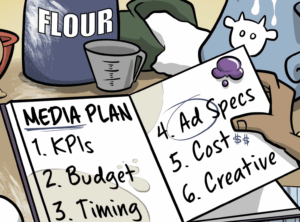
- DSPs and other service providers who want to stay independent will be forced to layer in additional services in an attempt to control more budget and retain margins. Consider ad serving/analytics, planning/buying, creative – to name a few opportunities.
You see where this is headed; DSP’s may come to look more like today’s digital agencies, while digital agencies will act more like DSPs. This will be particularly interesting given what is seems to be a symbiotic relationship between agencies and DSPs today.
What we’re really talking about here is the race to build the next-generation digital marketing services company. This company of the future will bundle many functions, driven by technology innovation and a truly integrated approach to delivering demonstrably better ROI to advertisers, without the complexity of managing multiple service providers. Who will win this race, the agile upstarts or the established giants? Probably some of each – one thing’s for sure though…it will be interesting to watch it play out.