

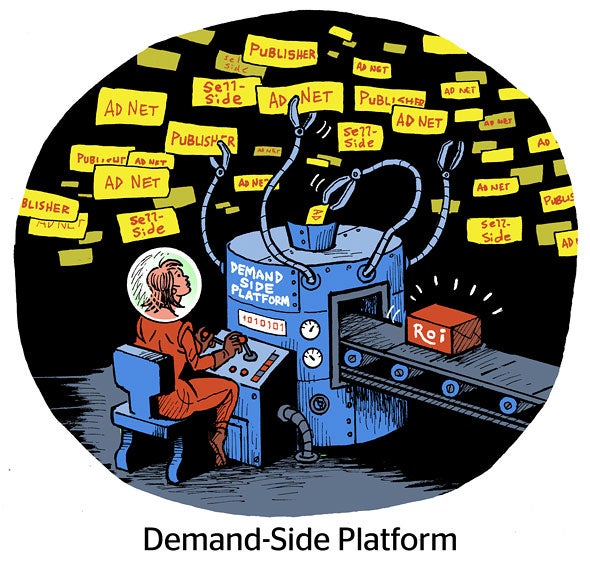
Sales are way up and ROAS is through the roof across search, social and ecommerce.
At least, that’s what the ad platforms claim.
But dig into the CRM, a brand’s primary source of actual sales data, and site traffic and engagement coming from search and social aren’t jumping.
This is a relatively normal occurrence for a small shoe manufacturer that I spoke to recently.
The company, which makes shoes and sandals for corporate events and parties, has a consumer-facing site and a separate wholesale site, where the service is different and prices are lower.
But there’s also something else different about the wholesale site: It’s walled off from the over-aggression of ad platform attribution.
Sometimes, this founder said, a company salesperson and a corporate buyer will strike a direct deal that ends up getting transacted via the DTC site.
But even when that salesperson and customer have met in person, exchanged multiple emails and talked on the phone, walled garden platforms, namely Google and Meta, often manage to claim those sales as driven by ad campaigns on their platforms.
“I don’t know how they’re doing it,” the founder said. “I’m not even mad; that’s amazing,” he added (in a nod to Will Ferrell).
Attribution vs. contribution
This isn’t a phenomenon unique to that shoe manufacturer, either. The problem of platform over-attribution has become an epidemic across categories.
For mobile performance marketers, such as app developers, the big three (Apple, Google and Meta) operate nontransparent systems. They reach billions of people and claim credit for conversions tied to ads even half-served for a few seconds in somebody’s potential sight, sometimes going back weeks.
Even app developers with declining sales or downloads might see platform attribution reports claiming ever-greater success, according to two mobile game developers bemoaning the state of their marketing.
Grocery brands fare even worse. They’re dealing with a proliferation of retailer-owned media networks that operate like walled gardens, all of which are hell-bent on nabbing credit for every sale they can.
This dynamic means marketing data can become totally untethered from reality.
Grocery and CPG brands may see Google, Meta, Amazon, Walmart, Target, Kroger and a whole basket of smaller retail networks self-attributing conversions all over the place – and without a rational connection to their own seasonal or month-to-month business performance.
Sales might always dip in April for a certain brand, for example, or bounce just before Valentine’s Day. Ad platform attribution should move in tandem, said one retail media agency buyer.
Instead, reports of ROAS move up and to the right as the ad platforms hone their targeting skills or simply claim 100% attribution on sales for which they contributed a tiny fraction, if not 0%.
This trend has a direct impact on a brand’s profit margin, since they pay more for sales that can be attributed to ad campaigns than they do for organic conversions.
 The incentive problem
One Fortune 500 beverage brand marketer recently mentioned to me she feels that the major search and social platforms – Google, Meta, Amazon and Apple – treat an advertiser’s organic sales as growth opportunities for their own respective platforms.
Walmart Connect, the retailer’s DSP, is reaching more people in new channels, she said. That means it will drive some measurable incremental new sales of her company’s drinks.
Emphasis on “some.” Because as Walmart Connect sharpens its targeting and attribution, it will grow by claiming more of the brand’s organic sales as its own ROAS.
“Walmart can’t just vastly increase the universe of beverage sales,” she said. Its ad platform might contribute some net-new sales, but Walmart’s real opportunity – the actual low-hanging fruit waiting to be plucked – is for it to claim attribution on more and more sales that happen at Walmart.
The same is true of Amazon, she said, but on steroids.
Amazon’s off-site ad platform is “plastering” made-for-advertising (MFA) inventory across the web, Krzysztof Franaszek, founder and CEO of Adalytics, said in March after publishing a report on MFA supply.
But these placements don’t drive purchases. The ads are on sites trafficked by chumboxes and served in total bad faith. But Amazon claims attribution credit for purchases that happen on its site so long as it served an impression to a customer within a given attribution window.
Remember that shoe manufacturer from earlier? He speculated that the sales made by direct salespeople could plausibly be attributed to Gmail ads. The company does use Google’s Performance Max, which buys across Google properties, including Gmail, and doesn’t disclose where exactly those ads ran. The customer may also have done a search for the company while on the phone with a salesperson, thereby associating them with an ad just before a large purchase.
But, he added, “I have no idea how Meta managed to self-attribute [that] sale as a huge ROAS day for its ad platform. Which it did.”








