

Greetings, readers! This is Allison Schiff subbing in for our senior editor and commerce expert, James Hercher, who’s out on paternity leave.
And I have a question for you: Is Instacart a grocery delivery/pickup service or an advertising company?
The answer is both.
Instacart, which plans to use CART as its ticker symbol (good one), filed for its highly anticipated IPO last week.
There’s a lot of meaty information in its S-1, but do a CTRL-F search for the word “advertising” and you’ll get 249 hits. Expand the search to include “advertise” or “advertiser,” and that number goes up to 301.
Meaning that advertising is referenced more than “delivery” (171 times), “pickup” (63 times) or “CPG” (46 times).
In the immortal words of Mobile Dev Memo’s Eric Seufert, “Everything is an ad network.”

Advertising in stock
Advertising has been a priority for Instacart since 2019 when it first introduced paid search.
Since then, Instacart has been expanding its ad offering at a rapid pace, including launching a self-serve ad platform, customer product landing pages for brands, targeted promotions and coupons, sponsored product ads, shoppable video, off-site placements, measurement tools, insights and analytics – the works.
According to its S-1, more than 5,500 brands are using Instacart Ads, a five-times increase since late 2019, and its ad revenue was $295 million in 2020.
By 2021, ad revenue nearly doubled to $572 million. In 2022, Instacart’s ad revenue was $740 million and made up 29% of its total revenue. Instacart reported positive net income last year, generating $428 million in profit compared to a $73 million loss the year before.
Keeping that momentum going is core to Instacart’s growth strategy.
Questions for CART
It won’t be easy, though.
Because although ad revenue may trending up – Instacart made $406 million in ad revenue during the first six months of this year alone, a 24% YOY increase – as Bloomberg columnist Dave Lee rightly points out, Instacart is building its future upon two channels that are “both vulnerable”: advertising and grocery sales.
Instacart’s business exploded during the pandemic for obvious reasons, but physical stores have made their comeback.
That’s not to say that millions of people aren’t still ordering their groceries online. Orders were up 18% between 2021 and 2022 to just over 262 million and they haven’t dropped.
But Instacart’s order volume was virtually flat between the first half of this year (132.9 million) and the first half of last year (132.3 million), despite a rise in revenue per order.
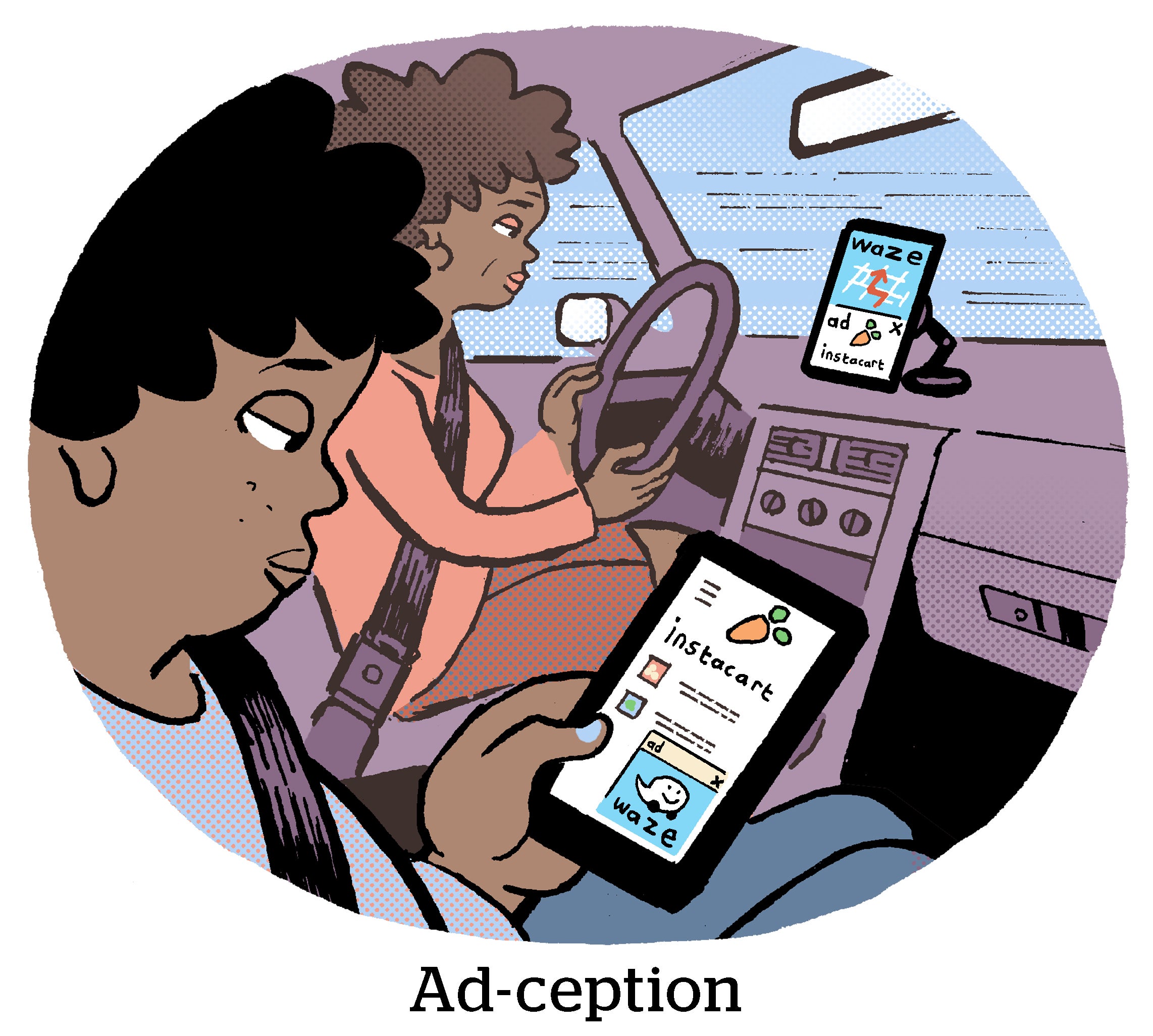 The only plausible way to explain that dynamic is by Instacart having raised its fees, which is not a long-term solution, especially considering the rise in customer acquisition costs.
Meanwhile, launching an advertising business may be low-hanging fruit, but it can also be a double-edged sword – and it has to be a two-way street. (Forgive the mixed and overcrowded metaphor.)
Meaning that advertisers pull back during times of macroeconomic uncertainty, which is not an issue specific to Instacart.
But when advertisers do spend, they expect results. And if overall sales across Instacart’s platform decline, that will likely have an impact on campaign performance. If campaigns don’t perform to expectations, advertisers won’t spend as much.
It’s the flywheel in reverse.
Regardless of these question marks – Bloomberg’s Lee referred to them as “red flags” – the market overall appears excited about this IPO. Hopes are high that Instacart going public will end the consumer tech IPO drought that’s been going on since late 2021.
And godspeed, both to Instacart and the market at large.
Here’s one more question, though: What does it mean for a grocery delivery company when more than a quarter of its revenue comes from advertising rather than the delivery of groceries? (h/t @coryweinberg)
This is James’ newsletter, but he’s not here, so the animals – specifically, the cats – are running the zoo. Please enjoy this brief clip, which is both commerce-themed AND cat-themed. You’re welcome.







