
Senior Editor
James covers the intersection of commerce, media and advertising technology.

James covers the intersection of commerce, media and advertising technology.

In the face of a potential global recession on top of a horrendous year for ad tech stocks, companies have to find comfort in the small victories. Wednesday was one such victory for Criteo, despite a few troubling trends.

You can call it a heat wave – but Liquid I.V. sees an opportunity. The Unilever-owned brand, which makes powder that gets added to water to improve hydration (and taste), began its first national branding campaign a week ago, including its first TV, OTT and out-of-home media buys.
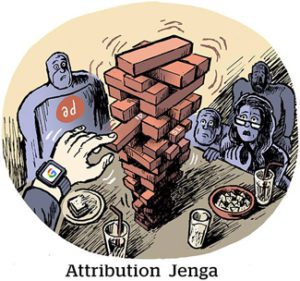
Many brand marketers, even some of the most sophisticated data-driven online advertisers, are reverting to tried-and-true methods to measure and plan their campaigns, including media mix modeling and surveys. You can’t blame brands from being pretty much done with promises when it comes to digital marketing.
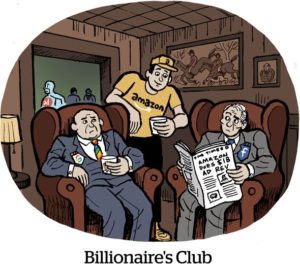
If another war breaks out, if Apple tightens the screws even more on targeted advertising, if shopping shifted: Amazon would still report strong and healthy earnings. Q2 this year is no exception. Earlier this week, Facebook reported its first-ever drop in year-over-year ad revenue and Alphabet hosted a defensive investor call, during which the C-suite […]

The ad fraud and verification company Human announced on Wednesday that it has merged with PerimeterX, a cybersecurity and identity fraud detection service. The two startups were introduced by investors and board members familiar with both their businesses, according to Human CEO and Co-Founder Tamer Hassan. Terms of the deal were not disclosed. “We were […]
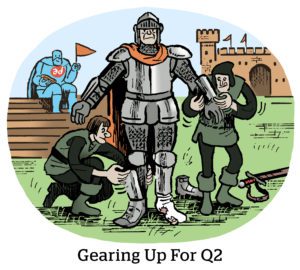
The onset of the digital media recession, if not the global economic recession, has struck Google. But Google’s doing just fine, though, thanks for asking.
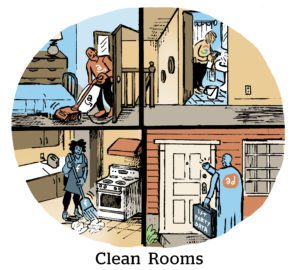
Over the past two years, data clean rooms have exploded onto the programmatic advertising scene, and they’re already at the center of some of the most exciting new partnerships and growth opportunities. But despite their rapid adoption, the definition of what a data clean room is – and all of the related nuance – is not well understood.

The Acceptable Ads Committee, the group that establishes quality guidelines to whitelist ads on ad blockers, has a new president and he’s an old programmatic hand. Terry Taouss, a Cento vet and currently a principal at ad tech consultancy AdProfs, is taking on the role, replacing Marty Kratky-Katz, co-founder and CEO of Blockthrough.
DTC brands are struggling to get by without the Facebook ad engine. Legacy brands are flummoxed by ecommerce. One company that’s hoping to split the difference is RoC Skincare, which spun out of Johnson & Johnson and was acquired by the private equity firm Gryphon in 2018.

If addressable ad IDs are the new keys to the kingdom, then you’ll find The Trade Desk at Epcot this summer. Which is to say, Disney and The Trade Desk announced an identity integration on Tuesday that will allow advertisers to activate against Disney’s first-party data programmatically via its clean room data product using Unified ID 2.0 (UID2) IDs.

There’s a disconnect between those ad buyers in the trenches of online advertising and their own corporate leaders up the C-suite, who are accustomed to determining marketing group budgets based on ROI and other basic advertising KPIs that, frankly, are going haywire right now. One way to deal with that disconnect is to add someone who speaks both languages, as it were.

The overturn of Roe v. Wade, the ongoing war in Ukraine, a stock market collapse – it’s all the news that’s fit to print, but how are publishers going to monetize it if brands are skittish about serious topics? Plus: The dangers of data collection in a post-Roe world.

Commerce and creator monetization are Pinterest’s two main priorities right now, said Jeremy King, the company’s SVP and head of engineering. King, who is also the former CTO of Walmart’s ecommerce business – he joined Pinterest in 2019 – said that the convergence of creator revenue potential with social media-based shopping and product discovery by consumers “will make Pinterest functional, versus purely inspirational.”

“We saw the rise and fall that can happen if you’re dependent on digital advertising,” said Bryan Porter, Simple Modern’s co-founder and chief ecommerce officer. “It worked really well for us … until it didn’t.” The experience of surfing an online ad wave and then crashing hard on the beach has shaped Simple Modern’s marketing strategy, which is fully in-housed
The parade of data-driven ad platform launches by companies that don’t traditionally monetize through advertising seemingly cannot be stopped. The latest example is Universal Music Group (UMG), a top music label which last week launched its data-driven ad-targeting platform called the UMusic Media Network.
Google has tried – and so far mostly failed – to get its customers on board with major new migrations for its online advertising platform. But Google means business this time, with the migration to the new GA4 analytics solution. You’ve got one year. Also: Tech layoffs are on the rise.
Two years ago, shortly after the start of the coronavirus pandemic, Nike doubled down on what it refers to as its Consumer Direct Acceleration. Nike wasn’t simply weathering a storm, but taking COVID-19’s worldwide shakeup of consumer buying habits as an opportunity to rethink its business “by expanding our digital advantage, reshaping the marketplace of the future and creating deeper, more direct consumer relationships,” CFO Matthew Friend told investors.
In nature, animals migrate. Elephants, birds, turtles – by some combination of memory, instinct and intuition, creatures in the wild know to make the same epic voyage every year. But how did they make the first great migration? If anyone figures that out, let Google know. It’s struggling to get marketers on board with a major analytics migration set for next year.

The grocery chain Albertsons in-housed its advertising services and tech business in February, and is still making big changes to the group. “It’s really about owning the tech stack and the product vision,” said Evan Hovorka, head of retail media products.

T-Mobile is sharpening its programmatic sales pitch and releasing new ad platform features this week. One cosmetic adjustment: The ad revenue group’s name is changing from T-Mobile Marketing Solutions to T-Mobile Advertising. But T-Mobile has also launched App Insights, an app-based analytics platform that’s been in beta for the past year.
Sam’s Club, the membership-based retailer owned by Walmart, recently rebranded its advertising business as the Member Access Platform (MAP) as it charts its own course alongside other emerging retail media platforms. The notion of “member access” is what sets Sam’s Club apart from other retailers that are focused entirely on advertising as a way to monetize customers, said Lex Josephs, a VP at Sam’s Club and GM of the MAP business.

Legalized sports gambling is flooding the market with betting apps, which are becoming powerhouse spenders as they seek to gain a foothold. Some betting apps put crazy-high premiums on new users that they hope to make up in lifetime customer (gambler) value, but they’re not all in a grow-now mode regardless of costs.
Marriott is one among a platoon of non-advertising companies that have launched programmatic ad platforms lately. Just don’t call Marriott’s new platform a retail media network. “I wouldn’t put us in that category,” said Elizabeth Donovan, global director and head of ad revenue for the Marriott Media Network. “We are a travel media network and I think more like a publisher, too.”

For years, data privacy regulators didn’t have the tools – or the teeth – they needed to effectively enforce proper standards on the internet. Then came GDPR. Now they have the tools and the teeth. But, still, privacy enforcers are mostly unable to disrupt the status quo. At least to hear Johnny Ryan tell the story on this week’s episode of AdExchanger Talks.

Mike Schott joined Volta, which makes electric car charging stations, almost six years ago to build out the company’s nascent advertising business. That makes Volta early to the everything-is-an-ad platform trend. But even back in 2016, Schott, a longtime EV owner himself with a background in ad tech – he’s the former VP of sales for DSP Viant – had the sense that “an advertising business would be a strong differentiator.”

Three web standards organizations tasked with the online ad industry overhaul, the W3C, the IAB Tech Lab and Prebid.org, called out for help this week during a series of presentations and a joint panel at the AdMonsters Ops conference in New York City.

Jeanelle Teves lives on the Upper West Side of Manhattan, where the sidewalks are jammed with UPPAbaby strollers. And now it’s her job as general manager of Amsterdam-based baby gear company Bugaboo’s North America business to expand the challenger brand’s presence stateside and into Canada. Teves joined Bugaboo a year ago following a long stint […]

The investment bank Needham estimates that Alphabet, Meta, Amazon and Disney combined will grab around $650 billion of ad dollars in 2023. By comparison, The Trade Desk earned just $1.2 billion in 2021, its first time clearing the billion-dollar mark in a single year, and even the strongest programmatic companies earn in the hundreds of millions, which is peanuts by walled garden standards. But “what that means is that a tiny 1% or 2% shift in budgets from the big platforms could double or even triple.”
The NewFronts are old news. Now it’s all about the upfronts, which are old. But don’t forget about the podcast upfronts, which are newer than the NewFronts but named after the TV oldfronts … or upfronts. Okay. Now that we’ve cleared that up, tune in for frontline reporting from the upfronts (TV and podcast varieties).

Google announced the latest updates to its shopping ad products at Google Marketing Live on Tuesday, with changes on the backend to how advertisers use its tech and on the consumer side. These changes are becoming more necessary as the mobile Google Search feed evolves from primarily text-based responses to more visual elements on the […]