

 The ANA’s recent media transparency probe alleged certain opaque practices and pricing models among holding company trading desks that didn’t always align with the best interest of clients.
Programmatic Mechanics thinks it’s in a good position to change some of those perceptions, given its independent status.
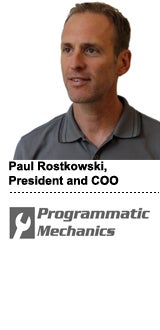
“We don’t have to be concerned about hitting corporate sales targets set for us by stakeholders or delivering on an EBITDA revenue target for a holding company,” argued Paul Rostkowski, Programmatic Mechanics’ new president and COO. “Dynamics change when you’re truly an independent operation that exists purely for the success of the clients.”
Rostkowski co-founded Programmatic Mechanics about two years ago while still employed as president of MDC Partners’ trading desk, Varick Media Management, along with Varick’s former VP of trading and platform operations Keith Gooberman. (Varick knew of his side project at the time, according to Rostkowski.)
Gooberman left Varick in 2014 to focus on Programmatic Mechanics, and Rostkowski has now followed. He will help run the indie trading desk’s day-to-day operations and sales org. The company employs 21 and just moved into a new office to accommodate more hires.
From the time it was founded, Programmatic Mechanics has viewed its independent status as a way to win services business from large holding companies that wanted to expand their programmatic trading capabilities without working with competitive trade desks.
“We [also] wanted to restructure how we pay people,” Rostkowski said. “What’s common in most [holding company-owned trading desks is that] the salespeople make a lot of money and the traders don’t really share in that success, which hurts retention and morale.”

Good account performance could result in companywide bonuses from time to time, but Programmatic Mechanics aims to level the playing field between salespeople and traders.
In traditional agency trading desk environments, it’s not unusual for account teams to sit separately from the programmatic traders.
Programmatic Mechanics pushes for more client contact with traders, who collaborate with a single account manager and earn equal commissions.
Programmatic Mechanics also wants to rewrite the stereotype of services-oriented businesses, particularly in ad tech, where self-serve, always-on SaaS is often linked with efficiency.
Rostkowski said a number of demand-side platforms outsource their managed service RFPs to Programmatic Mechanics, which would run the actual campaign execution part.
“A lot of these companies want software valuations and don’t want to be in the services business, so they give us leads as long as we deliver the client outcomes they’re looking for,” he said. “I’m happy to be in the service business because I don’t have any VCs and we’re not facing public market demands.”
In addition to its programmatic business with DSPs, Programmatic Mechanics also has a standard I/O-based model for brand and agency clients for direct buys.
Or, a brand might outsource its seat on AppNexus or DoubleClick Bid Manager to Programmatic Mechanics if it didn’t want to invest in the sales resources or headcount to pull the programmatic levers.
Although Programmatic Mechanics got its start during the height of the programmatic in-house trend, Rostkowski said the realities of cross-channel media activation often prove too challenging for brands to do alone.
When brands said they wanted to bring programmatic in-house, Rostkowski said they were really demanding more transparency into the media execution process, how their partners drove results and what targeting tactics they were using.
“I think the market is strengthening for really world-class, service-oriented programmatic businesses,” Rostkowski said. “Now that Accordant was purchased by Dentsu, there’s a big opportunity for independent trade desks and I’m sure the folks at Goodway Group are doing good, too.”







