

Don’t forget to nominate yourself and/or colleagues for our Top Women in Media and Ad Tech Awards! The deadline for entries is March 16.
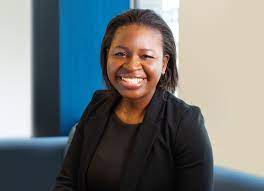
Recognizing what you don’t know – and leaning on other people’s expertise to fill in the blanks in your own knowledge – is key for DEI practitioners, according to Kinesso’s Femi Olu-Lafe, a 2022 Top Women honoree in the DEI Champions category.
As SVP of global culture and inclusion, Olu-Lafe develops and implements DEI strategy for Kinesso and its sister companies within IPG, Acxiom and Matterkind. Her day-to-day encompasses everything from coaching leaders to releasing the company’s first annual DEI report.
Olu-Lafe is an expert in the DEI space, a designation she says she takes “very lightly.”

“You always have to be learning from people,” Olu-Lafe said. “It helps you develop better ideas, and if you don’t, you’re going to get left behind.”
This openness to learning is a mindset she developed while earning her Ph.D. in psychology from Boston University, which informs the collaborative approach she takes today.
“My biggest learning from doing the Ph.D. is, Girl, you’re not going to know everything – and that’s fine,” she said. “Be curious. Learn. You don’t have to know everything.”
Learning how to learn isn’t the only skill Olu-Lafe picked up through her doctoral training, which involved diagnosing people with autism. Much of that training was about “getting better at listening to what people say” – an ability that has served her well throughout her career, Olu-Lafe said.
She spoke with AdExchanger.
AdExchanger: Is the company’s DEI strategy regionalized or localized?
FEMI OLU-LAFE: The strategy is global, and we have four pillars: enhanced representation, building belonging and equity, amplifying transparency and accountability and elevating social impact. While those pillars won’t change, what sits beneath them may look a little bit different depending on the region.
Enhanced representation is all about [identifying] where the biggest gaps are. What we’re doing to rectify the biggest gaps looks so different depending on the country you’re in. There’s gender, there’s race and ethnicity, there’s caste. We have to make sure whatever we do is addressing the biggest need.
What does it take to build an inclusive team?
Before my current role, I was in leadership assessment and development and executive coaching. That has helped me see people’s unique capabilities and shout out their strengths. There’s somebody on my team who’s amazing, but she has a different profile from me. I can see the value of that difference, of her processing things differently. I seek that out.
I also make sure I’m building an environment where people feel like they can speak up, and that when they do speak up, it’s heard. Not that we’re going to accept every single idea everyone throws out, but you feel like your idea was heard and it was valid.
How do your past experiences tie into what you’re doing now?
I was born in Nigeria, and I’m very proud of that. I moved to this country when I was young, and I was in an environment where there wasn’t a lot of diversity. I eventually went to an international school with people from all over the world.
That changed my life. That was the first time I saw diversity as a good thing. Growing up, it was always: You’re different, and that’s bad. But at the international school, the environment was: I’m different, you’re different, we’re all different – let’s celebrate and learn from each other. My curiosity about diversity was shaped in that environment.
What advice would you give to your younger self?
If there’s something you want to do, and fear of failure is what holds you back, do it. Take more risks. Don’t be irresponsible, but stretch a little bit more.
And I would say to my younger self that you’re doing the best you can right now. You need to recognize that and, please, be compassionate to yourself.
How do you maintain a balance between your career and everything else going on in your life?
I’m an overachiever, and I’m very passionate about DEI. The shadow side of loving what you do is you can just work, work, work. I had to build better boundaries around work and know what energizes me. Engaging with people, having music around if I’m not in a meeting, having my diffuser going – these things give me good energy.
I also have clear measures of what impact looks like for me because DEI is a long-term journey. You often feel like you’re not doing enough because there’s still so much to do. I have a clear idea of what’s an ambitious but realistic sense of success and I stick to that.
This interview has been edited and condensed.








