
It’s almost 2020, and data and technology have revolutionized media. So why has the industry still not been able to crack data-driven creative?
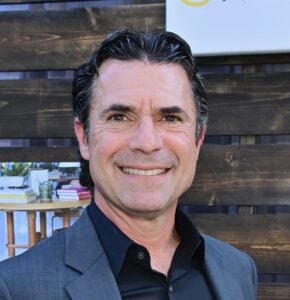
After six years at media agencies, Oleg Korenfeld asked himself that same question. In December he left Wavemaker, where he was global chief platforms officer, to join LA-based branding and experiential agency Troika Media Group. There, he’ll try to combine audience data with branding.
“Data and technology has completely changed the way we plan and buy media,” Korenfeld said. “But when it comes to creative, nothing has been done all the way up the funnel.”
Troika has 150 employees across four offices and clients like PGA Golf, Verizon and Peroni, and Korenfeld plans to help the agency transform by embedding data and technology tools into branding, creative and experiential processes.
The results could be anything from extending an experiential campaign with a strategic media buy, or simply using different kinds of data to inform the brand strategy.
While Korenfeld had been working with GroupM creative agencies to solve this same problem, he felt he could be more impactful at a smaller organization.
“I felt like I needed a dynamic, independent creative shop,” he said.
He spoke with AdExchanger.

AdExchanger: What made you want to join a creative agency?
OLEG KORENFELD: The data, research and analysis [creative agencies] use when designing the brand and messaging is very old school. The audience data that’s been available on the media side for 10 years hasn’t been used much on [the creative] side.
We applied dynamic creative optimization, but only on the media side, after the branding had been done. We optimized what had already been done, but it was too late to apply data that could’ve been helpful up the funnel.
On the creative side, skill sets are lacking. They don’t understand how to work with data.
Why is Troika different?
They were open to transforming from the bottom up to offer data and technology not just as a cherry on top, but a fundamental piece of the puzzle. Because it’s not just adding a person here or a partner there. It truly is transforming an organization.
How are you going to embed tech and data into the creative process?
We’ll restructure to support data in branding and strategy planning. In the creative world, there’s always the big idea. But that needs to be complemented by data to [determine] what kind of creative to go after and see what worked and what didn’t. [We will] probably acquire technology to provide that insight for the creative.
The other side is amplification. Creative agencies are still comfortable making one big video for TV and slicing it to fit it into other environments. How do you apply data to decide where this message will resonate? If you can make these decisions up front, you can design more effective and native messaging.
What might that look like in execution?
If you are doing a big installation in the mall, how do you talk to people before they get there, when they are there or afterward? People can see the follow-through on a digital billboard a couple of blocks away. That’s a natural connection, rather than trying to pull people back into that experience.
What technology do you need?
It’s a little too early to say what platforms make the most sense. I’m very conscious that it can be too far of a leap to integrate into the offering and explain to clients why it makes sense. But there are machine learning technologies that allow for creative decisioning.
What will change about the creative team’s day to day?
For the bigger part of my career, I’ve done education, put skill sets in place and grown the culture around those people. For me, it’s personally working with the teams but also bringing in people who understand data, tech and media and can explain how it applies to the creative world.
You tried to do this at GroupM. Why might this be easier at a smaller agency?
Just like any other big organization, it takes time to realize these skill sets are absolutely critical. How do you design a staffing structure to pay for these people?
I went through that at Publicis when we launched the programmatic group and the data architecture group. Considering the way big agencies charge for their services, this takes time. In a smaller shop with more control over the entire process, it should be easier to introduce.
Are you going to build a media department at Troika?
No. I want to build complementary tools, not change who they are.
This interview has been edited and condensed.