Here’s today’s AdExchanger.com news round-up… Want it by email? Sign up here.
House Of The Mouse
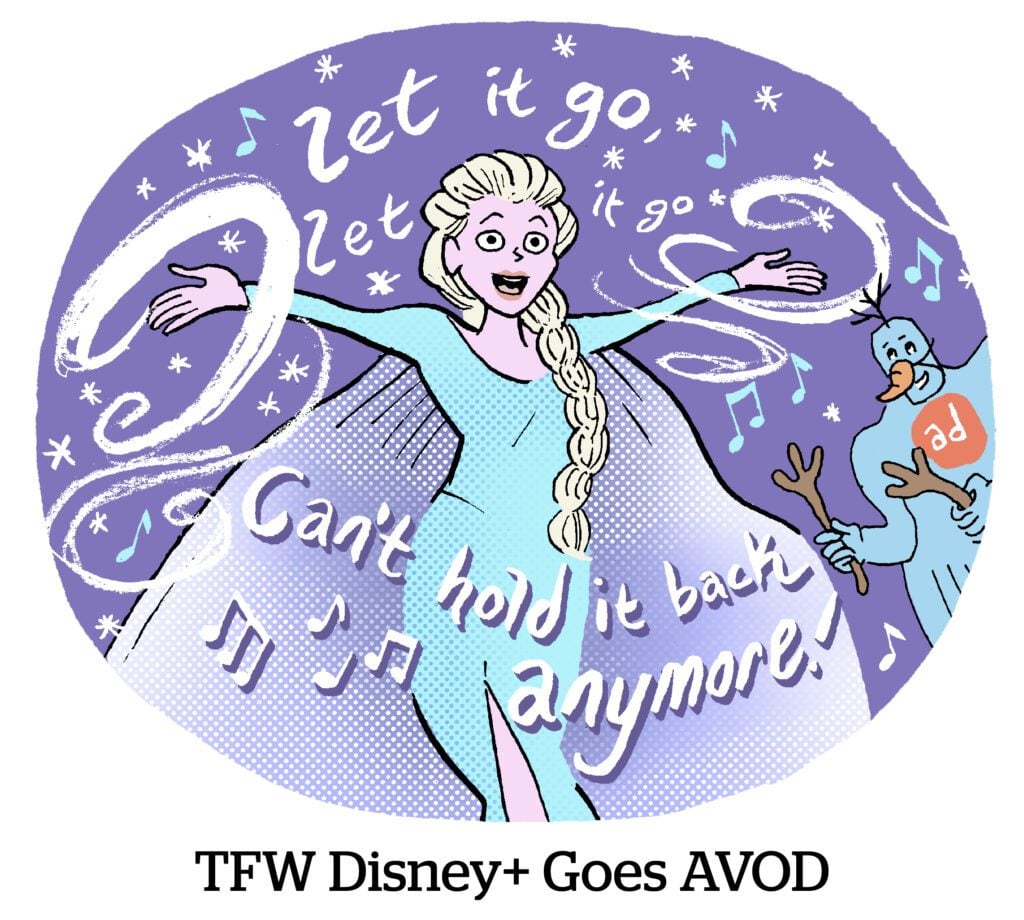
Disney has replaced CEO Bob Chapek with former CEO Bob Iger in a surprise turn.
The two Bobs (real names Robert Allen Iger and Robert Alan Chapek, if you can believe it) had two rather different streaming strategies.
Iger prioritized subscriber stickiness early on with relatively low prices, whereas Chapek quickly raised the price of an AVOD subscription.
Subscriber numbers are important, but are they all-important? It’s a question that’s split board rooms recently, and the answer often comes down to how the company (and the decision maker at its helm) feels about advertising.
Hans Vestberg, for example, went from Verizon CTO to CEO in 2018 and promptly sold off Oath and Verizon Media. One-time AT&T CEO Randall Stephenson preached his vision for a media company built on three pillars: mobile and internet connectivity, content and entertainment and data-driven advertising. But when John Stankey took over in 2020, it didn’t take him long to lop off advertising and media.
After Iger left Disney last December, Chapek increased the ad-free Disney+ subscription by $3 and fast-tracked a $7.99 per-month ad-supported tier set to launch in December.
But it appears there just wasn’t enough juice in the squeeze, and Chapek resigned after Disney reported “peak operating losses” for Q3 earlier this month.

Fighting “Surveillance” (The Term)
The FTC is considering new rules “for cracking down on commercial surveillance and lax data security practices.” (Their words.)
And yesterday was the deadline for people to submit their comments on whether these new rules are necessary. Privacy advocates, academics and ad industry orgs have all weighed in.
The FTC is an important regulator that’s been relatively mum on privacy in the online age. But the agency’s guns are blazing now, as evidenced by its use of the term “commercial surveillance.”
The ICCL, an Irish privacy advocacy group, submitted a note that used an even more specific and incendiary term: “surveillance advertising.”
But Eric Seufert, an industry analyst and the editor of Mobile Dev Memo, in his letter to the FTC, reframes the central question. “I do not think the ads personalization baby must be thrown out with the data abuse bath water,” Seufert writes, noting that “personalized advertising can be an economic and social good in support of free content and services.
Even if it wasn’t the FTC’s intention to use the term “commercial surveillance” in order to spur responses, it certainly worked. As of Monday afternoon, well over 10,000 comments had been submitted.
Flying Blind
Now that Twitter is a private company (well, that term is relative considering Elon Musk’s tweeting habits), its total ad revenue is a mystery.
But it can’t be good.
One B2B marketing leader claims their company is pausing the $750,000 it’s been spending on Twitter ads every month.
The exec, posting to the anonymous professional service blind (so it’s not a confirmed anecdote), says the company originally stuck with Twitter ads for whitepaper downloads and event registrations because of its bet that efficiency would improve with fewer advertisers and that the risks were overblown.
But even a B2B company promoting boring webinars had a flood of people sending in screenshots of its ads next to horrible content, not to mention adult and antisemitic bilge in their comments – which weren’t removed even after being flagged.
CPMs are steady, but performance is way down. Oh, and the team of account execs, creative specialists and an analyst this B2B company used to rely on have all “vanished without so much as an email.” The account manager who replaced them promptly quit and has not been replaced.
The ads platform is purportedly a mess, too. A campaign manager spotted that all paused creatives from the past six years were reactivated.
“I think the things we saw in these last 2 weeks means many more advertisers will bail on the platform in the coming weeks (for non-ideological or virtue signaling reasons),” the anonymous B2B marketer noted.
But Wait, There’s More!
Shopify is testing a cross-merchant search feature, a precursor to ads, that could complicate (and expand) its business. [Search Engine Land]
Despite Snapchat’s efforts, creators still don’t see it as a priority. [Digiday]
Meta adds teen privacy and safety guardrails to Facebook. [The Verge]
Amazon has a new kind of problem: Consumers don’t like it as much as they once did. [WSJ]
You’re Hired!
Toy company Spin Master taps Jeremy Tucker as its first global CMO. [MediaPost]