

Disney is losing money faster than it’s adding subscribers.
The media giant reported a $1.5 billion loss on its streaming business lines for the quarter, most of which Disney blames on content costs and cruddy macroeconomics. And CEO Bob Chapek told investors this should be the toughest quarter to weather for the streaming business.
This quarter represents a “turning point of peak direct-to-consumer operating losses,” Chapek said on the company’s earnings conference call on Tuesday.
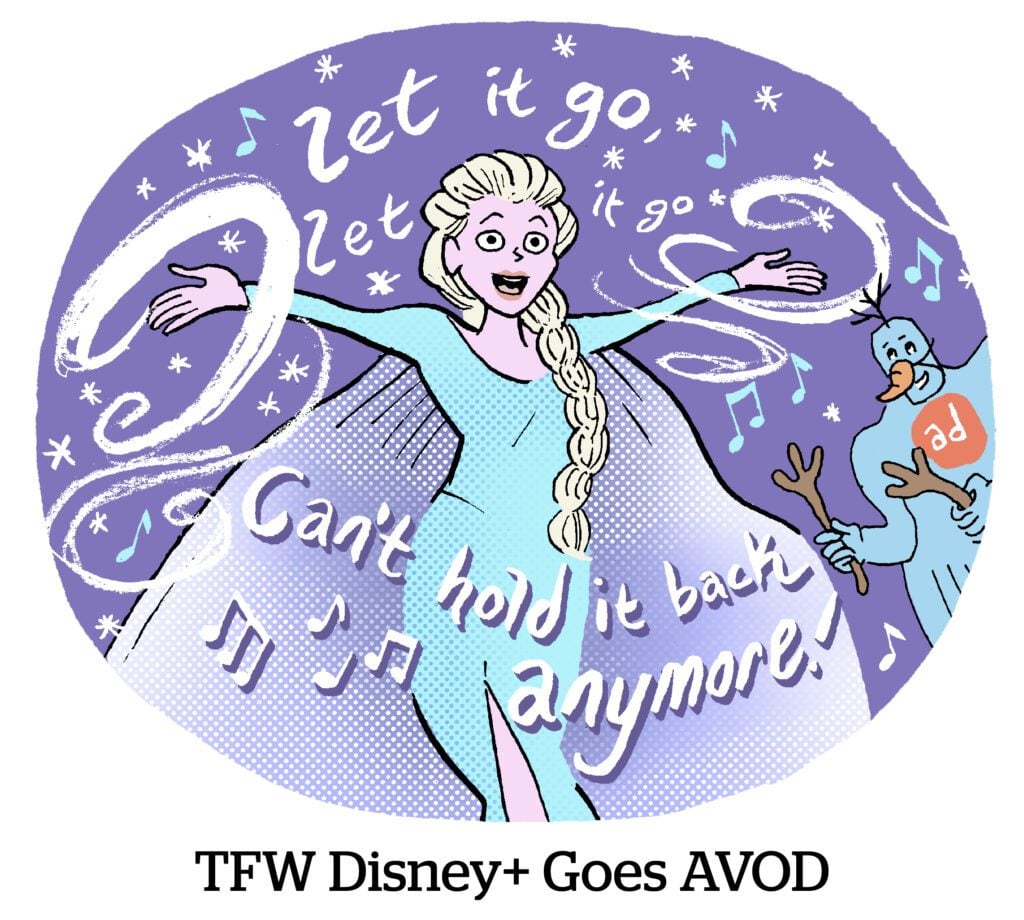
Disney isn’t worried (or so it seems). It’s hanging on until the US launch of an ad-supported Disney+ tier on December 8.
On the plus side (pun intended), Disney added 14.6 million subscribers in Q3 across ESPN, Hulu and Disney+, including 12 million for Disney+, beating expectations and bringing the company’s subscription base to 235 million accounts.
Still, average revenue per user (ARPU) is down 5% year over year.

Pay up
Disney expected short-term losses because the company heavily increased streaming investments, Chapek said.
But the ambition is that the launch of AVOD Disney+ in a month will tip the scales back toward sustainable growth.
Disney expects to make more money off subscribers by charging them more money. Which sounds pretty obvious, but it’s a risky balancing act considering the challenge to retain subscribers over months.
“Price increases across our DTC offerings should benefit subscription revenue and ARPU next year,” said CFO Christine McCarthy.
Disney+ with ads will cost $7.99 per month, which is now the same price as Hulu’s ad-supported plan (and a Twitter checkmark, but that’s a different story). Disney+ subscribers who want to remain ad-free must fork over an additional $3 per month.
Additional price hikes are planned for the Disney+ bundle (which includes Hulu and ESPN+) next year, too. ESPN’s growth is also “pacing down,” McCarthy said, compared with growth spikes for the sports service last quarter.
Disney hasn’t seen meaningful subscriber churn following previous price hikes, Chapek said. That’s not to say there won’t be any this time, he added, but between new content releases and more judicious spending on production, Disney expects net growth next year from Disney+ with ads.
The new DTC model that includes an ad-supported Disney+ is setting a “foundation for a sustainably profitable business model,” McCarthy said.
But a company doesn’t earn back this level of loss overnight.
Disney hopes to mitigate DTC operating losses in Q1 next year by only $200,000 compared with this quarter, according to McCarthy. “We don’t expect the launch of the ad-supported tier of Disney+ to provide a more meaningful financial impact until later in the fiscal year.”
Chapek also confirmed that Disney+ has more than 100 advertisers signed up ahead of the launch. If that number sounds light, Netflix claimed its Basic with Ads inventory was nearly sold out by hundreds of advertisers weeks before launch.
Which is another way to say there actually won’t be that much advertising, or the platform would need more total advertisers.
It will take time for the benefits of price hikes and ad revenue to realize on the bottom line. And there is no straight chart up.
“Subscriber growth per quarter for Disney+ won’t be linear,” McCarthy added, noting that growth in both subscribers and ARPU for the first quarter will be “modest.”
Healthy competition?
Disney entered the streaming market at $6.99 per month and dished out promos, such as one-year and three-month deals. But it’s taking a (slightly) more premium position.
Netflix undercut Disney’s prices by touting a $6.99 per month AVOD plan at launch after making it a point to race Disney to market last week. It’s probably not a coincidence that Warner Bros. Discovery subsequently decided to rush out its merged streaming service earlier next year, too.
Disney is sticking to its December launch date, in addition to touting its plans for price hikes.
But Disney is feeling the heat of competition.
“We have proven technology to deliver a great advertising experience [starting] on day one,” Chapek said, adding that Disney has “years of experience and ad tech relationships” suited to the AVOD biz.
Netflix, on the other hand, surprised the industry with its choice of ad sales partner and is offering very limited targeting capabilities at launch (contextual and genre-based only), likely because it was more concerned with getting to market first. (Disney didn’t divulge details about its ad targeting plans.)
Call it shade, but slow and steady hasn’t pulled ahead yet, at least in the streaming race.







