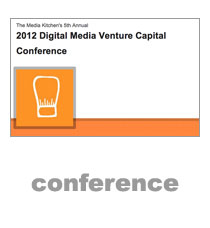
 Today, MDC Partners’ The Media Kitchen hosted its 5th Annual Digital Media Venture Capital Conference in New York City. In advance of the event, The Media Kitchen/kbs+p’s venture empresario, Darren Herman, outlined the agenda on his personal blog here.
Leading off, ubiquitous banker-about-town and LUMA Partners’ Terence Kawaja provided three things that gets him jazzed about 2012. In order, they are: Facebook’s IPO, Millennial Media’s IPO and this week’s Instagram acquisition by Facebook. Anecdotally, Kawaja told the investor audience that he believed investment bankers were active in guiding Facebook to buy Instagram (what a surprise!) for the mere fact that Facebook needed a better story around its mobile advertising strategy prior to its IPO roadshow which will solidify the company’s valuation and investors.
As he moved through each of his LUMAscape landscapes, Kawaja paused on the mobile landscape, “What tends to be exciting and the high growth stuff, are the mobile native apps. Where it wasn’t possible in the past to have a business model that starts on mobile, [now it is.]” And, the whole definition of what “mobile” is is changing – even the television could be considered mobile argued Kawaja. This echoes a Google tenet where everything is “display.”
Mobile display for the win!
Pausing on a visual of the final landscape – the Digital Capital LUMAscape containing all the funding firms that are busy fueling all the rest of the landscapes – it is obvious to see that not only is there a lot of money in the space, but there are a lot of investor dollars competing with each another – a point which Kawaja returned to later.

But it wasn’t just VC money that was causing the creation of so many companies in ad tech. Citing IDC predictions, he echoed the research firm’s findings that real-time bidding will having a huge effect on media buying going forward as over $5 billion of RTB-enabled, PC-based display spend is expected by 2016.
Among the emerging opportunities, Kawaja began by saying that 99% of ad tech is working at the bottom-of-the-funnel on behalf of marketers today – D.R.-land! Kawaja asserted that $250 billion of upper-funnel ad dollars will be at stake as companies move up funnel to target brand goals. Also, content management, ecommerce, CRM were among the important trends he saw ahead.
Hitting all the high notes, Kawaja said that defensive moats are being created by companies with first-party data a.k.a. “big data.” Those “winners” thus far include Apple, Facebook, Google and Amazon.
As for challenges ahead, “duplication is a problem not fragmentation.” Kawaja thinks that too many companies are doing the same thing. “These duplicative me-too services – there are so many of them that the pubishers and advertisers can’t meet with them all. The implications are that they’re not all going to make it,” said Kawaja who added that venture types know some (if not many) will fail and plan accordingly in their own investment models.
Next on the challenge front was standardization. Kawaja argued that an Advertising OS was ahead and referenced Google, MediaOcean, AppNexus, MediaMath and PubMatic as players in the newly forming app environment with Google, MediaOcean and AppNexus having a chance to create the OS.
Closing his presentation, he looked at who the buyers of ad tech are. Yes, Google, Microsoft, Yahoo!, Aol… and then many other enterprise software and media companies that are just beginning to enter the space as media heads for an efficiency makeover.
Kawaja warned that even though the IPO markets are open, they are “not a panacea for ad tech” as he addressed possible exits for ad technology firms. Overall, he broke exits down into three groups: Enterprise Software (Omniture, ExactTarget, Responsys, Salesforce.com), Ad Tech (MediaMind, interclick), and Consumer Internet (LinkedIn, Pandora, Zynga, etc.). So in spite of hot markets, ad tech execs and investors should not be assured of a windfall though it appeared tilting convincingly into the enterprise software space could help.
By John Ebbert