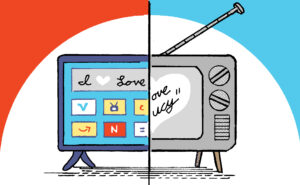

TV buyers predict streaming publishers will heed their demands for greater flexibility, more programmatic execution and improved measurement during this year’s upfront season.
Marketers face mounting pressure to prove the value of their media investments. And competition in streaming creates more options for TV ad budgets. So media buyers have a message for their TV and streaming partners: Give us what we need, or we’ll spend our money elsewhere.
For a while, streaming has been “getting a pass with the lack of measurement and accountability compared to other [ad] mediums,” said Kelly Metz, chief investment officer at OMD USA, an agency within Omnicom Media Group. Many major streaming players feel like a staple in a marketer’s media mix, but there are no longer must-buys in streaming, she said. Now that the winners and losers of streaming are starting to emerge, connected TV publishers must address advertiser needs or risk the chopping block.

Specifically, brands are demanding spend flexibility, more programmatic buying options and acceptable measurement.
Publishers “have to come to the table with [what] we want,” said Jenny Schauer, EVP and head of video and multimedia at Publicis-owned Digitas. Otherwise, brands will spend with the competition.
Advertisers must be flexible
The flexibility buyers call for doesn’t necessarily mean the ability to execute upfront commitments programmatically, which most publishers already allow, Schauer said. Instead, brands want flexibility to move, shift or cancel upfront budgets whenever they please, without penalty.
Because TV upfront budgets are spend commitments for the following broadcast year (starting in Q4), allocations for Q4 are usually 100% firm. Starting in Q1, however, there’s some degree of budget cancellation allowed, Schauer said. Budget cancellation depends on the publisher, she said, and can range anywhere from one-quarter to three-quarters of upfront budgets. There’s more cancellation leeway for streaming commitments, she added, but buyers expect linear buying options to match so they can plan cross-channel campaigns when they need to shift budgets.
Many brands need to shift spend across quarters to accommodate timing for product launches or rebrands, among other timely announcements, Schauer said. Many advertisers plan major product announcements for early in the year, for example, and oftentimes delays in approvals can make brands push back campaign flights. But the current upfront structure is static, rigid and inconducive to getting the level of flexibility buyers say they need. “It’s really difficult to move those dollars from one quarter to the next,” Schauer said.
To keep ad dollars circulating within the upfronts, programmers must “make some concessions” that would’ve been unheard of even just five years ago, she said.
Primed for programmatic
Speaking of spending flexibility, expect programmatic to also be a topline trend during the upfronts this year.
There’s more demand for programmatic coming into this year’s upfronts, said Mohammad Chughtai, global head of advanced TV at media buying agency MiQ. Programmatic guaranteed deals are essentially an automated insertion order, which is becoming an increasingly popular choice for media buyers who want to apply more audience targeting without giving up the transparency and predictability direct deals promise.
Biddable deals, particularly through private marketplaces, are also becoming more popular because they can help address some of the buy side’s biggest pain points, Chughtai said.
For example, bidding for inventory across multiple publishers gives advertisers a better chance of reaching new viewers rather than serving repeat ads to the same viewers on different streaming accounts, he said.
It’s especially hard to measure subscriber overlap between different streaming services because streamers typically don’t let their competitive audience data leave their platforms, he added. This is why brands often miss out on the chance to reach new viewers when they isolate audience-based buys within individual publishers.
Publishers prefer programmatic guaranteed because reserved inventory helps them predict how much ad spend they can count on for the broadcast year. But they need to open their doors to more programmatic partners to appease media buyers that prefer the advantages of biddable deals.
This shift explains why major streaming platforms like Disney and NBCUniversal spent the beginning of the year touting programmatic integrations with partners, including ones that represent smaller and local businesses. Many smaller businesses lack the resources or budgets for prime TV spots, but programmatic platforms that specialize in pacing smaller campaign budgets are beginning to attract new CTV demand.
TV measurement meter

Buy-side calls for spend flexibility and programmatic buying seem pretty straightforward. Meanwhile, the industry’s shift to alternative TV measurement currencies remains chaotic.
Perhaps the biggest problem with alt currencies is that “it’s very, very difficult to compare the four currencies” that buyers consider (Nielsen, Comscore, VideoAmp and iSpot) because their data and methodologies are so different, said Danielle DeLauro, EVP of the Video Advertising Bureau.
Variance between video currencies makes it difficult for buyers trying to figure out which currency they should rely on to predict reach, frequency and business outcomes from a TV ad exposure, DeLauro said.
Another issue with alt currencies is they haven’t yet reached “the scale they need for buyers to feel fully comfortable,” Chughtai said.
While buyers figure out what to make of Nielsen replacements, they’re demanding more measurement options to at least make sure their ad dollars are driving performance.
Netflix and Disney recently touted new measurement slates with an array of partners that can measure outcomes throughout the purchase funnel, from brand awareness and ad recall to purchase consideration, web traffic and sales.
There’s also sell-side “vigor” to include commerce and retail data in streaming and TV ad buys, OMD’s Metz said. Paramount recently launched a new partnership with Walmart that gives it access to the retailer’s shopper data, while Disney and NBCU continue to push adoption for shoppable ad formats. And, of course, there’s Amazon’s Prime Video, making a debut in this year’s upfront negotiations with a treasure chest of its retail data.
What’s next for alternative currencies?
But that isn’t to say buyers won’t try out alt currencies.
Firstly, alt currencies hold larger audience viewing data sets that promise advanced audiences and business outcomes. Among those larger data sets, automatic content recognition (ACR) is an especially valuable planning and measurement tool, Chughtai said. ACR identifies content playing on TV regardless of platform, which can help buyers fill in measurement gaps across channels.
Secondly, buyers have already invested so much in testing alt currencies, and they aren’t about to give up, DeLauro said.
Many buyers have already been “parallel pathing” between Nielsen and alternatives for some time, she said. With this technique, buyers use multiple currencies (including Nielsen) so they can start “getting comfortable” with reporting from alt currencies by comparing them with the incumbent.
At this point, many buyers who have already been doing “parallel pathing” should be ready to actually transact on a more significant amount of money against the alt measurement providers they’ve been testing as currency.
But the key word there is “should.”
While there is a lot of interest in alt measurement for planning and measurement, Chughtai said, the gap in adoption comes when buyers are asked to “put their money where their mouth is” and trade on an alt measurement provider as currency.