 “The Sell Sider” is a column written for the sell side of the digital media community.
Think of PicsArt as the love child of Instagram and Photoshop in app form.
Advertising and in-app purchases make up the bulk of its revenue, but the photo-sharing and sticker creation app is branching out with an ad-free subscription model.
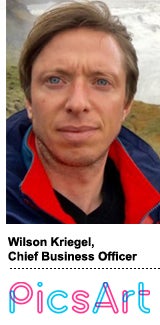
“We’re looking to monetize experiences,” said Wilson Kriegel, chief business officer at PicsArt, which hit the 100-million monthly active user mark in 2017, the year after snagging $20 million in Series B funding.
“But with subscriptions,” he said, “we’re able to reduce exposure to regular ads.”
PicsArt Gold, which rolled out in mid-March, costs $8 per month, although that price drops by half for users who commit to an annual subscription. Gold members get access to additional features, like more premium editing tools and unlimited access to thousands of stickers, frames and fonts.
Even so, why would anyone shell out for a photo app when others are available for free?
Because it’s about creation rather than pure consumption, Kriegel said – and that passion extends to branded content.

Some advertisers, like Dior, sponsor sticker packs on the platform. Others, like PopSugar, use PicsArt to run contests, like one over the winter that solicited cool travel photo edits. In some cases, PicsArt develops branded photo frames and clip art, like it recently did for pet food brand Nutrish.
“It’s not people just posting a picture or following an account,” Kriegel said. “We’re promoting interactive usability.”
AdExchanger spoke with Kriegel.
AdExchanger: How do you approach user acquisition?
WILSON KRIEGEL: There are apps out there, mainly games, that went from spending $1 per acquisition to around $20 per acquisition. But nongaming companies just can’t afford to do that. No one gets lifetime value on a user if they spent $20. Even Snap can’t make that work. Their ARPU was around $1.50 in Q4.
So, we don’t pay for users. The way to create value for users is to engage and re-engage through content optimization. What content are users interested in? What do they want to be social with? There’s a lot of optimization you can do around that, and it has a compounding effect. If you get someone hyped, they become an advocate for you. When you optimize for that consumption and that emotional attachment, what you do becomes socially relevant. Multiply that by MAUs, and that’s how we think about growth.
Do you do any paid acquisition?
We do almost no paid. We optimize our landing page in the app stores and figure out the best messaging for certain territories. We use Facebook to A/B-test different images for times of the year, like Christmas and Halloween. We might do a search buy for a big release. But overall, we spend less than six figures a year on actual media. It’s nonmaterial relative to our size. Our MAU count is tied to amplification through our existing users.
If you focus on app store optimization and you’re big, you show up in a lot of keyword searches. It’s more important for us to care about our ratings and reviews and to try to understand the App Store and Android algorithms than anything else.
How important is advertising to your revenue?
The majority of our revenue comes through in-app purchases, like stickers, stamps, fonts, frames and other one-time transactions.
We do run programmatic advertising, and we try to do it in as sensitive a way as possible, without disrupting the experience. Interstitials, display, native, pre-roll – these things remain important to us. But I’d love to get away from that as much as possible.
That’s why we’re adding a subscription model where we remove all ads and create an all-you-can-eat content experience.
We’re also looking for ways to support our top thousand creators and help them have a more direct relationship with brands. That’s more of a long-tail thing, where our creators get rewarded for their content being used by brands. If we can help creators monetize, it helps with retention. We always have to be thinking about how to make them money. It’s good for us when creators value our platform.
What are some of the ways you work with brands?
For brands, it’s about helping them make UGC relevant for their social campaigns. We have dozens of brand and content partners, including music publishers, magazines, broadcasters and shows. We’ve worked with AMC’s “The Walking Dead”, Disney’s “A Wrinkle in Time” and MTV’s “Fear Factor.”
They all have content, social interactions and followers on platforms like Facebook and Instagram. We differentiate by giving people the ability to create using brand assets they actually want to interact with. And then we support it with marketing and data.
What sort of data is important to you?
We look at data about who’s trending, what stickers are being used around what themes. We know what content is popular and what went into creating that content, and we’re building technology to use that behavioral intelligence to get people to create content that is more likely to be popular.
If there’s a feature functionality that people are excited about or a creative idea that’s starting to propagate, the question we’re always asking ourselves is: How can we amplify it within the app once it happens, but more importantly, how can we encourage it to happen in the first place?
This interview has been condensed and edited.