“The Sell Sider” is a column written by the sell side of the digital media community.
Today’s column is written by Scott Bender, partner and global head of client strategy at Prohaska Consulting.
No question, it’s going to be a rough second (and likely third) quarter for the digital publisher community. Some estimates suggest Q2 will decline more than 30% across all publisher categories, with CPMs across the open and private non-guaranteed exchange deals taking a significant hit.
The ad marketplace is operating in an environment of uncertainty with a very short-term – almost day-by-day – approach to decision-making for budgets, staffing and strategy.
There are immediate tactics publishers can and should do now to drive and save revenue. At the same time, it is absolutely critical for publishers to think and act beyond the current crisis and address challenges that didn’t go away or accelerated over the last month.
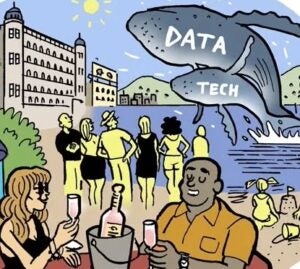
Like a shark, publishers need to keep moving or see their share of business perish.

Moves publishers need to make right now, for right now
New business rules for the current environment: Budgets are fluid right now with agencies and brands seeking maximum brand safety and assurances. Can publishers provide curated content through programmatic activity, which would also allow flighting and cancellation changes?
Individual account focus: The pandemic is affecting the entire marketplace, but its impact can vary by category and account. While much of travel is dark, some brands are shifting creative to more of a public service approach. Some financial services are also moving to messages of reassurance. A number of QSRs are still active, adapting creative to promote pick-up and delivery.
Sales teams need to engage advertisers with offerings relevant to that messaging. It could also be an opportunity to pursue nonendemic categories that would not normally be targeted, such as a CPG looking to reassure investors or institutions through a news property.
What is your COVID-19 content strategy? This story is not going away and will likely shape content across all verticals through the end of the year and beyond. That said, brands are starting to grow more tolerant of their adjacency to this story as we start to enter a new normal. It is evolving and may not be dissimilar to the gradual brand acceptance around 9/11 content.
This gets back to the direct conversations publishers need to have with agency groups and their trading desks about how they are approaching this content. What’s the policy, and what blocking terms are they using? Infection and mortality rate stories should arguably be in a different category vs. stories about homeschooling and heroic health professionals.
News and information sites should determine what type of contextual offering can provide separation of certain COVID-19 content. News properties have always been adept at creating ad-friendly evergreen offerings; this is certainly a time to ramp up those efforts.
For video-centric publishers, what creative offerings can they bring to the table that might supplement a brand’s need for live programming? Some entertainment properties have created sponsor-driven Zoom events, featuring different artists at home. Certainly, many events can be replicated across a number of verticals, besides music.
Immediate adjustments to your tech stack: Many of the previous rules – blocks, pricing floors, deals – need to be revisited. Everything has changed. Whether short term or long term, there must be adjustments and ongoing monitoring.
Payment terms: Beyond just the actual revenues, there also needs to be a focus on cash flow. Payment terms from programmatic platforms vary from 15 days to more than 90 days. Those terms may change business decisions.
Moves publishers need to make right now, for survival tomorrow
The challenges that existed for publishers before COVID-19 are still there. With the consolidation of tech platforms, many brands will also be looking to consolidate spending in perceived safe harbors and scaled offerings such as Facebook and Google. Beyond the current downturn, digital publishers need to move fast in the following areas.
Organization: Beyond any changes to headcount, reflecting the current economic circumstances, do teams have the proper skill sets as sales efforts shift from media to a more audience-based approach? With teams currently stuck working from home, this could be a great opportunity to invest in virtual training. Also, with the current work-from-home situation as a more accepted long-term trend, should publishers consider reorganizing their teams without being encumbered by their geographic locations?
Data strategy: Develop a plan of action for data that leverages both first-party assets and other partnerships. This includes developing first-party data collection, user behavior segmentation and delivery optimization via solutions such as a customer data platforms and moving toward deterministic identity solutions that leverage the critical trust between reader and publisher.
Attribution and measurement: Publishers’ must develop a strategy to demonstrate ad effectiveness and compete with the closed ecosystems of the walled gardens. Can publisher tags be added to their landing pages for recognizing actions and conversions? Can they highlight interaction and clicks to show better performance? Now is the time for publishers to ensure that their properties are receiving the proper credit for the performance and business outcomes they deliver to advertisers.
Other revenue: How are publishers thinking about revenue beyond advertising? Can they further develop subscription paywalls and ecommerce?
Reviewing vendors: Many platforms operate on revenue shares. When was the last time those relationships were reviewed? Are those rates now competitive? It’s time for a reevaluation. Ad tech consolidation was already in motion before COVID-19. Platforms will be looking to be one of the few winners (vs. the many losers). Publishers now have more leverage.
The challenges for publishers didn’t begin with the pandemic, and they won’t end when it’s behind us. This is the time to keep moving. Be the shark, not the minnow.
Follow Prohaska Consulting (@TeamProhaska) and AdExchanger (@adexchanger) on Twitter.