
Judge Mehta’s Remedies For Google’s Search Monopoly Won’t Cure What Ails Publishers
Remedies in the federal search antitrust case against Google landed with a thud earlier this week. Most publishers and ad industry pundits were sorely disappointed.

Remedies in the federal search antitrust case against Google landed with a thud earlier this week. Most publishers and ad industry pundits were sorely disappointed.

Google’s search antitrust trial ends with a whimper; the pitfalls of agency-owned SSPs; Perplexity axes its ads business; and brands are still building big-ticket metaverse experiences.

While some Privacy Sandbox testers lamented their seemingly wasted effort, they remain committed to post-cookie targeting and measurement – even if Google eventually abandons the Sandbox entirely.

Meta changes policy on “sensitive” ads; Texas AG launches an investigation into GARM; and the CMA takes it easy on Apple and Google when it comes to cloud gaming.

Competing agendas are limiting the tools publishers have at their disposal in ways that aren’t always primarily motivated by user privacy. Here are five things about privacy in digital media that should keep publishers up at night.

The publication still makes most of its on-site digital revenue from programmatic. But it’s doubling down on direct-sold custom content, especially when it comes to video and social media.

A group of 20 web app developers sent a letter to the CMA claiming the regulator’s proposed remedies for increasing competition among mobile browsers do not address barriers to entry for mobile web extensions on iOS and Android.

With a landmark ruling potentially forcing Google to change its business practices, who is actually likely to steal some of its search market share? And what should marketers do about it?

Ad revenue was helped along by 9% growth in unique visitors to the top sites in DDM’s portfolio. Programmatic ad rates were up roughly 36% in Q2, spurred by adoption of DDM’s D/Chipher contextual targeting solution.

Recent moves by major ad tech players prove the industry doesn’t actually need cookies. But Chrome’s cookie pivot doesn’t clarify what will happen to the 1% of its audience that’s already cookieless or what will become of plans to deprecate the Android Ad ID on mobile.

In today’s newsletter: Ad blocking is getting integrated into web browsers; why Reddit needs to diversify its advertiser base; and how big media’s affiliate marketing tactics crowd specialist publishers out of search.

In today’s newsletter: Online news revenue is being throttled around the web; Roblox is on a mission to build a $1 billion ad business; and TikTok is circumventing the Apple App Store’s 30% fee by directing users off iOS to purchase TikTok coins.

In today’s newsletter: Roku and The Trade Desk expand their partnership; Instagram changes its content recommendation system; and the European Commission investigates Meta for potential Digital Services Act violations.
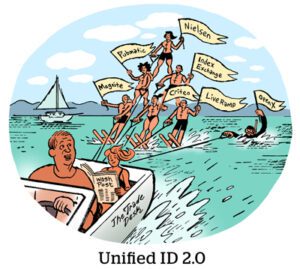
Bonbon gives users rewards – such as discounts or chances to win merchandise – for setting up email registrations with publishers. Now The Trade Desk’s OpenPass will include that same rewards functionality.

In today’s newsletter: Sensor Tower acquires mobile marketing analytics and benchmarking rival Data.ai; Minute Media will distribute Sports Illustrated; Apple fields questions at a DMA compliance workshop.

There’s a lot more good than bad in Google’s Privacy Sandbox. Here’s why some of the current criticisms around the cookie alternative don’t hold water.

In today’s newsletter: Microsoft Edge debuts its Ad Selection API, a PAAPI competitor; the EU’s DMA is live; and OhHello aims to help ad industry employees network.

Out of the 15 features bundled in the Privacy Sandbox, 12 have the potential to stifle ad tech innovation and disrupt advertising use cases. Let’s take a closer look at two of these features: Fenced Frames and IP Protection.

When Google finally stopped supporting third-party cookies for 1% of Chrome users, the ad industry reacted as if the sky was falling. But it’s unlikely that Google’s cookie deprecation plans will ever be fully fulfilled.

Due to declining paid social traffic, Wildgrain, a subscription box company that built its brand on Facebook, has ramped up its email marketing efforts through a partnership with LiveIntent.

Raptive and others aren’t convinced that the insights gleaned from Chrome’s current state, with some 30 million users sans cookies, will reflect the final state of targeted advertising on the web.

Welcome to Scandi-Land, where the cookieless future has been our online media reality for the last five years. Here are three lessons for media planners, buyers, sellers and platforms who are going to have a tough time navigating the thicket of change.

While LLMs are demonstrating their usefulness for marketing, they are less well suited to solving challenges in performance advertising, which require learning from numerical data, not words.

Traffic-shaping algorithms push almost all bids to cookied traffic. And the time to adapt to cookieless traffic is almost running out.

Here’s today’s AdExchanger.com news round-up… Want it by email? Sign up here. Apple’s Bite We already knew that Google shells out a heck of a lot for its default iOS search status – and now we know how much. Google pays Apple a 36% (!) cut of the total revenue it makes from searches conducted on […]

The Missing Link Log another demerit for YouTube transparency. Four buyers say their post-campaign reports for YouTube Select are riddled with broken links, Adweek reports. Google introduced YouTube Select in 2020 as a way for buyers to purchase premium YouTube inventory, including top-performing channels and YouTube TV. YouTube sends buyers post-campaign reports with links they […]

First-party data is bolstering Slickdeals’ direct sales efforts and offsetting an industry-wide decline in programmatic CPMs. That data is also making ad targeting more effective for its native retail media inventory as demand for retail ads ramps up.
Here’s today’s AdExchanger.com news round-up… Want it by email? Sign up here. Church And Stock News publishers have had some business model challenges lately. That’s not news to anyone. But one startup hopes to avoid the news industry’s advertiser drop-off and subscription malaise. The startup, called Hunterbrook, will commission news stories from journalists, while an […]

There’s a misguided desire to find a third-party cookie replacement with as little disruption as possible, and confusion reigns about data collaboration alternatives, their capabilities and the differences between them.

Here’s today’s AdExchanger.com news round-up… Want it by email? Sign up here. A Line In The Sandbox The Chrome Privacy Sandbox was hyperactive when it launched in 2019. (Remember the sudden appearance of all those bird names?) That was back when the deadline to remove third-party cookies was Q2 2022. But in 2021, Google Chrome […]