
 Facebook continues to be the most popular social networking site in the US, but users are more likely to take a break from the site or spend less timing using it, according to new data from the Pew Research Center’s Internet and American Life Project.
In its December 2012 survey, Pew found that 67% of online U.S. adults and 92% of social network users are on Facebook, but that 61% of those Facebook users have taken a voluntary break from the site for at least several weeks.
Additionally, 20% of online adults said they previously used Facebook, but no longer do so. Reasons for taking a break from Facebook varied, but included users saying they were too busy, that they found Facebook to be a waste of time, and that there was too much drama and negativity on the site. Four percent of Facebook users who have taken a break said they did so because of concerns related to privacy, security, ads, or spam.

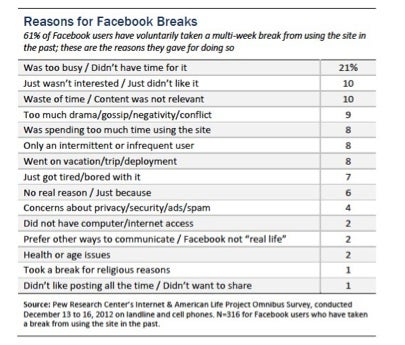
While some users have already taken multi-week breaks from Facebook, others have just spent less time on the site. According to Pew, 34% of Facebook users said they have been spending less time on the site, while 13% said they have been spending more time on Facebook over the past year.
This data from Pew is in line from June 2012 data from Reuters and Ipsos, which found that about a third of Facebook users said they had spent less time on Facebook in the previous six months (34%), while 45% said they had spent about the same and 20% said they had spent more.
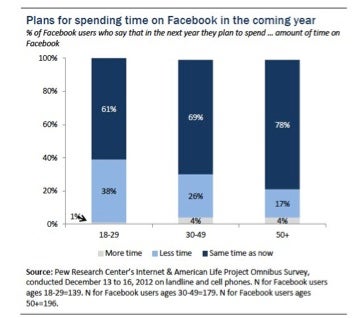
Keeping users engaged with Facebook — and coming back — is a key issue for the company, as it works to attract more advertising dollars from brands and marketers. Yet Pew found that users plan to spend less time on the social network.
Of Facebook users, 69% said they plan to spend about the same amount of time on the site, while 27% plan to spend less time, and 3% plan to spend more time. Younger users, ages 18 to 29, are more likely to say they will spend less time on Facebook in 2013, with 38% saying so, according to Pew.
To its credit, Facebook is working to improve the user experience, introducing its new search functionality and improving its mobile applications. And it is working to expand its mobile ad options and Facebook Exchange to be of benefit to advertisers. But with increased competition from other social networks, will user time—and advertiser dollars—move away from Facebook?







