


CPG brands buy digital media to make their in-store sales pop. But attempts to measure the impact of digital ad dollars on physical sales often fall flat.
Blame it on retail data silos, said Graham Goeppert, VP of digital commerce and media at probiotic soda brand Poppi.
Real-time inventory information typically sits separately from sales data. And both flow into a different system than a brand’s online media spend data. This makes it nearly impossible to prove a causal relationship between media spend and in-store conversions.
As a result, “there’s often the perception that digital tactics are only really driving digital sales, when the reality is that there’s actually a much bigger return offline,” Goeppert said.

Thirsty for insights
Earlier this year, Poppi started looking for a way to get more reliable, faster access to sales data from its retail partners. That’s when it came across Crisp, a retail data platform founded by Are Traasdahl. (Traasdahl was also the founder and former CEO of cross-device provider Tapad).
It just so happened that, around the same time, Tinuiti, Poppi’s agency, was also starting to test Crisp.
And so the three began to collaborate on a methodology for tying digital media to in-store activity to give brands like Poppi the ability to better optimize online spend based on what’s in or out of stock at specific stores.
Crisp’s API acts as a data connection hub between brands and retailers, including Target, Walgreens, Walmart and Whole Foods. Point-of-sale and inventory data down to the SKU level flows automatically and on a daily basis from retailers directly into a brand’s marketing tools and data warehouse.
It’s not impossible to get this data through other methods, Traasdahl said. But it’s a slow process that requires a lot of manual labor.
“Brands can use Excel sheets and log into multiple places to try and find the correlation between revenue and sales, but it’s really hard to do,” he said. “If you can get data in real time, though, you can be a lot smarter about how you spend and how you use advertising to support your distribution.”
Shelf life
Using retail information via Crisp, Tinuiti developed an econometric data model to establish a statistical relationship between media spending on specific online channels and subsequent sales in certain regions.
Put simply: Does TikTok or Instagram or streaming – or insert other digital channel here – cause someone to take an item off the shelf and put it in their cart?
That doesn’t mean, however, a brand needs to determine whether a specific user saw a specific impression before making a purchase, said Morgan Stockham, director of econometrics at Tinuiti. It’s not necessary to drill down that far.
“But because we’re able to take in a brand’s entire portfolio and take control variables into account,” she said, “we can say with more certainty than before when an increase in spending on certain channels contributes to an increase in purchases overall.”
Minding the store
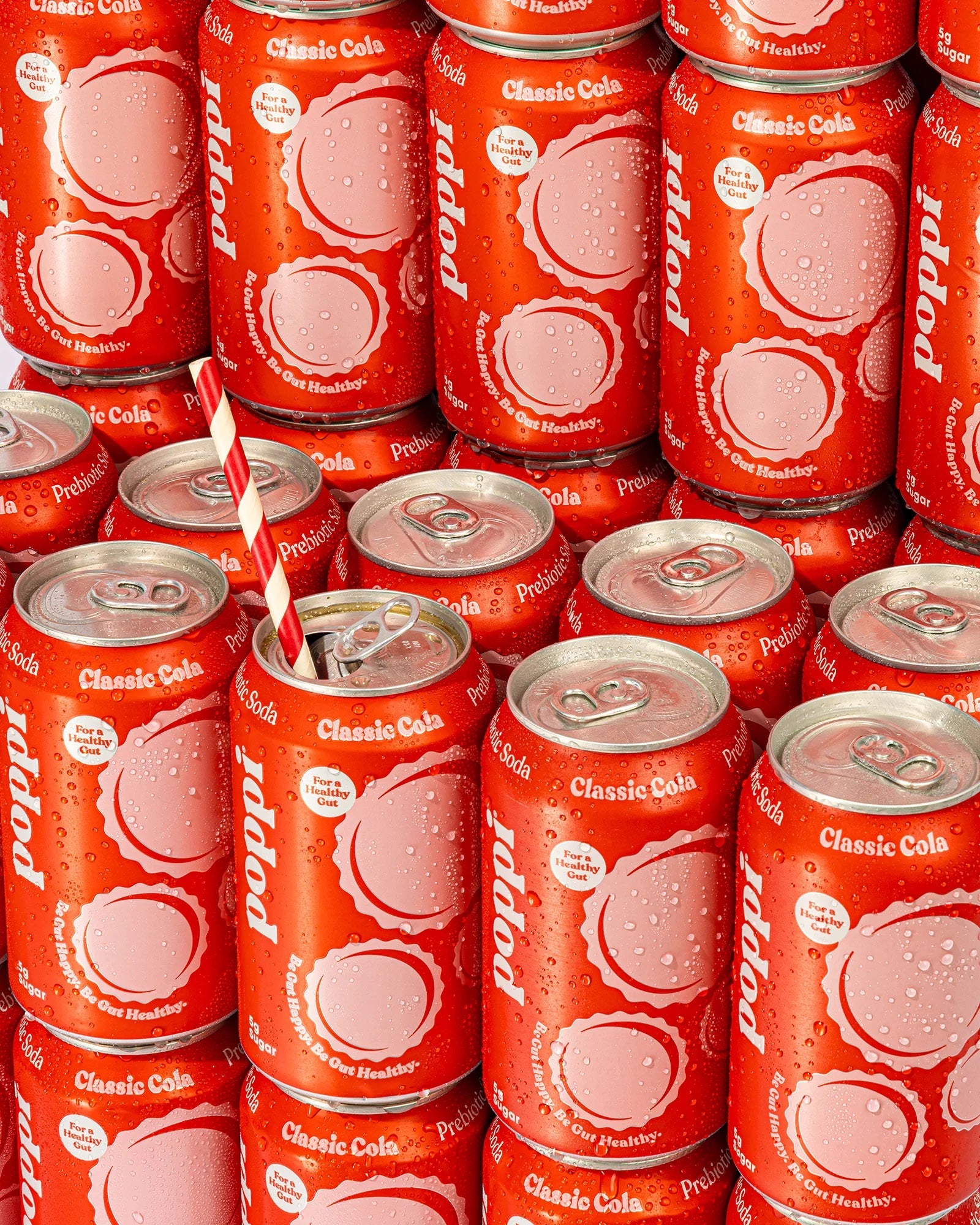 In Poppi’s case, the brand used Tinuiti’s model and data from Crisp to prove that people who saw Instacart search ads led to a 10% increase in monthly in-store transactions at a particular retailer the following week.
Poppi also found that people who saw Amazon online video ads were 15% more likely to buy its products in a store than people who didn’t see those ads. Meanwhile, customers exposed to TikTok ads were 80% more likely to buy Poppi soda at a store.
Knowing what role digital media plays in the overall mix means marketers can spend on those channels more strategically.
In media planning, “brands can sometimes shoot themselves in the foot because they’re not thinking holistically,” said Aaron Gooden, Tinuiti’s director of marketplace growth.
“People see ads on TV, they see digital ads, they get coupons, and what our clients want to know is which channels actually help influence those people to go into a store near them and buy something,” Gooden said. “Our job is to figure out what that kind of attribution looks like.”
And the better brands get at assessing the impact of digital on in-store conversions, the more easily they can justify shifting money into digital marketing.
“We want to place big bets, but we also need to feel comfortable doing it,” Poppi’s Goeppert said. “Now, we’re able to make big adjustments in our annual planning processes and also feel good about doing it.”









