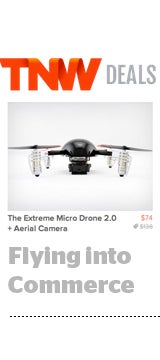
 Not every publisher sees selling drones as a natural extension of its business.
But converting readers into customers is the next goal for The Next Web, an online tech magazine that has 6.6 million unique monthly visitors.
For the past three months, the company has been using StackCommerce to power its e-commerce store, called TNW Deals, which features a huge variety of products, including drones, mobile chargers, and boxed sets of whiskey. In other words: “The coolest things we can find,” said Rey Caacbay, senior business development manager.
The site now drives 10% of The Next Web’s total revenue.
Pairing content and commerce has unlocked data that The Next Web applies in other areas of the business, including advertising. For example, shopper data is a valuable asset for advertisers interested in buying sponsored posts. And blog posts and social media updates highlight products, which the site curates to ensure they align with audience interests.
“We can show our customers the information we’re getting from the e-commerce side, the conversion rate, how our audience interacts with the deals,” Caacbay said. “Now we have the numbers to back up the fact that our audience is creative and entrepreneurial, and buys a lot of e-learning items.”
Advertisers can participate in The Next Web articles in one of three ways: underwriting an article, sponsoring posts that mention their brand, and performance posts, which are designed to sell products.
“Because of TNW Deals, we have the data to give back to [advertisers] so they can build a performance model,” said Juan Buis, partnerships manager. “We can actually show them what we expect in terms of CTR or conversion rate.”

The Next Web began selling advertising directly a year ago. “We all know that there’s a decline in banner click-through rate now vs. 10 years ago,” Caacbay said. “We try to give a compete package to our partner, with display advertising, sponsored posts, and a corresponding private marketplace for programmatic where it makes sense. We make it as custom as possible and have it make sense to our readers.
The Next Web offers advertising services specifically designed to drive sales for companies with products in TNW’s shop.
Brands or startups with products on StackCommerce can buy posts on the site or through social network to raise awareness of their products, just as normal advertisers can.
The Next Web offers an advertising package called “The Future App of the Week,” which combines a product review with mobile placements designed to drive downloads. It plans to adapt this package for commerce, combining content with ads to drive sales.
That kind of integration requires limiting who The Next Web works with. “We choose our partners carefully. We want to make sure the deal or app is amazing for our readers,” Caacbay said. “But on the e-commerce side, we want to make sure it will have a conversion rate.”
The products on The Next Web’s site are a mix of those sourced by StackCommerce and products The Next Web scouts out itself. If it finds an interesting gadget, it will point the company to StackCommerce to be vetted and set up.
StackCommerce passes on a percentage of the sale to The Next Web, and the rest is shared between StackCommerce and the merchant.
The Next Web previously tried to integrate commerce in a way that made the publisher more involved operationally. “It was too much overhead,” Buis said. “We’re more of a marketing company, and they know more about running a web shop. They help us out with sourcing deals, anything in the order process, and shipping.”
Three months in, the experiment continues. “We see our company as a beta product every day and look at how we can improve,” Caacbay said.