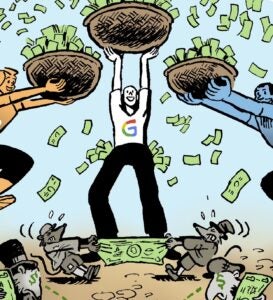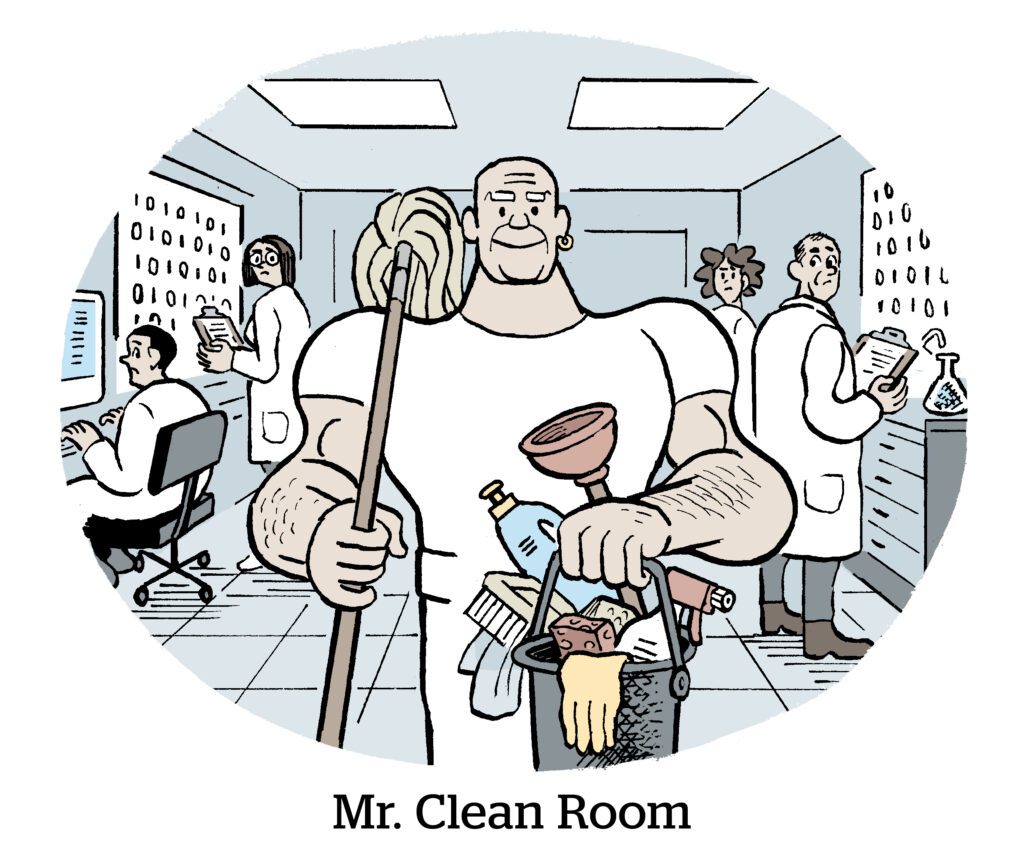
Consolidation has come to the data clean room category.
On Wednesday afternoon, LiveRamp announced plans to acquire Habu in a deal worth $200 million.
The two companies have clear synergies.
Habu is a cross-cloud clean room specialist with native applications for walled garden platforms, including Google’s Ads Data Hub and the AWS-based Amazon Marketing Cloud. LiveRamp, meanwhile, maintains the largest commercial identity graph and allows advertisers to onboard their offline data and apply it across the digital marketing ecosystem.
Whereas Habu primarily helps marketers analyze black box systems like Google, Meta and Amazon, LiveRamp’s strongest clean room use cases are for advertisers who go deep on the open web.

The deal does relieve competitive tension, though.
“From a competitive standpoint, LiveRamp was who we worried about the most,” Habu Co-Founder and CEO Matt Kilmartin told AdExchanger on Thursday.
LiveRamp share prices jumped 10%, added LiveRamp CRO Vihan Sharma. Clients like it as well as investors.
“We already in the last 24 hours have seen a huge influx of requests coming in from our customers,” Sharma said.
Muscle Up
LiveRamp and Habu are two of the largest data clean room service providers on the market.
A recent IDC vendor assessment report on data clean room services for advertisers, which covered 11 vendors, including AWS, Snowflake, InfoSum and Acxiom, found four clear leaders in terms of capabilities and integrations: Epsilon, Habu, LiveRamp and AppsFlyer.
Still, the data clean room category is small, made up of a handful of vendors trying to contend with the likes of Google, Amazon, Microsoft and Snowflake.
Venture-backed startups in the space will find it difficult to compete, Kilmartin said, “because, ultimately, it is all about the network.”
LiveRamp brings some 900 brands as clients, he said, plus a wide range of integrations with the cloud and media platforms.
“It’s going to be hard for some of these other companies to gain commercial traction,” Kilmartin said.
Startup days
And Kilmartin knows firsthand about the challenges facing a venture-backed startup in the clean room category. Habu is backed by none other than Snowflake.
But for companies to collaborate using Snowflake’s tools, they must also warehouse their data on Snowflake, too, he said, which is limiting because natural data partnerships have nothing to do with the choice of cloud infrastructure provider.
As Habu grows, it needs a wider cross-cloud layer. A large enterprise marketer – the type most likely to be using data clean room software services – won’t restrict its business partnership efforts to companies that share its cloud infrastructure.
Pepsi, a Habu and LiveRamp client, must work with Ads Data Hub for Search and YouTube insights; with Amazon Marketing Cloud for Amazon analytics and with Azure for Microsoft Advertising and LinkedIn – not to mention with Walmart’s clean room solution and Disney’s offering, etcetera.
But there are two companies with partnerships and integrations across all the cloud and media platforms, Kilmartin said: Habu and LiveRamp.
From collaborate to activate
Habu had also been constrained by focusing only on data collaboration services.
“Without activation, the value of collaboration is limited,” Kilmartin said. LiveRamp brings activation pipes via ad tech and media partnerships as well as the advertisers that use its RampID identity solution.
These growth challenges help explain the paucity of independent data clean room vendors.
Epsilon, another IDC-rated “leader,” is owned by Publicis. Acxiom is owned by IPG. Samooha was acquired by Snowflake in December to develop its own clean room tech. AWS, Google and Snowflake have clean room services, but they operate more like satellites that orbit the core business.
Independent clean room tech vendors are therefore in a tough environment right now.
But for LiveRamp and Habu, this week’s deal rids each of a close rival and puts both companies more squarely on track to contend with the real competition coming from walled garden giants and other companies that don’t just share data, but also use it to buy ads.