
 Want to buy a comment?
Commenting platform Disqus released Monday a featured called Sponsored Comments, following a month-long beta testing period that included The New York Times, Yahoo and Xerox, among others.
This is not Disqus’ first foray into advertising products. Sponsored Comments arrives roughly one and a half years after it released its first ad feature, Promoted Discovery.
“Once we saw the Disqus audience was receptive to advertising, it set us off into advertising as how we will sustain ourselves as a company,” said David Fleck, Disqus’ general manager of audience. (A blog post by company CEO and co-founder Daniel Ha detailed some results shortly after Promoted Discovery’s release in late 2012.)
Those not familiar with the Disqus name (it’s pronounced Discuss and originated in 2007) have likely seen or interacted with its software, as it powers the commenting features on publisher websites like CNN, National Public Radio and IGN. The system is on roughly 3 million websites and Disqus’ user base (made up of 1.3 billion uniques, according to Fleck) is linked to its broader community. Click on the name of a commenter and you’ll see a thread of her comments across other publishers using Disqus.

Sponsored Comments is basically a labeled promotional message companies can purchase for placement at the top of a commenting thread. Here’s what it looks like:
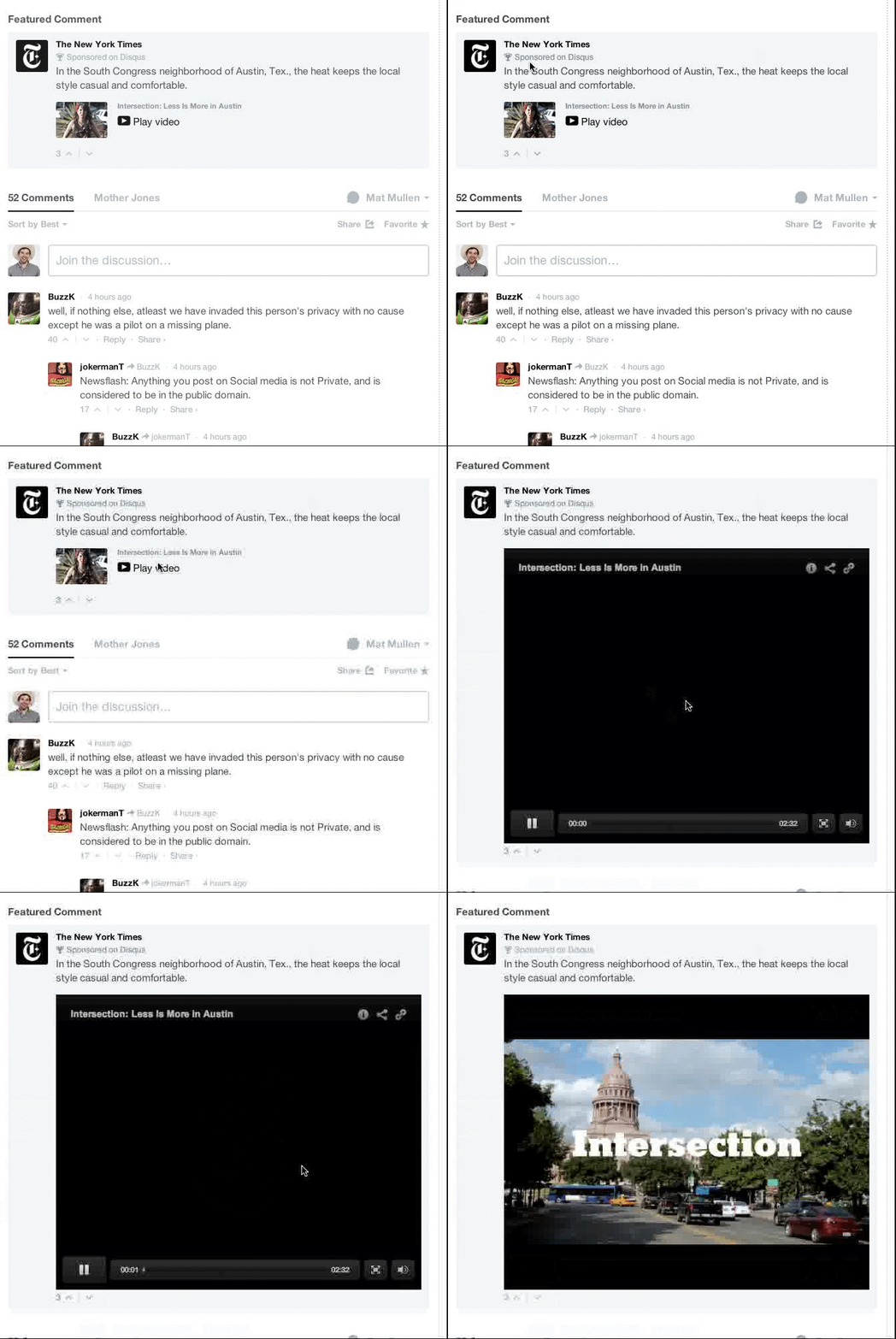
Brands interested in buying a Sponsored Comment speak to a Disqus sales rep, and the subsequent ad unit appears on the comment section of select Disqus-using publishers. There’s a targeting element as well, Fleck added: “We have a lot of information on users. We understand if you’re commenting, what you’re commenting on and what you’re reading. That’s a powerful predictor of what you’re interested in.”
Fleck compared Sponsored Comments favorably to Twitter’s Promoted Tweet product, which he said doesn’t provide enough scale.
“Promoted Tweets are in Twitter’s environment, and you might see a tweet come through,” he explained. “Whereas with Disqus, [Sponsored Comments are] an endemic way to repurpose those assets.” Consequently, he said, brands and agencies are discussing using Sponsored Comments to extend Tweet buys.
Unlike Promoted Discovery, which has a self-serve dashboard and is a bidded CPC product, Sponsored Comments is a managed service priced on a viewable CPM model. This will likely evolve, Fleck said.
“Sponsored Comments is a managed service because it’s in the extremely early stages,” he said. Right now, Disqus wants to make sure its clients get what they buy, and need to closely monitor the Disqus community and system to see how it reacts. Eventually Sponsored Comments will migrate to a more self-serve model.
“Over time, Sponsored Comments will evolve very similarly to Promoted Discovery,” Fleck said. “We want it to become as programmatic as possible. Our advertising ecosystem will be a native programmatic ecosystem, [which] means it’s noninterruptive and enhances the user experience.”
Does this mean Disqus will open an exchange-like environment? Fleck said it’s too early to talk right now about adding inventory to either a public or private exchange. He emphasized, however, that Disqus isn’t looking to create a demand-side platform (DSP), as there are enough potential partners that can handle Disqus’ inventory should it be made available.
“We’re not today talking to the downstream DSP guys, but we’re talking to their proxies, our brand and agency partners, to understand how they’d want to target and buy,” Fleck said. “And we’re building out what we think is the best way to allow this business to provide scale-based targeted buys.”
It’s not surprising that commenting platforms like Disqus are looking into advertising to monetize and differentiate. The competitive landscape for such tools is fierce, with companies like Livefyre and Facebook dealing in.
Moreover, publishers swap commenting platforms like children swap baseball cards. Case in point: popular tech blog Engadget, owned by AOL, migrated from Disqus to Livefyre. TechCrunch (another tech blog owned by AOL) went from Disqus to Facebook to Livefyre. As of this writing, TechCrunch appears to be using Facebook’s comments plugin again.
So the success of a feature like Sponsored Comments will hinge in part on Disqus battling out with competitors to maintain its reach. And tools like Sponsored Comments, functioning as a link between numerous publications, could also provide data that helps publishers better understand their readers.
Of course, Disqus isn’t the only commenting platform after advertising dollars. While Disqus has taken the product route, Livefyre focuses on services, including the mid-2013 launch of its Social Native Advertising Group, a unit designed to help brands and agencies with “social strategy, creative services, technology and distribution.”