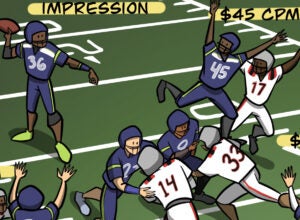
“On TV and Video” is a column exploring opportunities and challenges in programmatic TV and video.
Today’s column is written by Kevin Lenane, general manager of video at Integral Ad Science.
If you regularly read digital advertising news, you may be forgiven for believing that marketers have embraced video advertising in a monumental way.
In my view, however, the hype surrounding the online video revolution is premature. The mass of dollars flowing into it is a bit misdirected, due to a high cost of entry for advertisers, a lack of transparency and the long-term effects of little or no investment in video technology.
Veterans of the digital ad tech space may assume that there are dozens of nascent companies actively working to address these problems. The industry has a solid history of meeting every challenge with VC-funded startups – but that hasn’t been the case with digital video.

While investment dollars have certainly been abundant in video ad tech, most of that money has gone into new formats, such as mobile video and OTT. Further consideration has been given to better audience targeting in video, but comparatively little has been directed toward technology that builds trust and addresses the unique challenges that video presents.
Transparency Discomfort
In addition to the massive entrance cost, there is a standing level of discomfort among digital advertisers when running video campaigns. Though spending in the channel is undeniably rising, for many it still feels too new.
For example, video content can’t be indexed and monitored the same way as text-based content for display, requiring advanced and unique technology to analyze video imagery and audio. As a result, advertisers never truly know exactly what their ad will appear before. Just a few months ago, major brands unknowingly paid for YouTube pre-rolls that ran before ISIS and jihadi videos.
Even beyond brand safety, we too often encounter 30-second ads before 20-second video clips. It’s simply not appropriate and delivers a poor user experience.
High Video CPMs Limit Innovation
Outside of a select few mega brands, most advertisers can’t afford the production costs of creating myriad high-impact flicks needed to execute a large-scale video campaign. And that’s not including the high CPMs that advertisers must pay to get decent placement for those video ads. Digital video CPMs are five to 10 times higher than for display banners, a Credit Suisse analysis found.
In fact, digital video CPMs are often higher than traditional TV – the average CPM for in-stream ads was $24.20 last year, 60% higher than cable TV CPMs, according to SQAD.
Thanks to stratospheric CPMs, we’ve actually seen less innovation on the video technology front, and the money that does come in is used to sustain existing technologies and content production, rather than innovate new ones. The truth is that publishers and video ad networks make high margins on video, and feel little pressure to open the spigot to a wider breadth of marketers. And why should they if they have no issue meeting or exceeding their sales projections?
When publishers started driving profits from high CPMs for video, they had a choice: Invest in technology and ad formats that deliver the best possible experience for users and advertisers or build video content teams to create more video. Only one of those options generates revenue in the short term, which is why video content creation has become the name of the game.
This is the exact opposite of what happened in display, where fierce competition spurred every digital publisher to break new boundaries in terms of ad formats, interactivity, targeting and tracking. In my mind, the question is simple: How do we get our industry ready for the influx of digital video dollars that marketers will want to spend in the coming quarters?
There’s no doubt in my mind that immediate investments in video technology will lead to greater trust in video advertising, which in turn will lead to greater spending in the channel. With ad spend coming to the channel, we need to be ready for it and accountable for its performance.
Follow Integral Ad Science (@Integralads) and AdExchanger (@adexchanger) on Twitter.