

 The Twitter Publisher Network is now the Twitter Audience Platform – but the name change is more than aesthetic, said Ameet Ranadive, Twitter’s senior director of revenue products.
“This is one step in the direction of reaching our total audience,” Ranadive said.
Several enhancements were made to the rebranded Twitter Audience Platform (TAP), which came out of private beta into open beta on Thursday. Those changes include the ability to extend Promoted Video and Promoted Tweet engagement campaigns to TAP and the launch of additional creative units.
Direct-response functionality is not yet on offer, however. Twitter acquired digital ad platform TellApart at the end of April as part of its push into DR.
By “total audience,” Ranadive was referencing something beyond Twitter’s 316 million monthly active logged-in users.
Powered by MoPub, the mobile exchange it bought in 2013 for a reported $350 million, TAP claims to reach more than 700 million people both on Twitter’s owned and operated properties, as well as on third-party apps and sites.

“MoPub is essentially the connection point between Twitter’s owned and operated ads and this platform of publishers,” Ranadive said.
Investors have looked hard at Twitter’s ability to stimulate user growth. On Twitter’s Q2 2015 earnings call, interim CEO Jack Dorsey referred to the company’s “total audience strategy,” a plan that revolves around increasing reach, participation and value among current and lapsed users.
From an advertiser perspective, TAP is about reach extension. From a publisher perspective, it’s about audience monetization. Ranadive added that by making their inventory available on MoPub, publishers get access to Twitter’s advertisers to fill demand.
“Twitter’s sales force is in the hundreds, but publishers don’t have the same kind of sales force to go out and look for access to demand sources,” Janae McDonough, Twitter’s senior director of exchange, told AdExchanger at the beginning of April. “Twitter becomes the demand source. Those are dollars they wouldn’t otherwise be able to capitalize on.”
Advertisers will have access to the same targeting capabilities available to them elsewhere on Twitter’s O&O, including interest-based targeting and TV targeting.
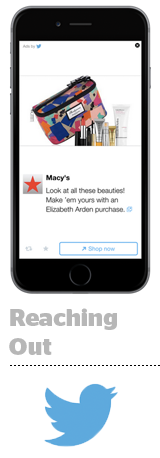
They’ll also be able to automatically include images in their Promoted Tweets, turning them into interstitial, videos, banners or native ads with a social flavor. Retweet and favoriting functionality is baked directly into the units.
Early beta partners, including Samsung UK and audio brand JBL, have seen encouraging results. Macy’s, for example, garnered a 7.8% engagement rate on a July campaign it ran to drive traffic to a beauty product page.
In terms of video, the same viewability rules apply both on Twitter and off, said Ranadive. In June, Twitter launched autoplay video on its platform, guaranteeing a 100% in-view for three seconds standard.








