Apple and Google own the app economy – and that makes distribution and discovery pretty tricky for the average app developer.
“These companies … are monopolizing this ecosystem,” said Chris Cunningham, newly minted CRO of beacon and proximity data aggregation company Unacast, speaking at the Interactive Advertising Bureau’s Mobile Marketplace event on Monday in New York City.
Google and Apple each control an operating system, an app store and the hardware itself. Not only are developers at their mercy, but their needs aren’t necessarily aligned with Apple’s and Google’s respective objectives.
A company like Apple, for example, is highly incentivized to keep its developers happy so they continue creating more apps – but what Apple cares about most is selling more iPhones. App developers looking for better visibility in the App Store just isn’t a major priority for Apple.
But before worrying about revenue or distribution, developers need to go through a notoriously time-consuming and often inconsistent app store approval process.
Just getting an audience with Google or Apple can be a bit like scoring a meeting with the Wizard of Oz.

Noah Heller, VP of audience development, data partnerships and emerging technology at Hulu, experienced that firsthand as CEO of Vhoto, a Seattle-based startup which produced an app that would scan mobile videos to capture the best still images. Vhoto was acquired by Hulu in late 2015.
Heller and his team would regularly send emails to Apple and Google developer support with seemingly casual messages like, “Hey, so turns out we’ll randomly be in town – grab a quick coffee with us?” even if they had no plans to be in California. Most of the time there would be no response. But the odd time there was one, Heller and his team would spring into action and buy plane tickets on the spot.
“It was worth it just getting a meeting,” Heller said.
But even meeting with the powers that be doesn’t automatically guarantee anything in the way of app discoverability.
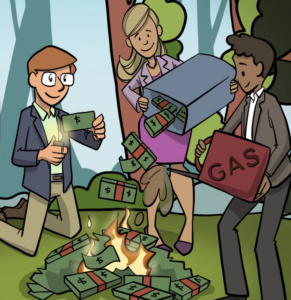
A lot of larger app developers and enterprise publishers – especially in the game space where old titles are continually falling out of favor as new titles emerge to take their place – rely on paid acquisition to burst into the charts and boost their user base. But funding paid installs takes a lot of cash, which not all app developers have. When the big guys spend, through, they really spend. Hong Kong-based app publisher I Got Games, for example, has shelled out hundreds of millions of dollars just on paid UA.
The reality, said Cunningham, who made the move to Unacast in early April after a stint as head of US mobile at app discovery platform ironSource, is that initially most content and app discovery comes through word of mouth. Paying for users isn’t going to scale an app’s user base if it isn’t underpinned by healthy organic growth.
It’s the daily dance a developer does. But there are emerging alternatives beyond fighting to stand out in the App Store or Google Play.
Hulu, for example, uses a solution from ironSource called appCloud that allows publishers to pre-install apps on phones through direct partnerships with carriers and original equipment manufacturers.
Most new phones come preloaded with a number of apps, some might call it bloatware, regardless of who the user is. Rather than hardcoding certain apps onto a new phone – apps that can’t be deleted, like the Stocks app on iPhone, for example – users are presented with a series of recommended apps in categories from travel to social to ecommerce during the initial setup process.
Users can select which apps they want on their phone from the beginning, and from there they continue to receive targeted app recommendations throughout the life cycle of the device based on their activity and other signals, like location.
It’s just one way to circumvent the app stores, where masses compete for attention. As of June, Apple’s App Store had roughly 1.5 million apps, while Google Play topped 2 million apps in February.
“We view discovery as a major challenge, [which is why] we make sure our content is spread out across the web for the express purpose of bringing people back into our ecosystem,” Heller said. “Our core business thesis is that you can’t rely on traditional methods to make people aware of your app. That only works once you have massive, massive scale.”