

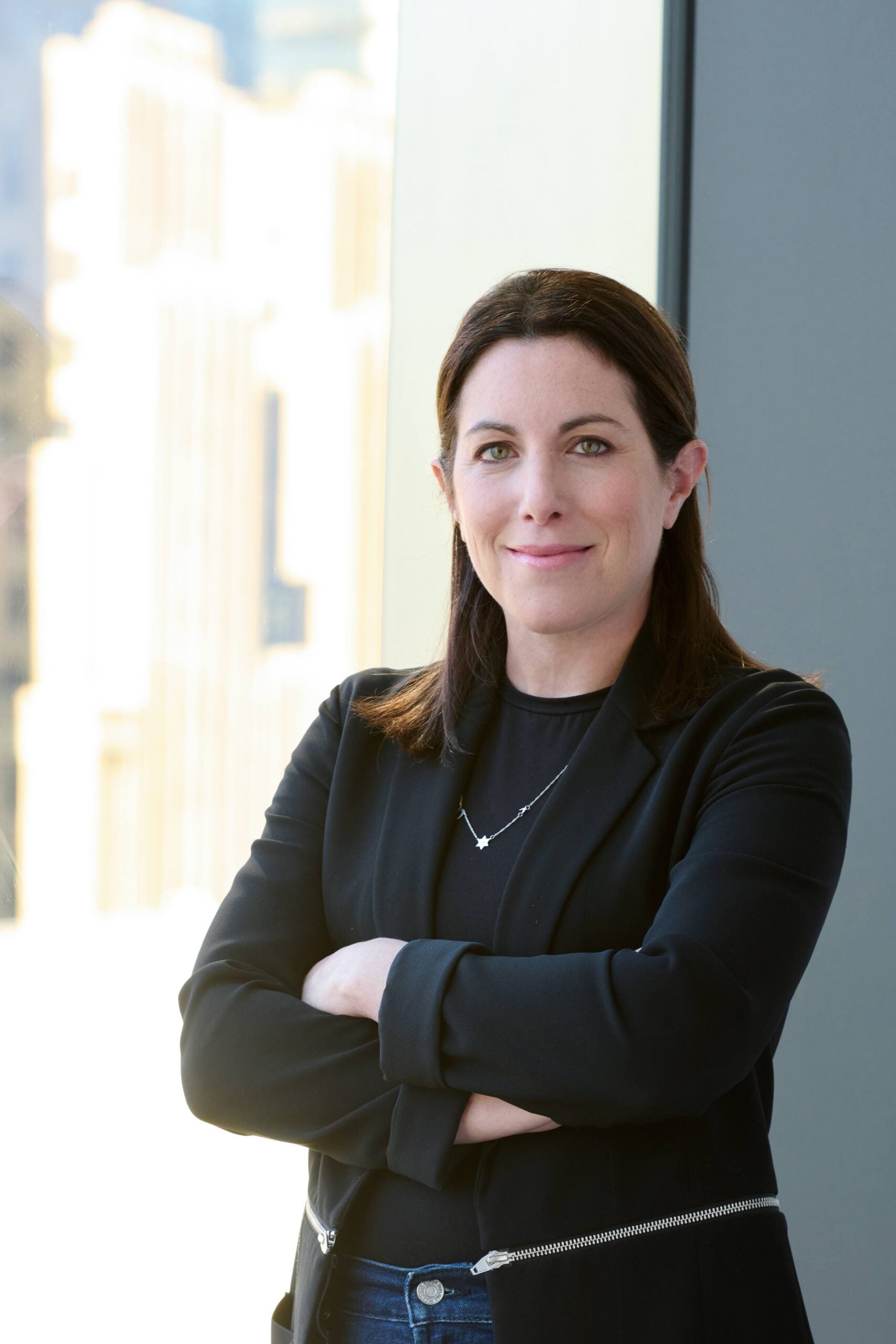

Gila Wilensky knows the secret sauce behind good marketing – you could even say she’s a chef of sorts, having spent the past six years working on business growth within WPP, most recently as its chief solutions officer for North America.
But it was time for a change.
On Monday, Monks, the digital arm of Sir Martin Sorrell’s S4Capital, appointed Wilensky as its EVP and head of data and media for the North America region.
Her role at Monks will be similar to her previous work. Wilensky is overseeing the agency’s media and data practice and developing a go-to-market strategy, Wilensky told AdExchanger.
But the game plan won’t look the same as it did even just a few years ago.
The rise of AI has brought previously unheard of “speed, quality and value to advertisers,” she said, and brands have higher expectations now.
“We’re at a tipping point,” she said.
Wilensky spoke with AdExchanger about her new role.
AdExchanger: Why did you decide to join Monks at this moment?
GILA WILENSKY: Advertisers are looking for agile, integrated, technology-forward partners to help them navigate the AI era. There’s so much to learn; there’s so much to build; there’s so much to integrate into legacy ways of working, and that is just completely refreshing.
Monks has a deep legacy with partners, specifically the top algorithmic ad platforms like Meta, Google and Amazon, and it has unique access to co-building with those partners.
This tipping point is extremely exciting, because it’s all about helping brands that we work with grow and figuring out how to do that faster.
How do you help brands grow faster?
In my experience, it’s really understanding what their KPIs are and how they define success.
It can’t just be “let’s do what we did last year but do it more efficiently or more cheaply.” It has to be determining the value that the brand is looking to drive, whether that’s sales or customers. Once we can partner with clients to identify what their North Star is, it’s building everything around that for them.
Your new title, “head of data and media,” encompasses a lot. What exactly does your role entail?
I’ll be helping prove to global brands how an independent unified partner can deliver performance for them and drive their growth.
I’ve spent the last many years building cross-channel media solutions and running activation for large enterprise accounts, so I know how to scale data-driven marketing. Doing so with the content production engine at Monks is sort of like all of the puzzle pieces coming together.
Media and data are very broad, all encompassing, but the task is simple – to bring that together for go-to-market.
That’s my North Star.
Monks bills itself as a “digital first” and “AI first” company, but what does that really mean at a time when so much of media is digital, and everyone is adopting AI?
What I think is really unique and differentiated is the integrated data media engine powered by Monks.Flow, which is the company’s AI tool and operating system.
The differentiator is the way Monks integrates everything creatively, from getting your insights on your clients to building the creative to media distribution and closing that measurement loop in a holistic, client-owned platform.
A lot of media agencies and service providers are doing that in their own instance, but Monks took the approach of building it in the client-owned instance. It’s interoperable that way, so that is quite unique.
How has AI changed the way marketers and vendors need to approach data?
It’s about the orchestration.
AI is allowing us to get insights faster, whether that’s understanding creative fatigue or shifting investment into stronger-performing partners. Really, it’s about how to connect and collaborate, to reduce silos and collapse timelines.
We’re only at the beginning of this journey to free our teams from more manual execution and manual insight discovery, but that is really going to allow them to focus on optimization and business outcomes.
On the flip side, is there anywhere you feel AI definitely shouldn’t be used, or any fears you have about AI?
Change is the only constant in life and our industry.
I think we can only be optimistic about this. I’m an optimist. I don’t have the scaries about AI at nighttime. I wish AI would make my dinner for me, but that’s a different story.
This interview has been lightly edited and condensed.
For more articles featuring Gila Wilensky, click here.









