“Marketer’s Note” is a regular column informing marketers about the rapidly evolving, digital marketing technology ecosystem. This week it is written by Catherine Oddenino, Analyst, AdExchanger Research.
In recent conversations with marketers and technology providers for an upcoming AdExchanger Research report on content marketing, several have emphasized the ability to quickly respond to cultural events as a top factor in selecting an agency.
While I agree that speed and the ability to create relevant content are important elements that I also used when evaluating agencies as a marketer, the social media era has accelerated this trend – leading some misguided brands and agencies to comment on all buzzed-about events. Just because something made a splash on the web doesn’t mean you have the right to comment on it. Not every Twitter trending topic is relevant to your brand.
Perhaps you had hoped to never hear about the clearly white and gold (not black and blue) dress again, but it’s a great example of a cultural phenomenon that marketers latched on to, some with more success than others.

One of my favorite responses to #TheDress came from Adobe:
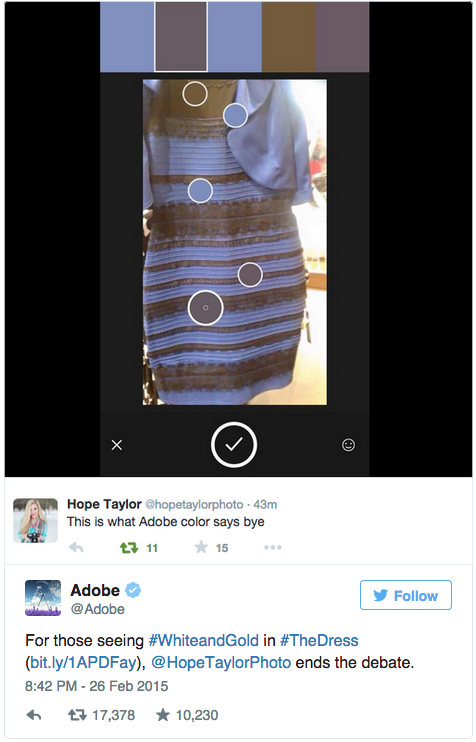
It involved a consumer and perfectly demonstrated some of the value of Adobe’s Color app.
Wired Magazine also used the opportunity to effectively demonstrate the value of its brand, quickly securing a neuroscientist to explain the science behind the phenomenon. The article ended up getting more traffic than some of the original posts.
Some less effective examples included this response from Zyrtec:

And this from Olive Garden:

Neither added value to the conversation and both fell a little flat. These messages are simply broadcasts capitalizing on a popular hashtag rather than providing relevant commentary. Consumers know when they are being served marketing drivel, and you’re likely to annoy and eventually lose them by cluttering their feeds with unrewarding posts.
Starting with your customer data may help evaluate a news item or viral hit as a content marketing opportunity. Do your existing customers and social media followers index highly for entertainment and fashion? Then #whiteandgold might be a fit.
Taking this a step further, selective content marketers might consider building keyword lists pegged to customers’ demonstrated purchases, content behaviors and personal values. By developing content around news developments and social phenomena that match to that list, the odds of resonating with customers and prospects (vs. earning less meaningful “social impressions”) is much greater.
When responding to an Internet meme, you must keep your brand’s core message at the forefront of anything you create. It needs to add value to the conversation in order to be worth your time and your consumers’ time. Don’t use “me too” or “everyone else is doing it” as a reason to publish a message or piece of content. Keeping this in mind in all of your communications will help earn consumers’ trust and attention.
The interviews I’m conducting are for an upcoming report on about how marketers create and source their content. If you’d like to participate, please get in touch.
Follow AdExchanger Research (@AdExchangerRsch) on Twitter.