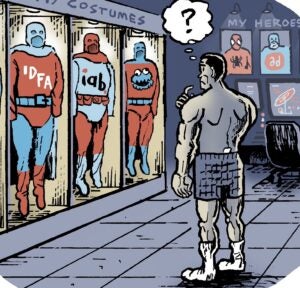
Connected TV advertisers know their ads are going to the big screen on the wall, but don’t know much else about what content they’re running against.
And they’ve had enough of it already.
“It is wild that, given where we are in advanced TV, we can’t do some of the same things we could do in linear TV,” said JiYoung Kim, chief products and services officer of GroupM’s North American business, during a session at the IAB Tech Lab’s advanced TV summit in New York City on Thursday.
Digital ad targeting and contextual data has gotten savvier over the years. But the fact still stands that CTV buyers often lack visibility into which network, program or distribution channel where their ads are served.
It’s almost enough to wish for the good old days of program guides.

Do my bidding
Inventory transparency may simply not exist in a walled garden world. But there are ways to get buyers more info to incorporate into their bidding schemes.
CTV advertisers have insufficient inventory descriptions, according to Neal Richter, director of advertising science at Amazon Ads, who was also speaking at the summit.
And the transparency will abate in CTV as more TV content becomes available for addressable buys. Because advertisers must understand both their video buys and audience reach across channels without involving so many supply, measurement and DSP partners.
The future of CTV won’t be 100% programmatic interconnectivity, said Mike Fisher, VP of advanced TV at GroupM agency Essence. But the idea right now is to make headway on common grounds for an identity-based measurement currency.
There is still no common currency for unique reach and unique frequency, Kim said. “The problem is that there’s not much incentive for our [media] partners to come together and share this kind of currency, not yet.”
That incentive sits on the buy side, she added.
If an ad misses its audience, overdelivers or, worst of all, runs on very unsuitable content for the brand, that impacts consumers’ opinions of brands, not the programming. (All I have to say is “Applebee’s” and you know what I mean.)
Programmatic push and pull
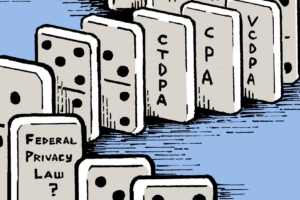
Data is a competitive value prop, but publishers are reluctant to loosen their grip without a good reason. And burgeoning privacy standards around online targeting doesn’t help increase that likelihood.
There is something in it for sellers, though, Kim said. If the sell side opened up to more programmatic data, it would light up the inventory with stronger CPMs and interest from buyers, because the attribution would be better.
Programmatic used to be nothing more than “commoditized ad holes” on the open web, Amazon’s Richter said. But now, programmatic ad buying has evolved to include content signals that can deliver much more targeted messages, which drive business outcomes.
Sellers seem to agree that programmatic can help clean up TV measurement, which is still a big fat mess.
“Buyers just want to reach their audiences without having to differentiate between GRPs for one channel and impressions for another,” said Andrew Tint, GM of programmatic partnerships at DISH. “And we lean on the support of DSPs and SSPs to allow for that level of execution.”
As more linear TV programming comes online, and as more streaming services add ad-supported options (Disney+, HBO, Paramount+, etc.), open ad tech will have more leverage to ask for data and will have a chance to prove whether or not programmatic demand delivers more value than the direct-sold business.
Building back
Even for the most sophisticated companies with great first-party data programs, addressability is no silver bullet for measurement, Kim said.
So what’s a buyer to do?
An agency could, say, resort to only using one DSP for all its buys to avoid some inventory and identity fragmentation. But the trade-off would be to exclude certain media partners and networks in their buys, Kim said, which is unrealistic.
But, while buyers and sellers continue to go back and forth about measurement, more technical standards in programmatic TV supply chains could be helpful.
The IAB Tech Lab, for example, recently extended its Open Measurement SDK specs to CTV, so the media could get the same treatment as with ads.txt and Sellers.json.
But the work is far from over.
“Programmatic is not just a budget,” Fisher said. “It’s a tactic.”