
The two-year-old TV startup Adcuratio is rolling out a platform in Q1 2018 that lets marketers dynamically swap and insert personalized ads into linear TV streams based on CRM or other first-party data.
Early beta testers will include the brands Clorox and Kohl’s, as well as agencies like Omnicom’s OMD and Publicis Groupe’s Zenith.
The problem with addressable TV ads is that they were traditionally limited to two-minutes per hour, which is the slot that the cable and satellite provider allot to local commercial time.
This inventory typically commands high CPMs because it can be targeted at the household level – yet it lacks the reach of linear, national TV.
Adcuratio aims to give buyers the best of both worlds.
For instance, an automaker might have a national brand campaign, while also having specific needs in local markets – like reaching a precise segment of people who have leases that are ending, said Harish Narasimhan, founder of Adcuratio.
Adcuratio can convert some of those national ad spots, purchased mostly through in upfront deals, into many different variations of ads based on CRM or other first-party data sets.

“Traditionally, an advertiser who buys an ad spot on CBS, would show the same ad to over 4 million viewers who are watching that same primetime show,” Narasimhan said. “What we allow is for a buyer to actually show four different ads within the same spot, nationally.”
Adcuratio first identifies households that will receive a default ad and which households receive a customized message before the campaign flight.
The brand pre-purchases the inventory, and Adcuratio connects to the advertiser’s CRM and uses Acxiom to match segments to set-top boxes. Adcuratio claims it can achieve a roughly 95% match rate between a purchase file, for instance, and the physical set-top box ID.
Then Adcuratio requests additional permissions from the network in order to splice and deliver different versions of the ad creative.
Once approved, Adcuratio instructs which ad to serve to the set-top box. Before the ad airs, the cable operator is also informed when to inject different creative into an ad spot and dynamically serve it.
 Nicholas Hartofilis, EVP of national video activation at Zenith, says Adcuratio’s offering holds big potential for brands just beginning to test addressable TV.
Larger advertisers who value scale but with very specific brand needs, windows around product launches or geographic tendencies stand to benefit most, he said.
“We see this as a new opportunity especially for clients who covet national audiences, but who maybe haven’t done traditional, local addressable because of the cost tradeoff,” Hartofilis said.
“It has the potential to be much more cost effective because we’re using inventory clients have already bought and basically just swapping out creative to customize and deliver at the household level.”
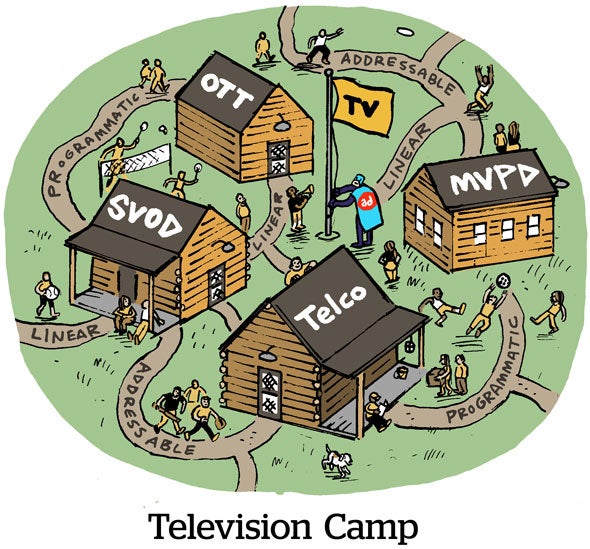
In order for Adcuratio to reach critical scale, however, it will need to integrate with numerous cable operators, satellite providers and broadcast networks, and for those operators to be aligned with the buy side’s needs.
Once it achieves greater sell-in, Hartofilis sees more opportunity for the solution.
“In local addressable, it’s more about just hitting the right households, and normally you don’t have as much control over the content itself,” Hartofilis said. “Whereas for this, you’re essentially supercharging the inventory you’ve already bought nationally [and diversifying] the content.”