
 March Madness equals mobile madness, according to mobile audience targeting platform Jumptap. As live sporting events increase web traffic from smartphones, tablets, and other mobile devices, Jumptap expects a significant mobile bump during NCAA basketball tournament.
“Whether they are editing brackets, sharing insights on social networks, or watching live games during lunch breaks, March Madness fans are increasingly going mobile,” the company said in its March MobileSTAT report that was released today. “In 2012, we saw an 80% spike in traffic on our Sports Channel during the NCAA tournament, and we predict a similar spike this year.”
Jumptap found that, while the iPhone is the most popular mobile device for consumers overall, when looking at March Madness fans, the iPod Touch was the most popular device, followed by the Samsung Galaxy 3, and then the iPhone. On the Jumptap network, 12% of mobile traffic from the March Madness audience segment came from iPod Touch devices, followed by 9% from the Samsung Galaxy 3 and 7% from iPhones. Just like iPod Touch users overall, March Madness fans are slightly younger and less affluent than the general mobile population, Jumptap reported.


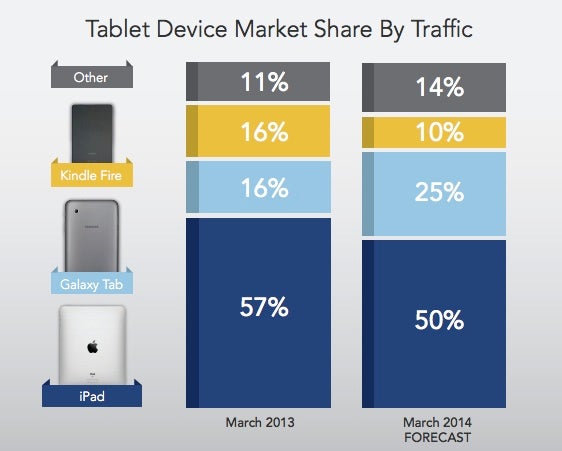
Beyond March Madness-related data, Jumptap also forecasted that the iPad will lose tablet market share in 2014, dropping from a 57% market share in March 2013 to 50% in March 2014. The Galaxy Tab, the company predicts, will increase from a 16% market share in 2013 to 25% in 2014.
Additionally, mobile app usage is on the rise compared to mobile web. In March 2013, mobile apps accounted for 84% of traffic, up from 45% in March 2011 and 60% in March 2012. Consumers tend to prefer the speed and browse-ability of apps, Jumptap said, which contributed to its explosive growth, as well as the sheer number of apps available.
NCAA March Madness itself has a mobile app for both Android and iOS devices, but no usage data has been released.







