GEOh No!
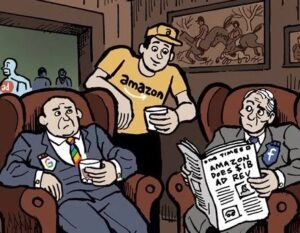
Apparently, the new it product for agencies is to offer tools and services that help brands understand how they appear in “zero-click” AI-driven search.
These tools are hard to resist. What brand doesn’t want to know what LLMs are saying about it?
But, as Digiday reports, the agencies that offer them are beset by churn, especially when they attempt the pivot from free test accounts to paying customers.
For example, many brands who signed up for one such tool, called Lorelight, were looking to improve how they rank and are described by AI search engines. “They basically wanted a secret hack that would suddenly allow them to rank in ChatGPT,” says Lorelight CEO Benjamin Houy.
The problem is, there is no secret magic hack. Marketers need to invest in brand awareness and earned media if they want to impact search chatbots – things that many clients neglect after their initial trials.
All Kidding Aside
The South Korean content studio Pinkfong IPO’d on the country’s Kosdaq stock market on Tuesday.
You probably don’t know Pinkfong but have heard the YouTube kids song “Baby Shark.” Many parents likely have a nightmare loop of doo-doo-doo-doo-doo running in the back of their minds right now.
Pinkfong is an interesting case study because it’s a burgeoning digital studio built from one viral hit – which happens to be the most-watched YouTube video ever with 16.4 billion views, almost double Luis Fonsi’s “Despacito” at No. 2.
The thing is, Pinkfong can’t effectively monetize its YouTube success because content made for kids is prohibited from personalized advertising, The Wall Street Journal reports. The company itself also can’t use normal growth tactics by engaging with comments or sending subscriber notifications.
For shows like “Peppa Pig” or kids media companies like Candle Media (another you’ve likely never heard of, though perhaps you’d recognize CocoMelon songs), YouTube success must be turned into revenue generation elsewhere, like via merchandise or content licensing.
Take Candle Media’s new managed services business for advertisers, which tries to make its YouTube inventory more valuable by handling ads in-house (thus eluding YouTube’s ad personalization tech) and by targeting parents rather than kids.
Gotta make that cash doo-doo-doo.
The Clock Tiks On
For TikTok users, no news is good news when it comes to the US government’s (supposedly) impending ban of the platform.
In April of last year, then-President Joe Biden signed a bill into law that gave China-based parent company ByteDance two options: Either sell the app or face a nationwide TikTok ban.
Thus far, neither has played out, with the exception of that very brief removal of the app from Google and Apple app stores back in January. There’s been almost no progress on a promised acquisition by US investors in months.
But, finally, the Trump administration claims to be on the verge of a deal, The Verge reports.
The new TikTok will be majority US owned and controlled, with a new board of directors and new recommendation and content algorithms. That said, the new US algorithm would be based on one licensed from ByteDance – and if that’s deemed an “ongoing operational relationship” between the US and China, it would actually … break the law.
Welp.
The stalemate might just live on.
But Wait! There’s More!
Meta defeats the FTC’s antitrust suit alleging a social media monopoly. [WSJ]
In an internal company memo, Havas CEO Yannick Bolloré denies that the holdco is in discussions with WPP about a possible acquisition. [Ad Age]
A Cloudflare outage disrupted X, ChatGPT, DoorDash and plenty of other sites and apps on Tuesday. [WSJ]
Roblox will now require users to go through an “age estimation process,” which involves submitting images and videos. [The Verge]
Pinterest’s AI strategy centers on using AI to understand and anticipate user intent. [The Information]
Google is fighting an AI defamation case that Meta opted to settle on. [The Verge]
Anthropic gets a $15 billion investment from Nvidia and Microsoft. [Axios]
You’re Hired!
Pranav Pandit joins Rain the Growth Agency as EVP of digital marketing. [release]
Ogilvy appointed Lyndsey Corona as US CEO. [Ad Age]
Thanks for reading AdExchanger’s Daily News Roundup. Want it by email? Sign up here.