Here’s today’s AdExchanger.com news round-up… Want it by email? Sign up here.
Etsy’s Unwinnable Hand
Etsy, the handmade and vintage product marketplace, is in a bind.
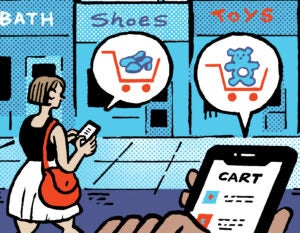
Chinese manufacturers of super-cheap plastic and clothes (namely, Temu and Shein) are hoovering up paid media shopping traffic across the major online funnels (namely, Meta, Google and Apple). So it’s harder for Etsy to shine through.
Also, as The Information reports, Chinese sellers from Temu and Shein keep slipping through Etsy’s filtering system that’s meant to block non-handmade products. Etsy customers don’t necessarily realize that the cheap plastic items they’re seeing are from third-party seller accounts owned by Temu or Shein. They just say, “Ugh, this is Etsy? Feels like Temu!”
And then, over time, they stop returning to Etsy.

And one more, rather awkward thing: The same Chinese seller accounts damaging Etsy’s overall quality and customer experience are among its largest advertisers. And advertising, currently 25% of Etsy’s total revenue, is one of Etsy’s only ways out of the red. Yeesh.
Etsy has made progress weeding out Chinese sellers with unsuitable merchandise, according to a March report by MoffettNathanson. But investors must realize that doing so means a reduction in ad revenue.
Canaries In The Coal Mine
Google employees have reported thousands of data privacy concerns and incidents over the past six years, reports 404 Media, which got access to this information through a Google database leak.
The offenses include collecting audio recordings of children, storing license plate numbers from Street View photos, leaking home addresses of Waze users and making YouTube recommendations based on deleted watch history, to name a few.
Every issue from the leaked list has been resolved, according to Google, which attributes the incidents to accidents, corner cases or mistakes among third-party vendors.
Still, thousands of mistakes involving the collection or leaks of sensitive data suggests that Google “often mismanages a staggering amount of personal data,” according to 404 Media.
But perhaps more importantly, the info from the leak demonstrates just how easily such data can be mismanaged. Putting malfeasance aside, tools are often improperly installed or glitch after an update. Tech issues combined with user error can also be misused in unexpected ways.
Mistakes metastasize.
Opening Up About Premium
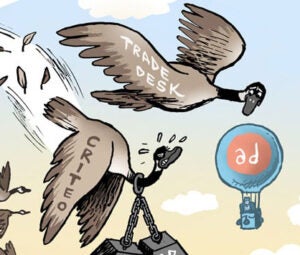
The Trade Desk’s recent list of what it considers the top 100 publishers sparked more discussion (and memes) about the shrinking open internet.
The so-called top 100 is, at heart, a marketing schtick of The Trade Desk, which recently repositioned itself as the access point to the “premium internet” rather than the open web.
In reality, the lines are blurred between open and “premium,” writes Ari Paparo on LinkedIn.
Accessing premium content, like a streaming service or a top-tier news pub, typically requires a user to log in or pay. Yet many sites exist on the spectrum between freely available and paywalled.
If Netflix has private auction-based bidding happening in the background, is it part of the open web? It’s 100% premium. Is Tubi not premium because people don’t need to share an email to watch? It would be hard to argue that – and it doesn’t even really matter.
Because it’s not hard to argue with this: Lists aside, the open internet is definitely in trouble, Paparo writes.
For most web publishers, the best chance of sustainable profits will be with free access and programmatic ad revenue – and by leaning into first-party data, just like the giant platforms.
“The only way,” he writes, “is to build relationships with consumers and get those emails.”
But Wait, There’s More!
Google’s search volatility has been wild recently, and it got worse since the start of June. [Search Engine Roundtable]
Meanwhile, Google defends its AI-based search. [TechSpot]
Instagram is testing unskippable ads. [TechCrunch]
Paramount’s merger with Skydance only awaits Paramount Chairwoman Shari Redstone’s approval. [Variety]
Retailers really want you to shop from your phone, not your laptop. [WSJ]
You’re Hired!
Attain hires Mediaocean’s Ben Kartzman as president and COO. [blog]