Off The Vine
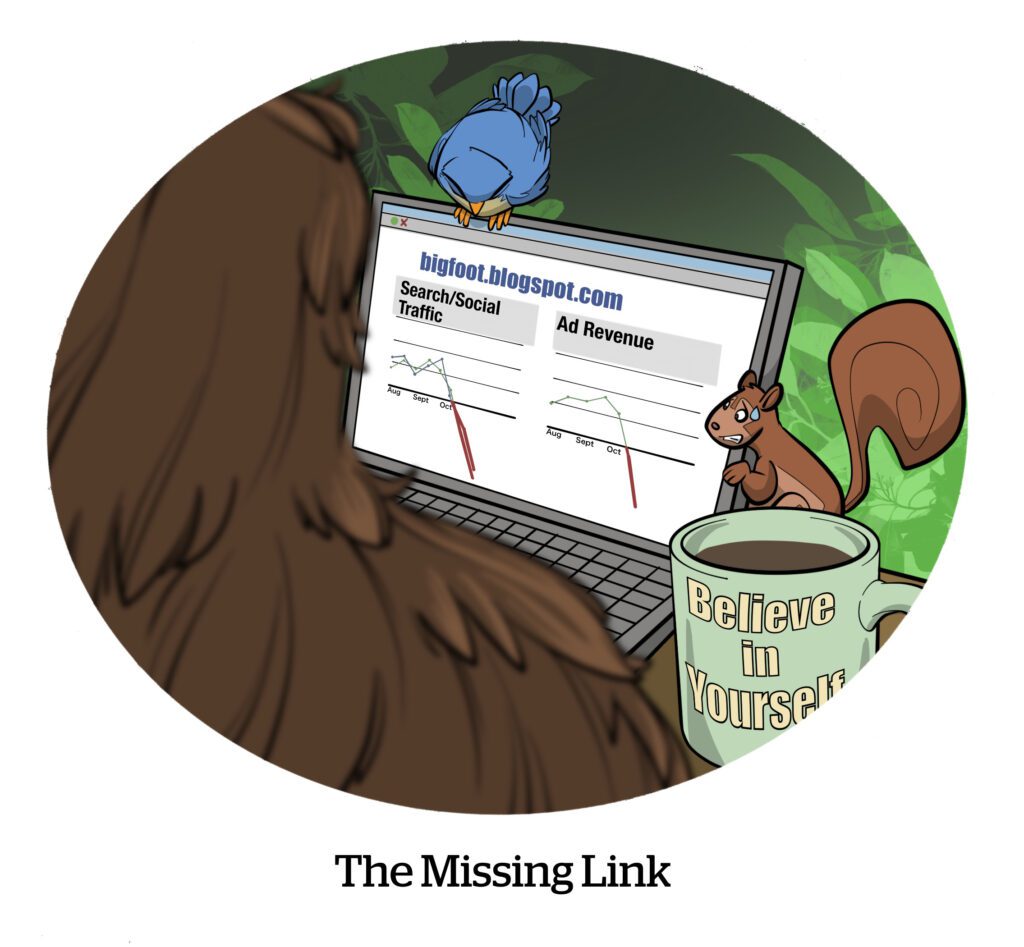
It’s a tough time for digital publishers. That extends to publisher ad networks, too.
Monetization platform Mediavine announced layoffs last week in a LinkedIn post by CEO Eric Hochberger.
“The landscape for creators and publishers is evolving rapidly, and we have to evolve with it,” Hochberger wrote. Although he didn’t explain how, exactly, the publisher landscape is evolving, the obvious culprit is AI search restricting referral traffic and, therefore, ad revenue.

AdExchanger reached out to Mediavine for more information about the layoffs and the company’s future direction.
Hochberger confirmed that “AI-powered search and shifting traffic patterns are putting real pressure on publishers.”
He did not confirm the number of employees affected, but AdExchanger heard from a source with knowledge of the layoffs that the company made deep cuts to its headcount.
Hochberger said the layoffs represent Mediavine “reallocating our efforts to focus exclusively on high-impact areas, such as driving publisher growth, enhancing performance and providing more personalized, strategic support.” Regarding the laid-off employees, he emphasized that Mediavine is “grateful for their contributions.”
And unlike many other companies that have cited AI as a reason for layoffs, he denied that Mediavine’s own adoption of AI tools made some of the eliminated positions obsolete.
“We’ve deployed AI-driven capabilities across publisher performance, ad infrastructure and market positioning,” he said. “Not as a replacement for talent but as infrastructure that makes our teams sharper.”
From Bot To Bought
Earlier this week, Adweek reported that advertisers will be charged per click as Amazon shifts its chatbot ads business from beta to general launch.
But that might not come out to a particularly hefty sum.
Consumer goods brand Paladone, for instance, only saw 88 clicks from chatbot ads in Rufus in Q1, compared to 500,000 clicks across all of its Amazon advertising, The Information reports.
Other marketers have agreed that chatbot ads drive far fewer clicks than other Amazon ads. But since they’re often less than half the price, it’s a low-cost, low-reward add-on.
In 2024, Amazon started rolling out sponsored prompts, or brand-specific questions that, when clicked on, trigger a conversation with Rufus. However, even these sponsored prompts make up less than 1% of clicks across sponsored product campaigns, according to Tinuiti’s senior director of innovation and growth for Amazon Ads, Joe O’Connor.
Early data suggests that the low number of clicks isn’t necessarily from lack of interest, but from lack of volume. And as Amazon shifts out of its beta phase and chatbot ads become a priority for more advertisers, the frequency at which users are nudged into these chatbot interactions is likely to rise.
Eat Your Vegetables (But Not Like That)
A group of over 200 children’s specialists signed an open letter to YouTube’s executive leadership expressing “serious concerns” about kids being exposed to AI slop on the platform, Bloomberg reports.
The letter, which was organized by anti-commercialist nonprofit group Fairplay, recommends that YouTube prohibit AI content both from being hosted on YouTube Kids and from being recommended by the algorithm to users under 18.
YouTube CEO Neal Mohan has previously embraced the dual ideas of protecting kids and cutting back on slop, touching on both in his annual blog post for 2026. But as the New York Times learned last month, AI videos are already being recommended to users who watch popular channels like CoComelon and Ms. Rachel.
There’s also the growing problem of AI videos that are generated in a Pixar-like animated style, but are decidedly not for kids – like the recent trend of adult, often fetish-adjacent stories featuring cartoon characters with produce for heads, as Playboy recently pointed out.
Most AI slop channels like this are playing a numbers game; they churn out as many videos as possible with the goal of getting enough views to generate ad revenue through content creator programs. Which means that, at the end of the day, it’s advertisers footing the bill for these weird little fruits.
But Wait! There’s More!
Five weeks into the Iran war, advertisers and ad markets are finally starting to sweat. [Digiday]
Nexstar and Tegna argue that they can’t comply with a temporary restraining order on their merger because it’s already too late to undo certain actions. [Variety]
How DSW plans to acquire young customers without alienating its loyal base. [Chief Marketer]
Anthropic accidentally exposed parts of Claude’s internal source code, raising larger questions about the AI company’s security measures. [Bloomberg]
OpenAI announces a partnership with creative ad tech platform Smartly, which aims to create personalized, interactive ChatGPT ads. [Business Insider]
America’s AI boom is leaving the rest of the world behind – for better or worse. [Rest of World]