To QR or not to QR?
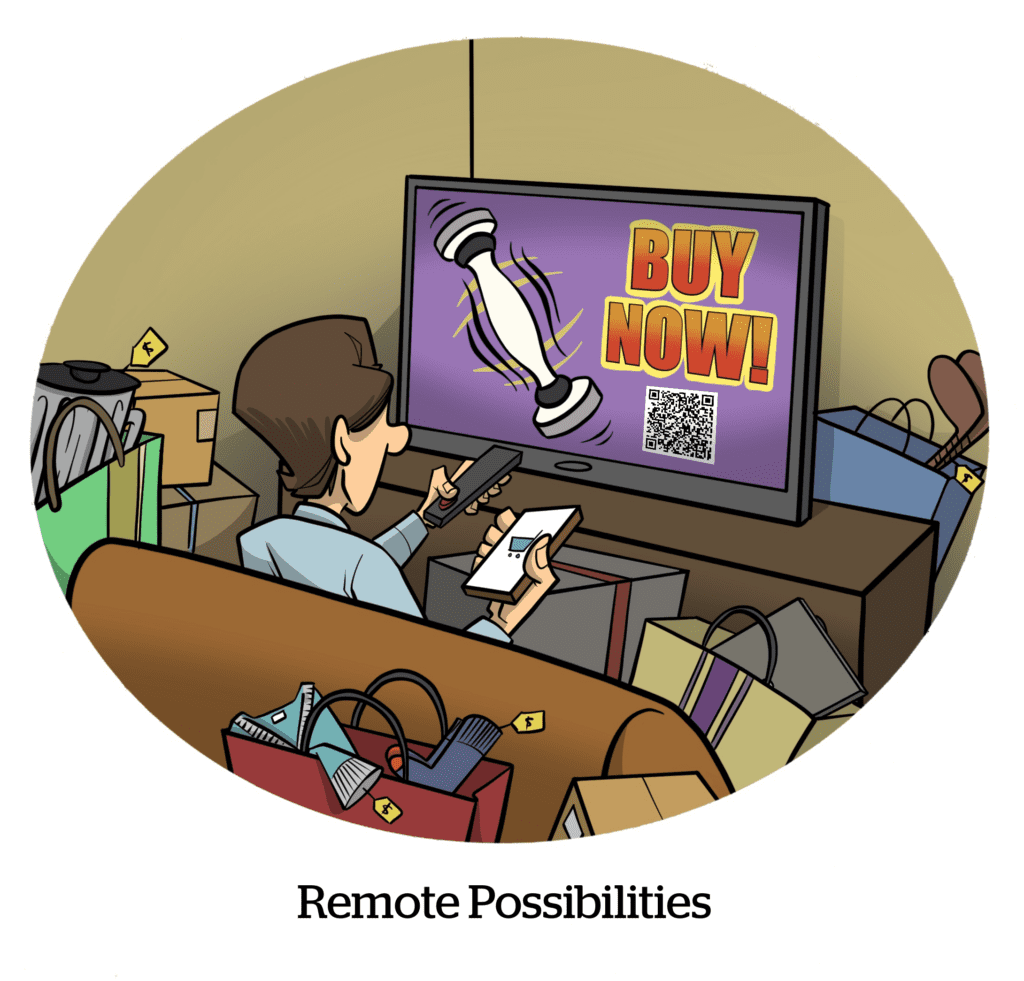
This question frequently dominates conversations about shoppable CTV ads. Would viewers rather use their phone to scan a code on their screen? Or use their remote to input a phone number or email address instead?
But Derek Gatts, VP of advertising experience and platform at Warner Bros. Discovery, told me there’s bigger fish to fry before broadcasters and streamers get bogged down in questions about QR codes and remote controls. (Although, for the record, WBD’s own testing found that consumers overwhelmingly favored QR codes.)
And that fish is: How do TV studios guarantee that the products featured in these new made-for-TV shoppable moments are ones that viewers actually want to buy in the first place?
For WBD, the answer lies in contextual relevancy.
The pixel edge
HBO’s influence on culture is well established. Just look at how “The White Lotus” triggers a surge of bookings wherever the newest season is filmed or how many people have named their children after “Game of Thrones” characters since the series first aired in 2011.
This ability to connect with viewers is what WBD’s shoppable ad business intends to capitalize on, Gatts told me, to “turn that inspiration into immediate, tangible action.”
To pull this off, WBD enlisted the help of Kerv.ai, which uses machine learning-based image recognition tools to analyze content for discrete objects like clothing, accessories or furniture.
Kerv’s selling point is its able to identify objects in detail, which Chief Innovation Officer Marika Roque referred to as “the pixel edge.” (If you’ve ever used an automatic select tool on an image editor like Photoshop, then you know how hard it is to achieve this sort of precision!)
WBD and Kerv began collaborating on shoppable ads not long after Black Friday in 2024, with furniture retailer Wayfair as their first retail partner. WBD ended up supplying Kerv with over 20,000 hours’ worth of content, which it matched against Wayfair’s live product catalog feed.
“It’s not just about showing Wayfair’s top-selling product,” said Gatts. “It’s about drafting off of the inspiration that a viewer just saw in that kitchen scene ahead of the break, and then showing that viewer products based on that specific moment.”
Fit inspo
Speaking of inspiration, while Kerv’s algorithm starts by looking for exact matches to what’s actually depicted on screen, it doesn’t stop there. The model moves on to contextually relevant objects. For example, an ad that appears after a kitchen scene might feature bar stools that fit the aesthetic of the kitchen, even if specific bar stools weren’t visible in the frame.
Using the content as a jumping-off point helps the shoppable ads avoid certain contextual limitations. I was going to make a joke about how you can’t buy the Iron Throne on Wayfair, for example, but, as it turns out, you technically can. Still, you get the idea – some historical or fantasy shows may have no perfect living room furniture matches, while still providing potentially useful contextual shopping opportunities.
Of course, contextual relevance is about more than just object similarity. As Roque pointed out, showing a knife on-screen in a cooking show is very different than showing one in a true-crime documentary.
Achieving this level of brand suitability, Roque said, represents another layer on top of Kerv’s product matching capabilities and requires input from the media owner – in this case, WBD – to make it an effective partnership overall.
How do I shop web?
Although WBD’s shoppable ad experiences started with Wayfair, the network has since expanded to other retailers. Retailers and merchants can buy either a single spot during a commercial break or a full title sponsorship, which alerts the viewer to the shoppable features before the show begins and replaces every ad pod with a product carousel.
Once consumers scan the QR code from an ad, they’re taken to a second screen experience (aka a website on a mobile phone) that’s branded with a “Shop HBO Max” logo and pulls the specific products from that CTV carousel.
Being able to follow consumers to another screen is an important part of the process, according to Gatts, and not just because certain purchase decisions take a longer time to ferment. Consumers need to acclimate to shoppable ads in the first place, and the “Shop HBO Max” branding helps to make that happen.
Case in point: During the first four to six months when Wayfair used shoppable WBD ads, the broadcaster saw a 50% reduction in the time between when consumers were first exposed to an ad and when they actually scanned a QR code.
“The only logical thing to take away,” Gatts proposed, “would be that users are recognizing the ‘Shop HBO Max’ name, they’re recognizing the experience, and they’re recognizing what to do when they see that experience.”