


No one in programmatic advertising needs another reminder about fragmentation. This complexity stands in sharp contrast to the original promise of the open internet. Programmatic was supposed to give marketers the freedom to reach audiences anywhere online by combining data, automation and inventory from across the web.
Instead, the ecosystem has steadily moved in the opposite direction. There are different DSPs for different channels, separate buying paths for CTV and retail media, platform-specific data policies and an ever-growing list of tools just to reach consumers across today’s digital landscape.
For large organizations with deep media teams and significant budgets, navigating that complexity is painful but manageable. But for small and midsize agencies and brands, it inevitably limits performance. Not only does fragmentation present barriers to flexible inventory access, it leaves agencies with the enormous burden of manually normalizing disparate performance signals in an attempt to understand what’s working and where to allocate spend.
These pain points and limitations have become baked into how smaller agencies operate – an accepted status quo. But fragmentation is accelerating, and new AI capabilities are finally making it possible to manage that complexity in a fundamentally different way.

A tipping point: Media fragmentation meets AI
The fragmentation problem is as old as programmatic itself, but it’s accelerating at an entirely new pace today.
Retail media networks are multiplying, each with its own targeting and measurement logic. CTV is introducing more supply paths and distribution models. Mobile apps, streaming platforms and social environments are operating as independent markets rather than as parts of a unified ecosystem. And the major walled gardens have tightened control over their data and signals, making it harder for marketers to compare performance across channels or coordinate campaigns holistically.
Which leads back to the greatest challenge of today’s fragmented programmatic ecosystem: making sense of the disparate signals delivered from disconnected environments. Normalizing those signals across platforms traditionally requires enormous operational overhead, a combination of specialized expertise and significant manual work.
At best, this overhead takes a huge chunk out of ROI. More often, it leaves small and midsize agencies building multichannel campaigns based on guesswork rather than being able to make the data-driven decisions the open internet promised.
Advances in AI are beginning to change that equation. Modern AI systems can analyze and interpret cross-platform campaign data at a scale that previously required large teams of specialists. Instead of manually reconciling signals from different environments, agencies can now process fragmented data streams more efficiently and identify patterns that help guide campaign optimization.
In other words, the same complexity that once forced marketers into walled gardens can now be managed openly and flexibly.
Reclaiming programmatic’s original promise
That technological shift is helping bring programmatic back toward the promise of the open internet, enabling ad tech partners to build new offerings that give agencies a much more flexible approach.
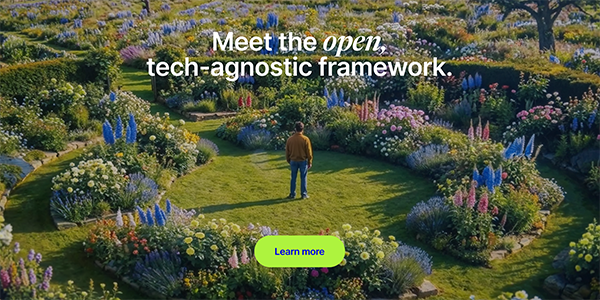
AI Digital, for example has established the Open Garden Framework.
The concept is simple: Instead of campaigns built around the constraints of individual platforms (what one can do), marketers build their campaigns around their brand’s objective (what one wants to do) and assemble the best mix of inventory sources, technology partners and data providers to achieve it. The bigger platforms still play an important role, but they no longer dictate the strategy.
In practice, this means agencies regain the flexibility to move across channels and ecosystems based on performance rather than platform limitations. Campaign decisions are made on a brand’s terms based on KPIs instead of terms set by the walled gardens, such as default settings, vendor lock-ins and minimum spend thresholds.
This gets us closer to what programmatic originally promised, which is the ability to operate across the broader digital ecosystem rather than inside isolated environments.
Why smaller agencies stand to gain the most
Freedom and flexibility benefit marketers of any size, but the impact will be most significant for small and midsize agencies. While large holding companies can absorb fragmentation by building specialized teams and proprietary infrastructure, smaller agencies typically cannot.
Yet smaller agencies still need to deliver sophisticated cross-channel strategies that span CTV, retail media, mobile and the open web. Every additional platform they incorporate adds operational complexity and reporting overhead, gradually slowing down optimization and compressing margins.
The Open Garden allows lean teams to combine AI-driven signal analysis with human expertise to coordinate campaigns across fragmented environments more efficiently. Instead of hiring specialists for every platform, agencies can use automation to interpret cross-platform signals and focus their expertise where it matters most: on strategy and optimization.
Ad tech partners like AI Digital have begun framing this model explicitly around the Open Garden philosophy, pairing AI-driven signal analysis with human media expertise to help agencies navigate fragmented data and make campaign decisions based on KPIs rather than constraints.
The proven value is already clear. We’re seeing clients that use analytics across open ecosystems generate 2.9x higher performance. But it’s not just broader supply that drives value. Implementing this agile, data-driven approach allows teams to make decisions 73% faster than those locked inside closed environments.
Why does faster matter? Because we know that teams optimizing in real time are generating 26% higher ROI.
The next phase of programmatic
Programmatic advertising has evolved through several distinct phases. Automation came first, moving media buying from manual negotiations into algorithm-driven marketplaces. Scale came next, expanding programmatic across channels such as video, mobile and CTV.
Orchestration will define the next phase. Amid accelerating fragmentation, agencies must be able to coordinate across platforms, normalize signals and make strategic decisions based on brand objectives rather than platform limitations.
The Open Garden approach enables that shift. It allows agencies to embrace both the biggest platforms and the newest media environment, while restoring the flexibility that marketers originally expected from programmatic.







