Ritz Crackers is always looking for out-of-the-box ways to connect with its customers.
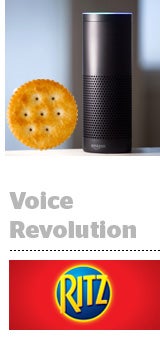
So when NUE Agency, which develops the music strategy behind campaigns for Ritz’s parent company Mondelez, suggested launching a voice-activated cooking show on Amazon Echo, Ritz marketing exec Lauren Sella was all in.
“As a brand, we’re about celebrating people getting together and providing inspiration to make those get-togethers even richer,” Sella said. “It felt like the perfect marriage of technology and what we’re trying to do.”
With help from technology incubator Betaworks, NUE and Ritz developed the first episode of Recipe Remix, a cook-along show with baked-in voice commands, featuring music from trumpet player Spencer Ludwig.
“It’s a skill where artists walk you through how to cook their favorite dishes while playing their latest music,” said Jesse Kirshbaum, CEO at NUE Agency.
The episode, which launched this month, features all of the songs and a bonus track from Ludwig’s new album as he coaches listeners through his special recipe for meatloaf – which, of course, calls for Ritz crackers. Branded shows like Recipe Remix are the only way for brands to market on the platform, as Amazon has strict rules around paid media (remember the Burger King fiasco?).
“Skill” building, Amazon’s name for apps on Echo, was a new endeavor for all three parties. The technical development was as straightforward as cutting up audio files and inserting voice commands, said James Cooper, head of creative at Betaworks. But the team encountered some speed bumps when trying to upload the show to Amazon’s skill store.

“The store is not as well developed as the Apple store,” he said. “If the teams [at Amazon] have never seen something before, they don’t really know how to process it.”
For example, two weeks after uploading Recipe Remix to Amazon’s skill Store, the app was accidentally kicked out because Amazon thought the show didn’t have the rights to Ludwig’s music.
“Of course, we do have the rights to the music. That’s what Jesse and his team at NUE did,” Cooper said. “There are blanket policies where [Amazon won’t] allow someone to upload more than two minutes of audio because they think there’s going to be a rights issue.”
For Ritz, the learning curve was around understanding how to approach and measure results on a new platform, especially one without a screen, Sella said.
“What does success look like on an emerging platform?” she said. “What KPIs should we be looking at on something new?”
The first episode of Recipe Remix had some fortuitous synergies. Ritz worked with Ludwig on a campaign earlier this year, in which he wrote a song for the brand used in the show. Securing the rights to work with another artist could be more difficult for Ritz the second time around.
“Scripting it out, shooting it, coordinating with artists’ schedules and clearing the music is a pretty substantial cost,” Kirshbaum said.
Because of these unknowns, as well as the difficulty of extracting ROI from voice-activated platforms, Ritz is approaching Recipe Remix with a test-and-learn mindset. It will look at KPIs around downloads, reviews and retention rates before producing a second episode. But it does plan to launch the episode on other voice-activated devices like Google Home.
“At this point, we’re playing with this new innovation,” Kirshbaum said.
The future of Recipe Remix also depends on how Echo (and later, Google Home) users receive the show. If there’s listener interest, Amazon will promote Recipe Remix in the skills store and get more users to download it, just like Apple does in the app store.
“They can make it easier for people to find skills, and we want to make sure they’re encouraging it and feel like it has potential,” Kirshbaum said.
Despite these unknowns, claiming a stake in the voice-activated world early will allow Ritz to be ahead of the curve when the product goes mainstream, which it’s arguably beginning to do. At the beginning of 2017, at least 8 million consumers in the US owned Echo devices, according to a report from Consumer Intelligence Research Partners. Echo was Amazon’s top-selling product on Prime Day this year.
“It might not be this very day, but we’re going to get to a situation where it’s like [Apple’s] app store,” Cooper said. “Some people are a little short-sighted on how important voice is going to be. Smart brands are going to take advantage of the space.”