

Budweiser is bringing a first-party data approach to its FIFA World Cup sponsorship, a sign of shifting priorities for many marketers.
The brand, owned by Anheuser-Busch InBev, has always used a mix of first-, second- and third-party data for behavioral targeting.
But first-party data isn’t always easy to come by for consumer-packaged goods companies. Their retail partners typically own the direct relationship with shoppers.
Budweiser’s recent focus on direct-to-consumer marketing is part of a broader effort to generate more first-party data to power its marketing, said Todd Allen, Budweiser’s global VP of marketing.

Putting the “party” in first party
The brand’s latest global campaign, which launched in mid-September ahead of the World Cup, is part of this strategy.
The campaign features a 45-second spot that stars professional soccer players Lionel Messi, Neymar Jr. and Raheem Sterling striding out to the field followed by a marching band, a parade and an entourage of screaming fans holding and clinking Budweiser beer bottles.
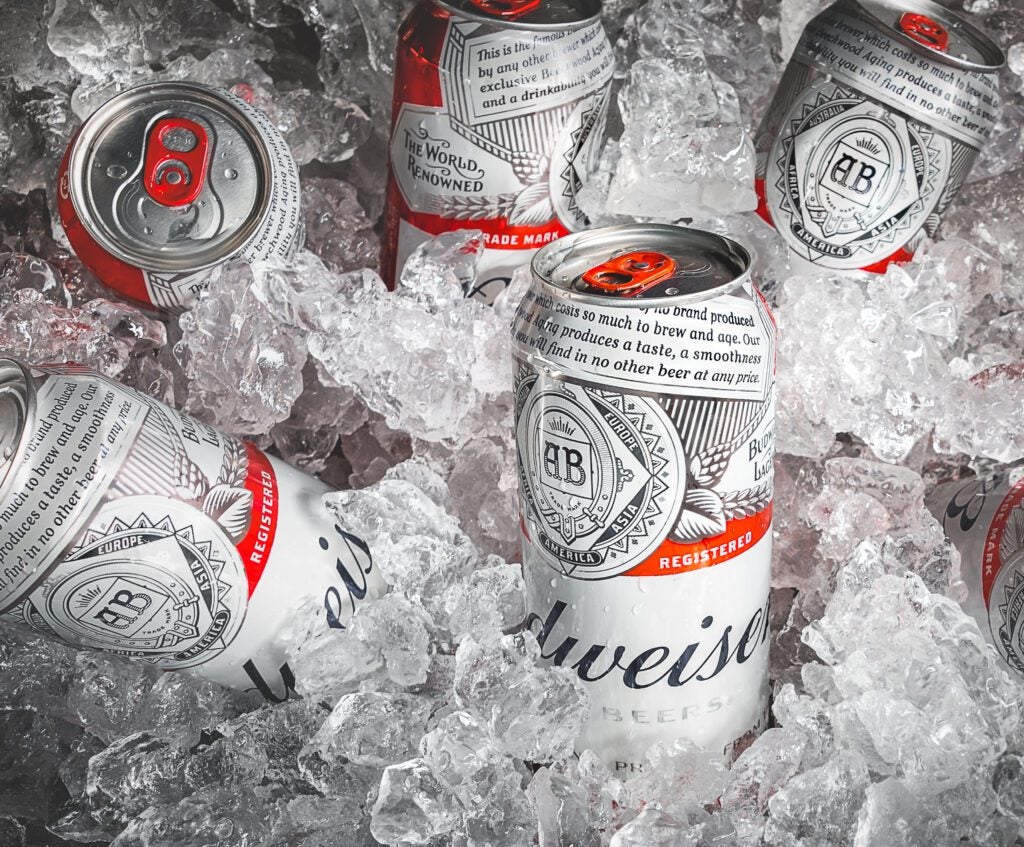
But a key element of the high-production commercial is actually the QR code that appears on screen at the end directing users to a promotion of limited-edition beer on Budweiser’s website. The limited-edition bottles and cans have a second QR code on them that people can scan for the chance to win tickets to the match.
It’s become a trend among marketers to go overboard with their branding to help fill in first-party data gaps by eliciting sign-ups or purchases with personalized promotions. (In that vein, during the pandemic, Budweiser actually produced a literal gaming console shaped like a six-pack that cools beers, which it auctioned off for charity.)
In addition to the QR codes and limited-edition merchandise, Budweiser’s World Cup campaign includes NFTs (don’t ask us about the “Budverse”) and live promotions at a hotel in Qatar that Budweiser is taking over for the duration of the games.
Advertising alcohol online is restricted in Muslim majority countries, which creates more of a need for on-site marketing that can garner more first-party data to help inform the rest of the campaign.
Lager for later
Direct-to-consumer marketing drives sales, but it can also help generate first-party data.
Budweiser’s goal with its World Cup campaign is to sell one billion bottles and cans with limited-edition branding and QR code activations, and in so doing simultaneously fill its purchase funnel with first-party data.
Budweiser can use this data for retargeting to keep viewers engaged and buying beer for the duration of the World Cup, Allen said, which runs for about a month.
Consumers share first-party data when they interact with Budweiser’s DTC offerings online, including by scanning product QR codes, creating an account on Budweiser’s site, entering the sweepstakes for free tix or making a purchase for a beer delivery. Budweiser can also collect other signals that speak to purchase intent, like engagement with the brand on search or social.
Budweiser is also integrated with several global delivery platforms (Gorillas in the UK, Zé in Brazil and TaDa in Columbia and Argentina) and its marketing promises 30-minute beer delivery to promote the limited-edition products.
The campaign’s main spot is running on TV, streaming, radio and out-of-home as the branding vehicle that drives viewers down the purchase funnel and ultimately to online checkout.
But the effort is also designed to collect data that can be used to reach consumers with performance media across SMS, email, search and social to drive conversions.
The campaign is a full-funnel one designed to drive new reach and sales for the brand at the same time, Allen said.









