Here’s today’s AdExchanger.com news round-up… Want it by email? Sign up here.
Begun, The Clone War Has
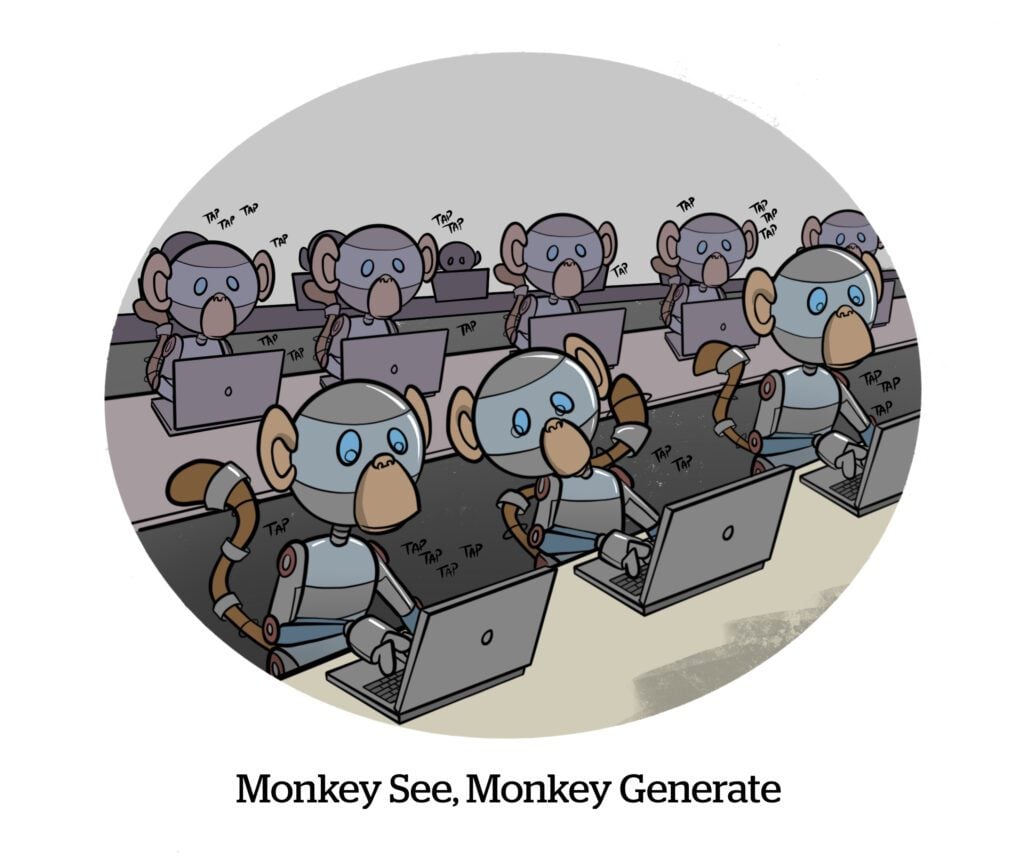
The robots are taking over, and publishers are fighting back.
A growing list of media outlets are attempting to stop AI bots from copying their content, CNN reports.
Last week, The New York Times, Reuters and CNN led the charge by blocking OpenAI’s crawler. And now Disney, Bloomberg, The Washington Post, Condé Nast, Hearst, Vox Media, Axios, Insider, ABC News, ESPN, The Atlantic, Gothamist – and, uh, InfoWars – are following suit.

Generative AI bots like ChatGPT train themselves by ingesting content from around the web, scanning it and then regurgitating it in response to user prompts.
AI vendors say this approach does not violate copyright, but watchdogs have already found proof of less reputable publishers copying content from the big-name media orgs listed above. For example, NewsGuard recently found that content farms used AI chatbots to produce articles that lifted text and images wholesale from stories published by NYT, Reuters and CNN.
It remains to be seen whether blocking ChatGPT’s crawler will prove effective. Meanwhile, publishers are considering more aggressive action, including lawsuits.
Fraud Farming
Speaking of the downsides of AI …
Digiday reports that click and impression farming – longtime scourges of programmatic advertising – may skyrocket thanks to AI technology.
Human click and impression farms are limited in how much fraud they can commit. But AI tech can create hundreds of thousands of websites, flood them with invalid traffic and impressions and even make bogus ad exchange accounts. And with trillions and trillions (and trillions) of programmatic ad impressions a year, this fraud can easily slide under the radar.
Generative AI tools may also produce poor-quality inventory littered with misinformation, plagiarism and spammy-sounding language. This content may nonetheless catch programmatic ads in its spamdexing net, like an angler’s trap snapping shut on a school of unwary fish. And as bots crawl the internet, trawling for data to feed and train their ML algorithms, they get better and better at mimicking legit sites.
What can marketers do to prevent audience fraud? Steer clear of a myopic focus on programmatic CPMs, which heavily prioritize impressions. Instead, bring in other metrics, such as cost of engagement, that prioritize ad quality over cost. Oh, and always demand transparency from supply chain partners.
We’re Exclusive
The garden walls around TV content are coming down, in part as a response to the ongoing writers’ and actors’ strikes, Insider reports.
Over the last few years, entertainment giants have been paying premiums for full ownership of TV shows and movies. Producers get a bigger payout upfront, but lose future revenue streams through licensing and syndication deals. Industry insiders say Netflix started the trend, so they blame Netflix for the strikes more than they do the legacy TV broadcasters.
But splitting ownership rights might work out better for broadcasters, too.
After years of burning through cash to compete with Netflix’s content slate, Warner Bros. Discovery (WBD) and Disney are trying to save some money by making exclusive content more accessible. WBD is licensing HBO Originals to Netflix, while Disney’s Bob Iger says he would be open to licensing some titles to third parties, according to Insider.
More syndication would give both content producers and distributors a better chance at building future revenue streams by broadening the reach of TV shows and movies – and giving them an opportunity to attract more ad dollars.
But Wait, There’s More!
Twitter/X will allow political ads for the first time since 2019. [CNN]
Meta disrupts a yearslong political misinformation campaign linked to Chinese law enforcement. [CNBC]
YouTube’s scandal over ads on made for kids content has yet to impact Google’s ad revenue. [Ad Age]
The Video Advertising Bureau calls on Nielsen not to move forward with its plans to integrate Amazon streaming data into its ratings. [Sports Business Journal]
The apps for LG and Samsung smart home appliances will soon become compatible. [The Verge]
Google now has a watermark for AI-generated images. [The Washington Post]
Yahoo-owned TechCrunch acquires media startup StrictlyVC and appoints its founder, Connie Loizos, as TechCrunch’s editor-in-chief. [Axios]