
Here’s today’s AdExchanger.com news round-up… Want it by email? Sign up here.
The Ailment Is Worse Than The Keurig
Keurig Dr Pepper sparked a rare joint agency outcry regarding an RFP for its PR business.
The beverage brand issued an RFP with 360-day payment terms – meaning the brand wouldn’t have to pay for work done by the agency until a year after its completion.
Agencies that can’t get by without that cash (they have to pay their own people, not to mention publishers and vendors, after all) would be asked to seek financing from supply chain financing company PrimeRevenue and thus pay a fee just to secure their own contractual payments from a client before a year elapses.
These are horrific terms for an agency, so it’s no surprise to see a consolidated pushback from the European Association of Communications Agencies and VoxComm, an agency trade group backed by the 4A’s and PR Council, among others.
Brands have been testing agency limits. WPP backed out of a McDonald’s creative RFP in 2016 because they were required to work at cost.
Agencies now have to ask themselves: Is having the Dr Pepper business worth it if it takes almost a year to get paid?

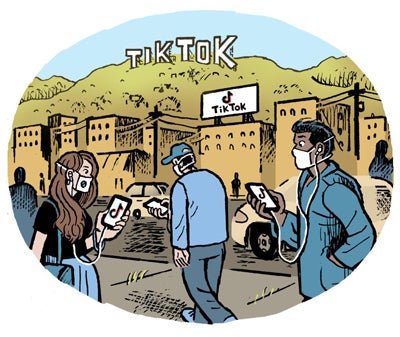
TikTok The TV Native
TikTok bristles when it’s called a social media network. It prefers to be known as a TV-like entertainment platform, and there is a case to be made.
Brands now invest in TikTok for brand lift and recognition, which is also why they buy TV ads. And, on the flip side, TV commercials now emulate the TikTok vibe.
The Tractor Supply Company, for example, just debuted its first “TikTok-style ad” on TV during Paramount’s premiere of the show “Yellowstone.”
“We’re expanding to appeal to a younger audience in more fun and engaging ways,” Kimberley Gardiner, CMO of the tractor retailer, tells Digiday.
But social-media-style TV campaigns don’t always translate. Vertical videos look jarring on large horizontal screens, and ads made for social aren’t always as engaging without the ability to scroll.
Still, the biggest benefit of slapping a TikTok on TV is to attract a younger audience using a format they’re familiar with. And it’s not just brands that are trying to blur the lines. YouTube just put its TikTok clone, YouTube Shorts, in the living room à la YouTube TV.
The fact is younger audiences respond to short-form videos that tell a quick story – and “the more native your ads look, the more successful they’ll be to the brand’s bottom line,” says one agency CEO.
The Mobile Lose-Lose
Apple’s ATT rollout triggered an upheaval for the mobile economy. But for users who only see the effects of ATT privacy prompts when a new app asks for tracking consent, there’s little understanding of how Apple’s policy has reshaped their experience on iOS, the web and even in the real world.
For instance, do you feel like you see ads everywhere now? That your car service is an ad network, not to mention your fridge, your smart TV home screen and the screen in your hotel room, too? That trend is spurred on by ATT.
And even in the places where people expect to see ads, like Meta’s apps, Amazon, YouTube, Twitter, et al., the volume of advertising has shot up.
The reason we’re seeing more ads, according to Eric Seufert at Mobile Dev Memo, is because there are only four ways for an ad network to grow revenue: increase ad load, increase reach, increase format value/ROI and increase time spent on site or in-app.
People hate increased ad loads, but it’s the only freely available option for most ad networks.
“The fact that ad platforms are taking this route is a testament to how challenging the digital advertising operating environment has become as a result of ATT,” Seufert writes.
But Wait, There’s More!
Twitter’s advertising losses are piling up. [Platformer]
Speaking of Twitter, the European Commission threatened the platform with a ban unless it abides by strict content moderation rules. [FT]
Disney buys out the MLB’s stake in BAMTech, the streaming video tech that powers Disney+. [Axios]
IAB Tech Lab is changing its release cadence for the OpenRTB spec. [blog post]
CPMs on Facebook and Instagram were down 29% from 2021 for the period between Thanksgiving and the day before Cyber Monday. [Adweek]
Instacart introduces a new ad product for special promotions. [release]
You’re Hired!
Integral Ad Science appoints Khurrum Malik as CMO. [release]
Bombora hires Jeff Marcoux as CMO and Elena Drozd as VP of data science. [release]








