
 Here’s today’s AdExchanger.com news round-up… Want it by email? Sign-up here.
Long Live The Shakeout
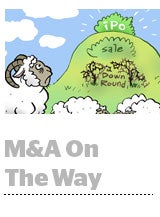
After a year of intense M&A, in particular around DMPs and video platforms, 2015 may bring even more deal activity, Jack Marshall reports for The Wall Street Journal. Luma Partners’ Terry Kawaja is quoted, saying the current field of scaled online ad platforms is not sustainable. “I don’t know what the right number is, but it’s probably less than 10,” he said, adding, “Dialogue around M&A deals is picking up rapidly.” Translation: Some investors want exits. Read it.

M&A Review
Just how frantic was consolidation in 2014? I-banker Jordan Edmiston Group’s 2014 year-end M&A report identified 602 transactions in the marketing services and technology area, totalling $39.7 billion. That represents a 26% increase in deal volume and a 71% increase in value. In other words, deals proliferated during the year, but average price as well. Might be early to use the word “shakeout.” More. A similar year-end report from Coady Diemar Partners highlights the largest video ad tech buys of the year. Read AdExchanger’s coverage on that.
The Most Durable Game
The Super Bowl is fast approaching, and the record-high $4.4 million to $4.5 million price tag for a :30 spot isn’t dissuading brands. NBC has already unloaded 95% of the ad space. Digital Super Bowl ad sales have also been selling, and have doubled since 2012, Adweek reports. “Frankly I wish we had more capacity there,” NBC sales chief Seth Winter told the publication. “We could do a very good job.” The biggest-reach, least-targeted ad buy of all time still has a halo.
Pure Mobile Data
Street Fight talks to several mobile analytics platforms, some of which migrated to an ad network model after facing challenges scaling up their pure data businesses. “One of the biggest problems is that companies often do not have the budgets for data,” said PlaceIQ CEO Duncan McCall. “They may have budgets for media with data, but not data on its own.” And then there’s the loss of control: “We were just throwing our data over the wall to the third party and hoping all worked well.” Others, such as Placed CEO David Shim, see hope for pure-play analytics as smartphone use continues to race forward. Read it.
You’re Hired
But Wait! There’s More!
- Microsoft Opens Up New Cross-Platform Advertising Opportunities On MSN Apps, For Windows, Android, iOS And Amazon – Microsoft Blog
- Could The Mobile Ad Industry Spin Off A Data Business? – Street Fight
- Forecast: Streaming Will Surpass Traditional Pay TV – MediaPost
- Shopping, Productivity & Messaging Give Mobile Another Strong Growth Year – Flurry
- BitTorrent Adds First Feature Film And Pay-What-You-Want Option To Its Bundle Offering – TechCrunch
- Inmoji Gets $250K, Launches SDK To Boost Sharing Of Brand Content Via Messaging – BostInno







